 Save to Pinterest
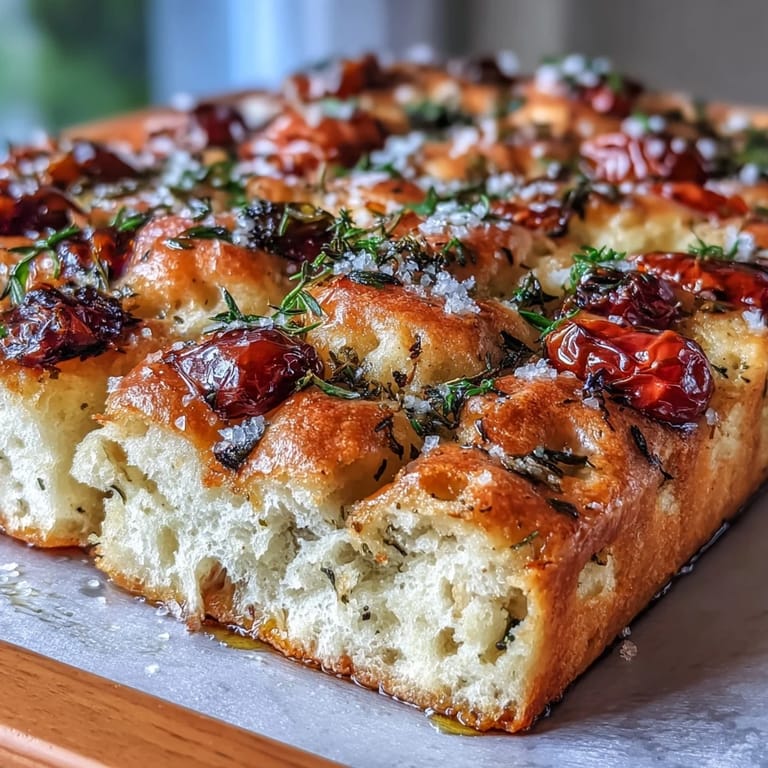
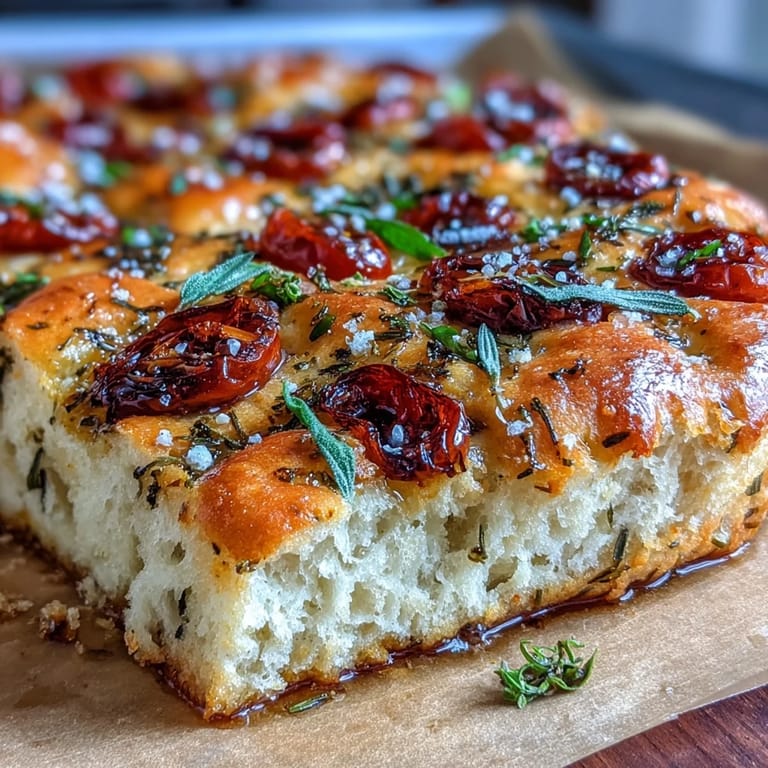
 The first sign of spring in my kitchen isn't a calendar change—it's the collective brightness of fresh herbs bumping elbows in the market. I never planned to make focaccia studded with tomatoes and wild armfuls of greenery, but one cool April afternoon the idea practically tiptoed onto my countertop, coaxed by the scent of rain and garden trimmings still clinging to my hands. That day, the dough rose like a secret I couldn't wait to share, and the soundtrack was the gentle drumming of rain on the window as the oven hummed to life. There’s something playful about dimpling focaccia, teasing clouds of olive oil into golden craters, and I always smile when I see friends tear off a soft, herb-laced piece. Bread like this makes it impossible to be unhappy for long.
I once brought this bread to an impromptu picnic after convincing my skeptical neighbor that yes, bread could steal the dessert's thunder. As everyone reached for seconds, she laughed and confessed this focaccia was the only herb garden she didn’t mind disappearing.
Ingredients
- Bread flour: Using bread flour gives the focaccia its satisfying chew and open crumb—don’t substitute all-purpose unless you must.
- Fine sea salt: This infuses the dough itself with seasoning, not just the crust; whisk it evenly through your flour.
- Active dry yeast: This little packet is the magic; always let it foam in lukewarm water to check it’s alive.
- Lukewarm water: It should feel like a pleasant bath if you dip your finger—anything too hot risks killing the yeast.
- Extra-virgin olive oil: The real flavor backbone—drizzle generously for both the dough and the topping, and use the good stuff.
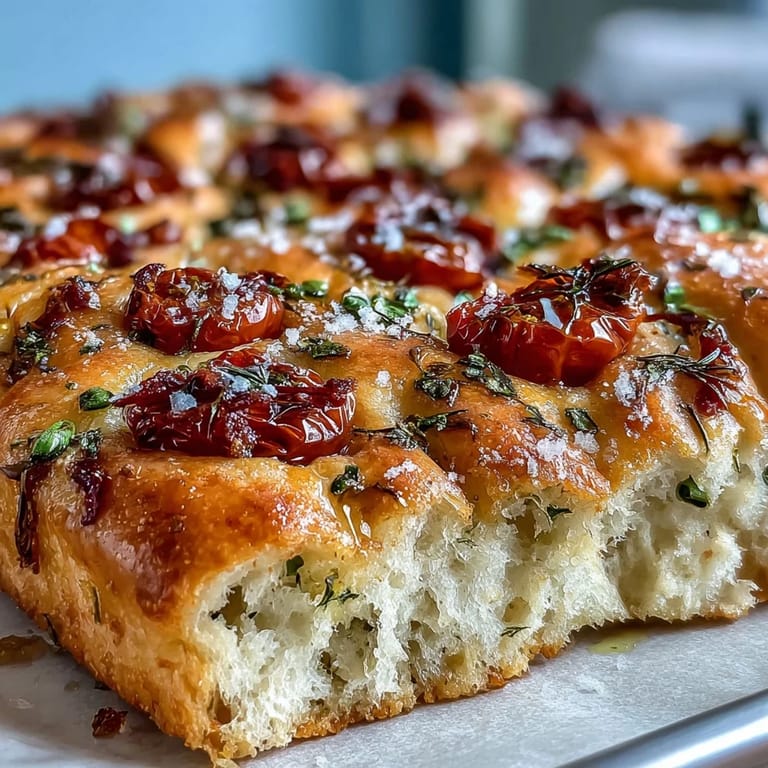
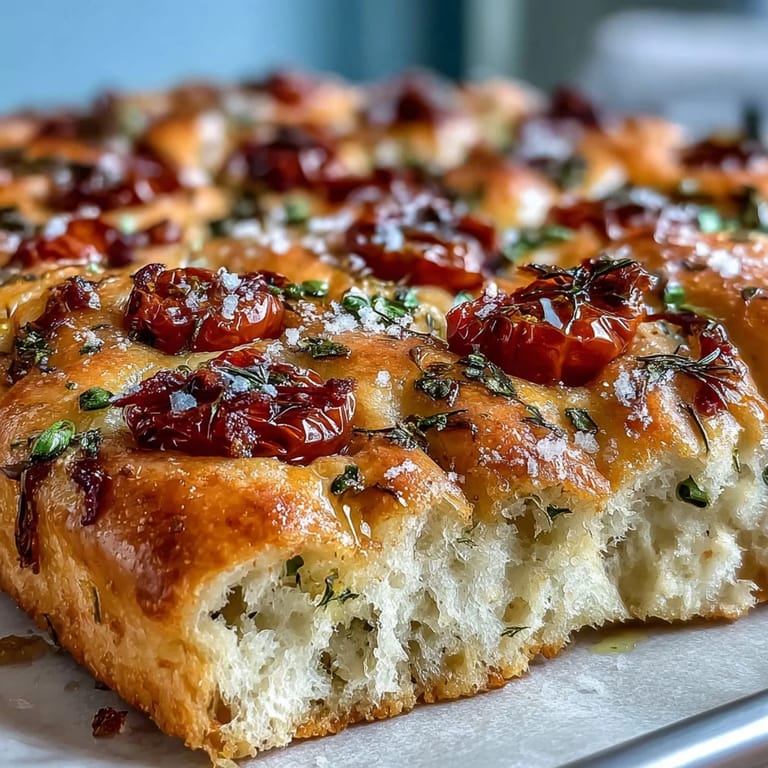
- Cherry tomatoes: Halved and tucked into the surface, they roast into sweet, jammy pockets—choose ripe ones for best flavor.
- Fresh rosemary: A few leaves scattered go a long way, but pinch them smaller for softer bites.
- Fresh thyme: Leaves plucked just before baking keep their vibrancy and don’t turn muddy.
- Fresh chives: Finely chopped, they give a gentle oniony lift—scatter these after dimpling the dough.
- Fresh basil: Tearing instead of chopping keeps the aroma alive; add at the last minute for a burst of green.
- Flaky sea salt: A final big pinch just before baking creates those addictive salty pops in each bite.
- Black pepper: Freshly ground right on top gives a subtle hum below all the herbal brightness.
Tired of Takeout? 🥡
Get 10 meals you can make faster than delivery arrives. Seriously.
One email. No spam. Unsubscribe anytime.
Instructions
- Mix the dry ingredients:
- Grab your biggest bowl and whisk together the bread flour and sea salt until the salt is flecked throughout—this step matters for even flavor.
- Activate the yeast:
- In a small bowl, swirl the yeast into the lukewarm water and watch for a creamy layer of bubbles—if it’s quiet, start over with new yeast.
- Form the dough:
- Pour the foamy yeast mix plus olive oil into your dry ingredients and stir with a wooden spoon until a sticky, shaggy dough forms—you can get hands-on if you like a little mess.
- First rise:
- Coat another bowl with olive oil and plop in your dough, spinning once to coat; cover with a damp towel and let rise in a warm place until doubled, 1 to 1.5 hours, while you practice patience.
- Stretch and dimple:
- Generously oil a rectangular baking tray and gently ease your dough on—using oiled fingers, stretch it to the corners and poke deep dimples all over, like pressing your thumb into soft clay.
- Second rise:
- Cover and let the shaped dough puff up again for 30 to 40 minutes as it gets delightfully airy.
- Preheat the oven:
- Crank your oven to 220°C (425°F) so it’s roaring hot when you’re ready to bake.
- Top it off:
- Drizzle more olive oil over the dough and arrange the cherry tomatoes, herbs, and flaky salt artfully across the top—don’t forget a few grinds of pepper too.
- Bake:
- Slide the tray into the oven and bake for 22 to 25 minutes; listen for the crust to crackle and check for an even golden color.
- Cool and serve:
- Let the focaccia cool just long enough so you don’t burn your fingers when slicing—eat warm, or let it linger on the picnic table at room temp.
 Save to Pinterest
  Save to Pinterest
 The most surprising memory is how quickly this focaccia turned strangers into friends—a few slices passed along a busy table, and suddenly the conversation bloomed as much as the herbs in the dough.
Choosing the Best Herbs for Your Focaccia
Let your nose guide you at the market—sniff each bunch and pick the most vibrant, tender herbs. Swapping in what’s freshest or even adding edible blooms like chive flowers can transform each bake into a one-of-a-kind loaf.
Bringing the Dough Together Without Fuss
Don’t overthink the mixing: a little stickiness is good, and imperfect shaping is part of the focaccia’s rustic charm. If your kitchen is chilly, let the dough rise in the oven with just the light on—it’s a cozy shortcut I learned on a drizzly day.
Making It Your Own: Variations and Serving Ideas
No two focaccias ever turn out the same in my house—sometimes I scatter over shaved asparagus, or tuck thin red onion slices into the dimples for a sweet bite. Serve as a side, use for sandwiches, or tear chunks to dunk into peppery olive oil and vinegar.
- If you crave cheese, grate a bit of Parmesan over before baking.
- Bake ahead and rewarm in the oven; it's just as lovely the next day.
- Double the recipe for a crowd, but use two trays for best edges.
 Save to Pinterest
  Save to Pinterest
 Whether you bake this to celebrate spring’s arrival or just to fill the house with good smells, this focaccia delivers simple joy one slice at a time.
Recipe FAQs
- → How hydrated should the dough be?
The dough should be slightly sticky but manageable; around 70% hydration (350 ml water to 500 g flour) yields a fluffy crumb while still allowing you to shape and dimple it easily.
- → Why does the dough need two rises?
The first rise builds structure and flavor as the yeast ferments; the second, after shaping, relaxes the gluten and creates an airy interior while helping the surface develop those classic dimples and a tender crumb.
- → How do I get crisp, golden edges?
Use generous olive oil on the tray and finish with a drizzle before baking; a hot oven (220°C/425°F) and baking directly on a well‑oiled tray help form a crisp, caramelized edge.
- → Can I swap the herbs or tomatoes?
Yes—use any soft spring herbs like parsley, dill or tarragon, and swap cherry tomatoes for roasted peppers or olives. Fresh herbs sprinkled after baking keep bright flavor, while heartier herbs can go on before baking.
- → How should I store and reheat leftovers?
Store cooled focaccia wrapped at room temperature for up to 2 days or freeze slices for longer. Reheat in a 180°C (350°F) oven for 8–10 minutes to revive the crust; a toaster oven works well for single slices.
- → Can I make the dough ahead of time?
Yes—after the first rise, refrigerate the dough in a lightly oiled bowl for up to 24 hours to develop flavor. Bring back to room temperature before shaping, then proof and bake as directed.