 Save to Pinterest
 There's something magical about waking up to the smell of lemon and blueberries baking together, especially when you're not the one who has to do the work. I discovered this French toast bake on a lazy Sunday morning when I had friends staying over and wanted something that felt special without spending hours in the kitchen. The sourdough's tangy edge plays so beautifully against the bright lemon and sweet berries that it became the recipe I reach for whenever I want to impress without stress.
My neighbor knocked on the door one Saturday with her teenage daughter, both of them apologetic for the surprise visit, and I had exactly this casserole warming on the counter. Watching them taste it for the first time and seeing their surprised reactions when they hit a pocket of warm blueberries made me realize how food brings people together in the smallest, most genuine moments. That morning turned into a three-hour brunch on the porch, and now it's the dish I make whenever I want to feel like I've done something thoughtful.
Ingredients
- Sourdough bread (1 loaf, about 400 g): Cut into 1-inch cubes so each piece can absorb the custard evenly without getting mushy or staying too dense in the middle.
- Fresh or frozen blueberries (1½ cups / 225 g): Frozen berries work just as well and sometimes burst more easily, creating pockets of intense flavor throughout.
- Lemon zest (from 1 lemon): Use a microplane to get the finest zest possible, which distributes the bright flavor more evenly than larger shreds.
- Large eggs (6): Room temperature eggs blend more smoothly into the custard and create a silkier texture.
- Whole milk (2 cups / 480 ml): The backbone of the custard that keeps it from being too heavy while still providing richness.
- Heavy cream (½ cup / 120 ml): This is what makes the difference between a custardy bake and something that tastes like scrambled eggs, so don't skip it.
- Granulated sugar (⅓ cup for custard, plus 2 tbsp for topping): The custard sugar dissolves into the eggs while the topping sugar creates a slight crust that catches the heat beautifully.
- Pure vanilla extract (2 tsp): Extract, not imitation, because the flavor needs to stand up to the lemon without disappearing.
- Salt (¼ tsp): Just enough to make everything taste more like itself without anyone realizing salt is there.
- Lemon juice (from 1 lemon): Freshly squeezed tastes brighter than bottled, especially since citrus is the whole point here.
- Unsalted butter (2 tbsp / 28 g), melted: Drizzled over the top before baking to create those golden, slightly crispy edges.
- Ground cinnamon (½ tsp): Just enough warmth to complement the lemon without making it taste like a cinnamon roll.
Tired of Takeout? 🥡
Get 10 meals you can make faster than delivery arrives. Seriously.
One email. No spam. Unsubscribe anytime.
Instructions
- Prep your dish and build the base:
- Lightly grease a 9x13-inch baking dish and spread your sourdough cubes in an even layer, then scatter the blueberries and lemon zest over them. Think of this like building a foundation where every piece of bread will have a chance to soak up custard.
- Create the custard:
- Whisk together eggs, milk, cream, sugar, vanilla, salt, and lemon juice in a large bowl until the mixture is smooth and uniform. You'll feel when it's right, like the sugar has dissolved and everything looks silky rather than separated.
- Let the bread drink:
- Pour the custard evenly over everything and press down gently so the bread absorbs the mixture without breaking apart. Let it soak for at least 30 minutes in the fridge, though overnight is truly better because the flavors meld and the bread gets completely saturated.
- Add the finishing touches:
- Preheat your oven to 350°F while the dish sits cold. Drizzle melted butter over the top and sprinkle the cinnamon-sugar mixture evenly so you get some crunch in every bite.
- Bake until golden:
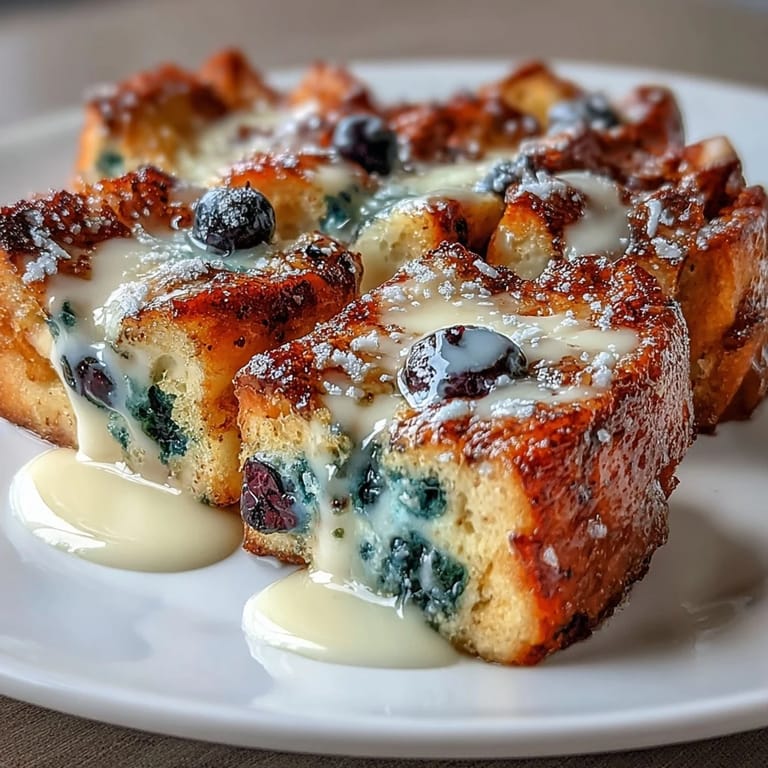
- Bake uncovered for about 45 minutes until the center feels set when you gently shake the dish and the top is deep golden brown. The edges should look slightly caramelized, almost like French toast that's been perfectly crisped on both sides.
- Rest and serve:
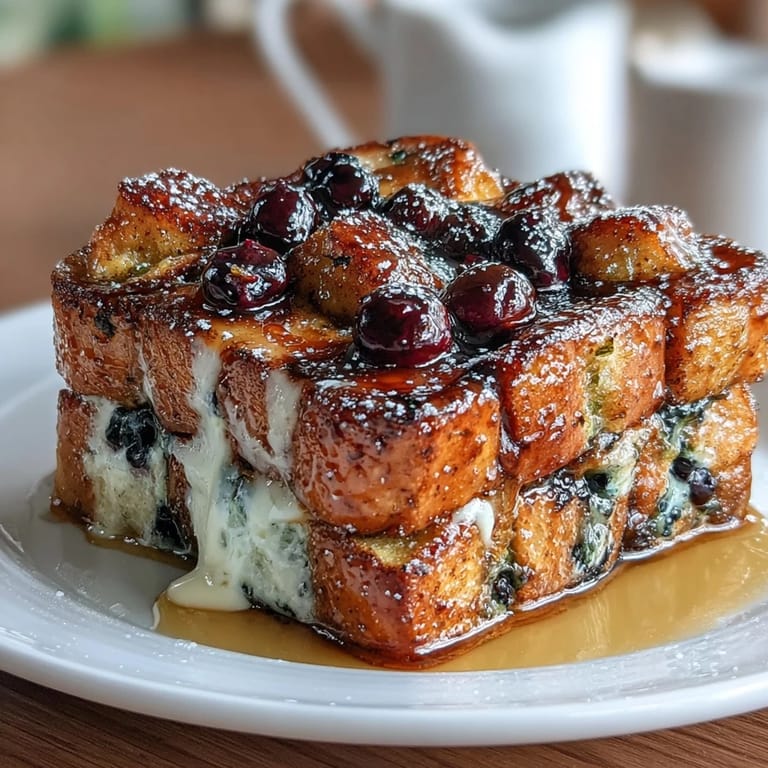
- Let it cool for about 10 minutes so the custard finishes setting and the top cools enough to handle. Serve it warm with maple syrup if you want extra richness, or a dusting of powdered sugar for something lighter.
 Save to Pinterest
 There was a morning when I made this for my in-laws' visit, and my mother-in-law asked for the recipe before she'd even finished her first bite, then came back to the kitchen to watch me explain it. That single conversation about how to pick the best sourdough and why lemon makes breakfast feel special shifted something in how I think about cooking for people I love.
Why Sourdough Makes This Special
Regular bread would work, but sourdough brings a subtle tang that doesn't fight with the lemon—instead it creates this complex flavor where you can't quite tell where one ends and the other begins. The crumb structure is also more forgiving because sourdough's natural fermentation creates larger pores that drink up custard without turning into mush. I've made this with regular brioche before and it was sweeter, fluffier, but somehow less interesting because it didn't push back against the lemon.
The Lemon Factor
It's easy to think lemon is just for fish or desserts, but here it becomes the voice of the entire dish, preventing anything from getting too heavy or sweet. The zest scattered throughout gives you visual interest and little bursts of oil when you bite into certain pieces, while the juice in the custard keeps the whole thing bright. I've learned that using both fresh juice and zest is what separates this from tasting like a generic French toast casserole.
Make It Your Own
The beauty of this recipe is that it's a framework waiting for your own touches and preferences. Some mornings I'll add a handful of raspberries alongside the blueberries for more tartness, or swap in blackberries when they're in season. The custard is forgiving enough that it works with almost any berry, and I've even made a version with diced stone fruits in late summer.
- Try a splash of almond extract in the custard for a subtle warmth that plays beautifully with lemon and berries.
- If you make this for guests with dairy sensitivities, plant-based milk and cream swap in seamlessly without changing the texture noticeably.
- Bake it covered with foil for the first 25 minutes if you're worried about the top browning too quickly in your particular oven.
 Save to Pinterest
 This recipe became a favorite because it meets you where you are—needing something that feels special without needing you to be perfect. It's the kind of dish that brings people together before the day even properly starts.
Recipe FAQs
- → Can I prepare this dish ahead of time?
Yes, refrigerate the assembled bake overnight to allow the custard to soak into the bread deeply before baking for best results.
- → What can I substitute for sourdough bread?
Other hearty bread like French or whole wheat works well, but sourdough adds a distinct tang that complements the lemon and berries.
- → How do I make this dairy-free?
Replace whole milk and heavy cream with plant-based alternatives such as almond or oat milk and coconut cream.
- → Can I use frozen blueberries?
Yes, frozen blueberries can be used directly; just distribute them evenly to avoid excess moisture pockets during baking.
- → What are good serving suggestions?
Enjoy warm with maple syrup, powdered sugar dusting, or alongside a cup of Earl Grey tea for a delightful brunch experience.