 Save to Pinterest
 I stumbled upon Portuguese egg tarts at a tiny pastelaria in Lisbon on a grey afternoon when I ducked in to escape the rain. The baker handed me one still warm from the oven, and the moment I bit through that shatteringly crisp phyllo, I understood why locals queue for these every morning. That golden-brown pastry gave way to silky custard infused with cinnamon, and I knew I had to learn how to make them at home. What seemed impossibly delicate turned out to be surprisingly achievable with a bit of patience and the right technique.
I made these for my partner's parents last Sunday, and watching them pick up a tart with both hands, eyes widening at the first bite, reminded me why I love cooking for people. My mother-in-law asked for the recipe immediately, which felt like the highest compliment I could receive. Since then, I've made three more batches because apparently one dozen is never quite enough once people taste them.
Ingredients
- Phyllo pastry (12 sheets): The soul of these tarts—buy it fresh if you can, and keep it covered with a damp towel while working so it doesn't dry out and shatter into confetti before you even get it in the pan.
- Unsalted butter (60 g / 4 tbsp), melted: This is your binding agent and what makes the layers crisp; brush it on generously between each sheet for maximum shatter-factor.
- Whole milk (250 ml / 1 cup): The foundation of silky custard; whole milk gives a richer mouthfeel than lower-fat versions.
- Cornstarch (2 tbsp): Your secret weapon for thickening without making the custard grainy or heavy.
- Heavy cream (125 ml / ½ cup): This elevates the custard from simple to luxurious, adding body and a subtle sweetness.
- Granulated sugar (100 g / ½ cup): Sweetens without overpowering the delicate spice and vanilla notes.
- Egg yolks (4 large): The yolks give the custard its golden color and velvety richness; don't skip them for egg whites.
- Pure vanilla extract (1 tsp): Just one teaspoon makes all the difference, rounding out the flavors without making them taste like dessert.
- Ground cinnamon (½ tsp in filling, 1 tsp for topping): This is what makes them unmistakably Portuguese; warm and comforting without being overpowering.
- Salt (pinch): A tiny pinch balances the sweetness and makes every other flavor pop.
- Powdered sugar (2 tbsp for topping): The final flourish that makes them look and taste professionally made.
Tired of Takeout? 🥡
Get 10 meals you can make faster than delivery arrives. Seriously.
One email. No spam. Unsubscribe anytime.
Instructions
- Preheat and Prepare:
- Turn your oven to 200°C (400°F) so it's ready when you are. Having the oven preheated ensures your phyllo cups bake evenly and crisp up properly.
- Build Your Pastry Cups:
- Take one phyllo sheet and brush it lightly but thoroughly with melted butter using a pastry brush, then layer two more sheets on top, buttering each one. The butter is what creates those irresistible crispy layers, so don't be shy with it. Cut the stacked sheets into squares just slightly larger than your muffin cups.
- Line the Tins:
- Gently press each phyllo stack into a muffin cup, letting the edges rise slightly above the rim for a rustic look. Work slowly and your hands warm, and they'll be pliable; rush, and they'll crack.
- First Bake (The Foundation):
- Bake the empty phyllo cups for 8 to 10 minutes until they turn light golden and smell nutty. This partial bake sets their structure so they won't collapse when you pour in the custard.
- Make the Custard:
- Whisk milk and cornstarch together in a medium saucepan until the cornstarch dissolves completely and you see no lumps. Add the cream, sugar, egg yolks, vanilla, cinnamon, and salt, whisking until everything is smooth and evenly combined.
- Cook to Silkiness:
- Set the saucepan over medium heat and whisk constantly, never stopping, for about 5 to 7 minutes until the custard thickens enough to coat the back of a spoon. You'll feel it happen—it goes from pourable to luscious, and the whisking becomes slightly more effortful. Take it off heat the moment it reaches that creamy consistency; overcooking scrambles the yolks.
- Fill and Final Bake:
- Divide the warm custard among the phyllo cups, filling them to just below the rim. Bake for another 8 to 10 minutes until the custard is barely set and the pastry edges turn deeper golden; the filling should still jiggle very slightly in the center.
- Finish with Flair:
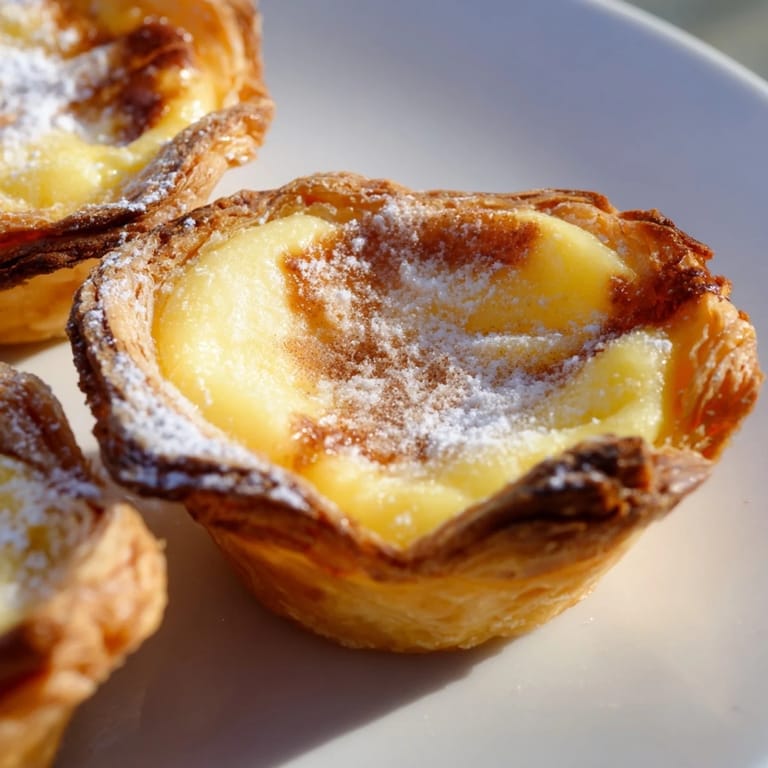
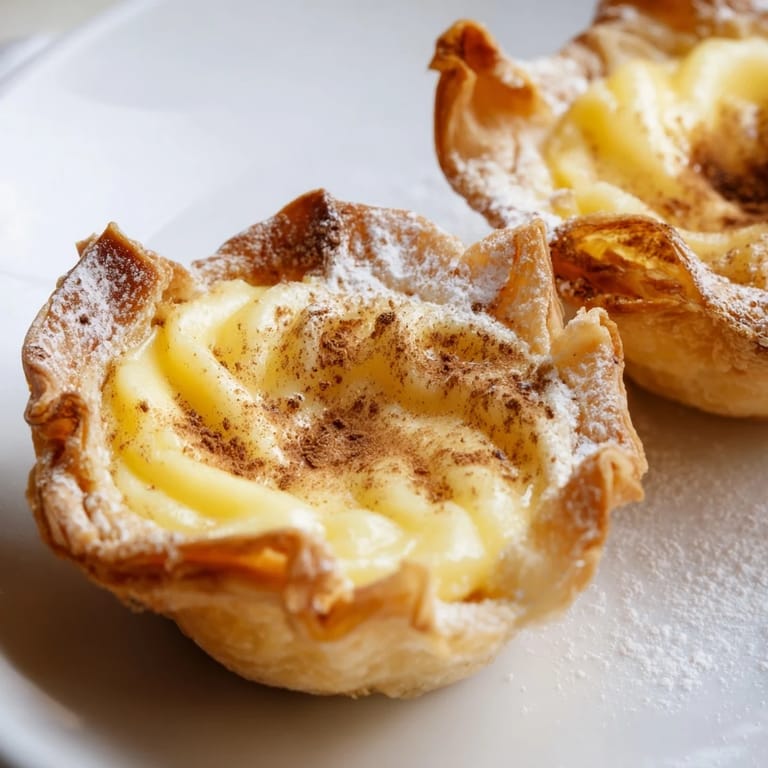
- Let the tarts cool for just a few minutes, then dust each one with a pinch of cinnamon and a light shower of powdered sugar. Serve them warm, when the custard is still silky and the phyllo still has its snap.
 Save to Pinterest
 The first time these tarts sat on my kitchen counter cooling, I caught myself just staring at them for a moment—the way the golden phyllo edges curved imperfectly, the cinnamon dust catching the light. It hit me that this is what cooking is really about, not the precision or the technique, but that small thrill of creating something beautiful and delicious from humble ingredients.
Why These Tarts Feel Special
Portuguese egg tarts have a quiet elegance about them that somehow feels more approachable than other fancy desserts. They're the kind of thing you'd grab at a café without thinking much about it, but once you realize you can make them at home, you start seeing them everywhere. There's something deeply satisfying about watching the phyllo puff and brown in the oven, knowing exactly what's waiting inside.
The Art of Phyllo
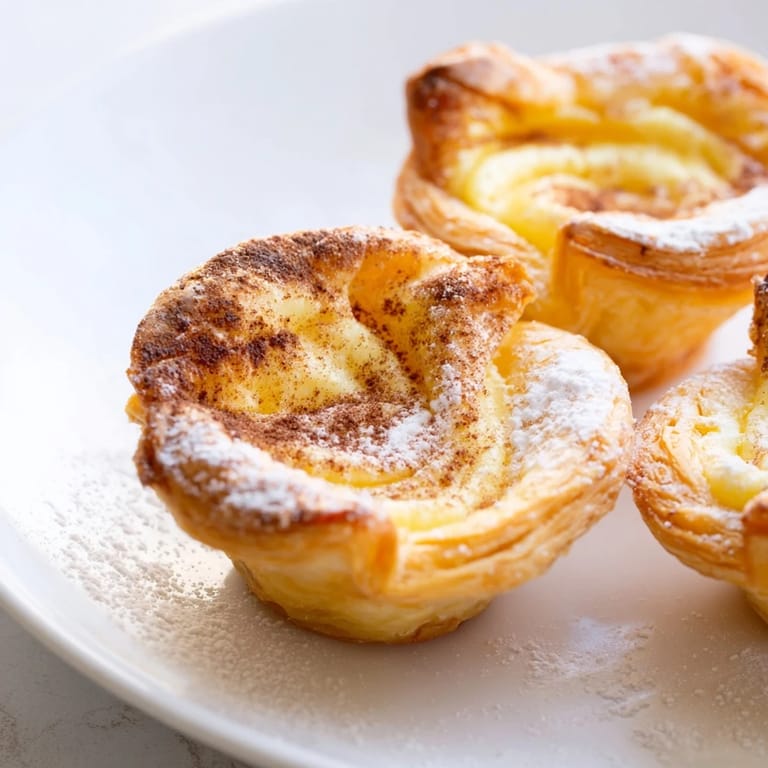
Working with phyllo taught me that delicate doesn't mean fragile if you respect what you're handling. I learned to keep my workspace clear, my hands confident, and my pace deliberate rather than frantic. The butter is your friend here—it forgives small tears and gives you that shattering texture that makes these tarts irresistible. The first time you pull a perfectly browned phyllo cup from the oven, you'll understand why this technique has survived for centuries.
Serving and Storage Secrets
These tarts are best eaten warm, when the contrast between crispy and creamy is at its peak, but they're still wonderful at room temperature or even chilled. If you find yourself with leftovers (which is rare), store them in an airtight container in the refrigerator and warm them in a 160°C oven for just five minutes to restore their crispness. Pair them with espresso in the morning or a glass of chilled white port in the afternoon for a moment of pure indulgence.
- Warm tarts hit different—the custard flows slightly and the phyllo snaps, creating the ideal texture combination.
- A squeeze of fresh lemon zest in the custard adds brightness and complexity without overpowering the cinnamon.
- Make a double batch because they disappear faster than you'd expect, and honestly, the effort-to-reward ratio makes it worth it.
 Save to Pinterest
 These Portuguese egg tarts have become my go-to when I want to impress without stress, and I hope they become yours too. Once you nail the technique, you'll find yourself making them for every occasion, because something this beautiful and delicious shouldn't be reserved for cafés in Lisbon.
Recipe FAQs
- → What type of pastry is used for the cups?
Flaky phyllo sheets brushed with butter are layered and shaped into cups, providing a crisp and delicate base.
- → How is the custard thickened?
Cornstarch is whisked into the milk before cooking with egg yolks and cream, creating a smooth, thick custard texture.
- → Can these tarts be reheated?
Yes, to retain crispness, gently reheat them in a preheated oven rather than a microwave.
- → What spices add flavor to the filling?
Ground cinnamon and vanilla extract are used to infuse the custard with warm aromatic notes.
- → How should leftovers be stored?
Store in the refrigerator and consume within a couple of days for best taste and texture.