 Save to Pinterest
 The first time I made poke bowls at home, I was trying to recreate that bright, punchy feeling I got sitting at a beachside counter in Honolulu, watching chefs move with such casual grace through their prep. It struck me that the magic wasn't in anything fancy—just pristine fish, a silky rice base, and the kind of heat that makes you pause mid-bite. That afternoon in my kitchen, surrounded by the smell of rice vinegar and sesame oil, I realized this was the kind of meal that could happen on a Tuesday night, without pretense, and still feel like a small escape.
I made this for a friend who showed up unexpectedly on a warm Saturday with wine and a restless mood. We built the bowls together at the counter, and somewhere between arranging avocado slices and debating whether furikake was essential, we stopped scrolling through our phones and just talked. There's something about hands-on food that invites real conversation—and by the time we finished eating, we'd made plans for the following month. That bowl became the reason we did.
Ingredients
- Sushi rice: Use sushi-grade rice if you can find it—the grains are stickier and hold together better once you've seasoned them with the vinegar mixture.
- Rice vinegar: This is what brings the whole rice to life; don't skip it or substitute with regular vinegar, which tastes harsh.
- Sushi-grade tuna: Source from a reputable fishmonger who explicitly sells sushi-grade; this isn't about being precious, it's about food safety and texture.
- Kewpie mayonnaise: If you find it, use it—the yolk-forward richness changes the entire marinade compared to standard mayo.
- Sriracha: Start with less than the recipe calls for if heat intimidates you; you can always add more to individual bowls.
- Sesame oil: A little goes a long way; toasted sesame oil has more personality than the neutral kind.
- Lime juice: Fresh lime, never bottled—the acidity brightens everything.
- Cucumber and avocado: Slice these moments before assembly so they don't oxidize or go soft.
Tired of Takeout? 🥡
Get 10 meals you can make faster than delivery arrives. Seriously.
One email. No spam. Unsubscribe anytime.
Instructions
- Rinse and cook the rice:
- Rinse under cold water in a fine mesh strainer, stirring gently with your fingers until the water runs nearly clear—this removes excess starch and prevents the rice from turning gummy. Combine with water in a saucepan, bring to a boil uncovered, then cover, reduce heat to the lowest setting, and cook for exactly 15 minutes; resist the urge to peek.
- Season while warm:
- Let the rice rest for 10 minutes off heat, then gently fold in the vinegar mixture with a rice paddle or fork, moving from the edges toward the center. The warmth helps the rice absorb the seasoning without becoming mushy; let it cool to room temperature before building your bowls.
- Make the spicy marinade:
- Whisk together mayo, Sriracha, soy sauce, sesame oil, and lime juice in a bowl—the mixture should smell alive and complex. Add your diced tuna and sliced green onion, then toss with a gentle hand; you want the fish coated but still in recognizable pieces.
- Prep all toppings:
- Slice cucumber paper-thin on a mandoline if you have one, cut your avocado just before serving, and gather everything else in small bowls or on your cutting board. This way, assembly becomes fast and you're not fumbling mid-build.
- Assemble with intention:
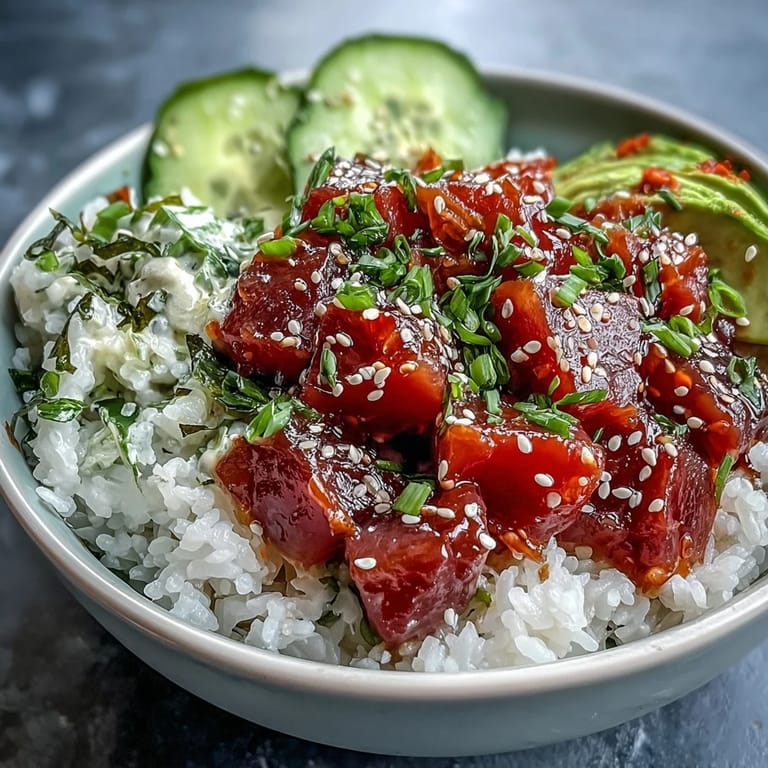
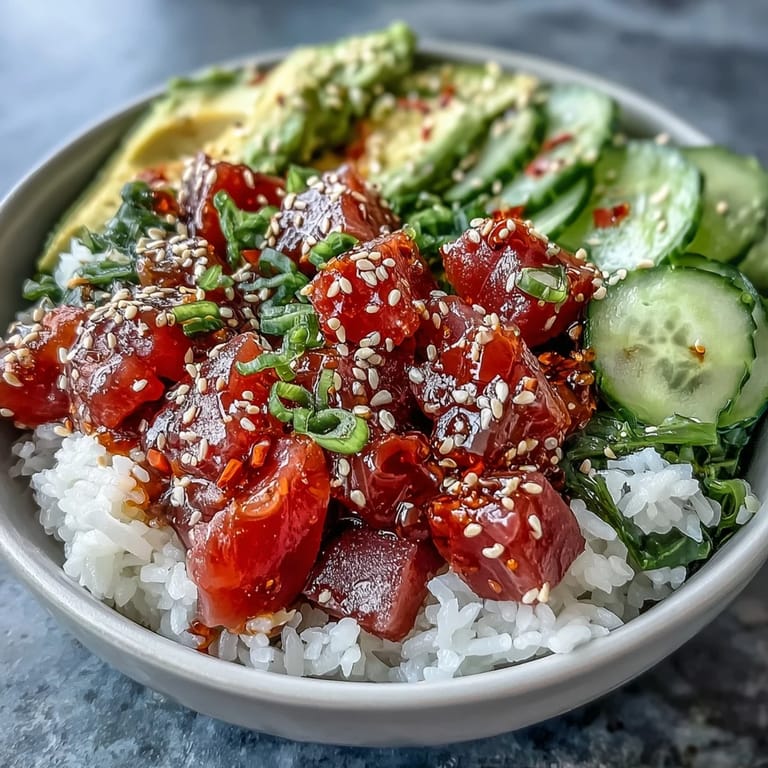
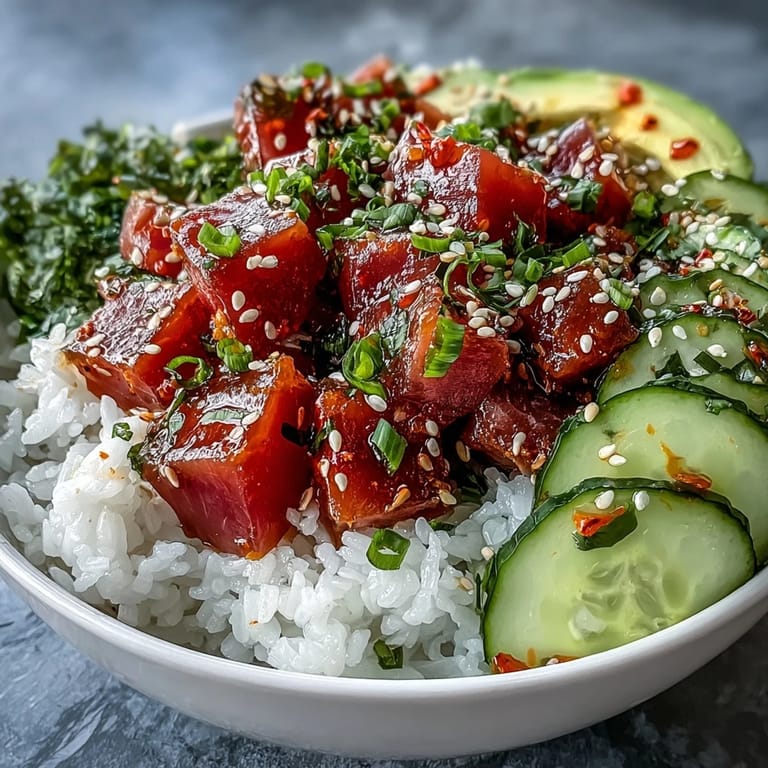
- Divide warm (or room-temperature) sushi rice into four bowls, creating a slight well in the center with the back of a spoon. Crown each with a generous scoop of spicy tuna, then arrange cucumber, avocado, edamame, and seaweed in sections around it like you're painting.
- Finish and serve:
- Scatter sesame seeds and furikake across the top, and serve immediately while the rice still has a whisper of warmth and the toppings are crisp.
 Save to Pinterest
 There's a moment when you first taste this—when the rice, still holding just a whisper of warmth, meets the cool spice of the tuna and the buttery give of avocado—that feels like breathing underwater. Suddenly you're not just eating lunch; you're somewhere else, and the simplicity of it all makes sense.
On Building Flavor Without Heaviness
What surprised me about poke is how much satisfaction it delivers without ever feeling like too much. The mayonnaise and sesame oil create richness, but the lime juice and vinegar keep cutting through, so you finish the bowl and want another one instead of feeling stuffed. This balance is why it works as a weeknight dinner rather than just a special occasion meal—it's nourishing without demanding anything from you afterward.
Temperature and Texture Matter More Than Perfection
I've learned not to obsess over making things look magazine-perfect because poke bowls have their own kind of beauty—messy, abundant, lived-in. What actually matters is the contrast between the warm rice underneath and the cool, crisp toppings on top, and the textural play between soft fish and crunchy sesame seeds. When you stop trying to make it look pristine and just focus on those sensory layers, something more interesting happens on the plate and in your mouth.
Customizing Without Losing the Spirit
Once you understand the skeleton of this bowl—seasoned rice, spiced protein, bright toppings, crunch—you can play with it endlessly based on what you have or what you're craving. Salmon works beautifully if that's what your fishmonger has; roasted chickpeas replace tuna if you're feeding vegetarians; even brown rice or cauliflower rice work if you want to shift the nutrition. The genius of poke is that it's forgiving enough to bend without breaking.
- Keep sesame seeds toasted and stored in an airtight container so they stay crunchy between meals.
- If you're meal prepping, keep everything in separate containers and assemble only what you're eating that day.
- A squeeze of lime juice at the very end brightens everything, even if you already used it in the marinade.
 Save to Pinterest
 This bowl is proof that good food doesn't need to be complicated—just honest, balanced, and made with attention. Serve it to someone you want to linger with.
Recipe FAQs
- → How do I prepare the sushi rice properly?
Rinse the sushi rice in cold water until clear, then cook with water on low heat for 15 minutes. After cooking, mix in rice vinegar, sugar, and salt, fluffing the rice for perfect texture.
- → What makes the tuna spicy?
The tuna is marinated in mayonnaise combined with Sriracha, soy sauce, sesame oil, and lime juice, creating a balanced spicy and savory profile.
- → Can I substitute any ingredients to adjust flavors?
Yes, salmon can replace tuna for a different taste, and brown rice or quinoa can be used instead of sushi rice for a healthier option.
- → What toppings complement the spicy tuna in this bowl?
Cucumber, avocado, edamame, pickled ginger, and seaweed or nori strips add freshness, creaminess, and umami to the dish.
- → How can I add extra heat if desired?
Simply increase the amount of Sriracha in the tuna marinade to boost the dish’s spiciness.