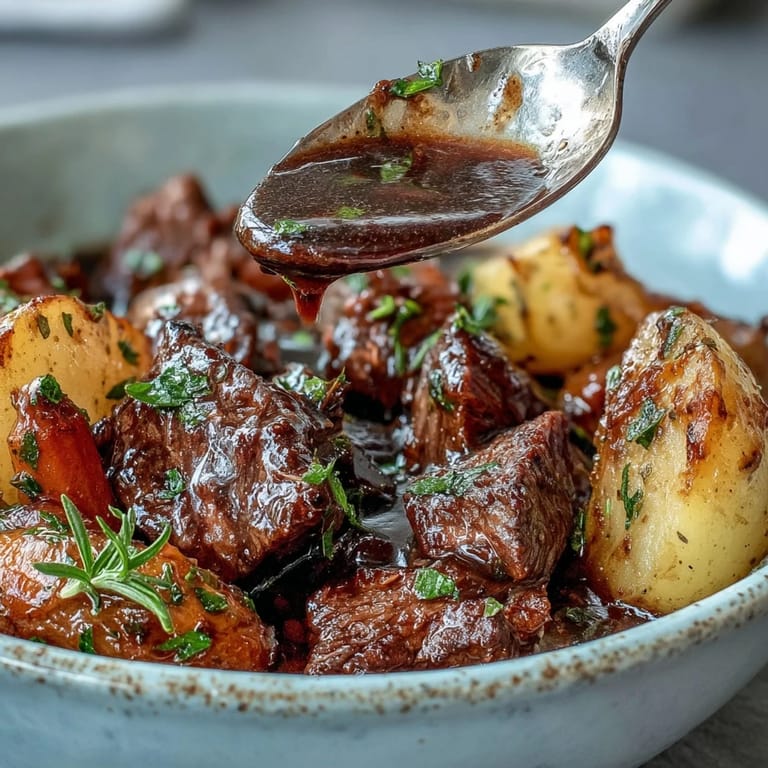
 Save to Pinterest
 There's something about the smell of beef browning in a hot skillet that signals comfort is coming. My neighbor stopped by on a gray October afternoon, and within minutes the aroma had drifted through both our kitchens—she ended up staying for dinner. That's when I realized this stew wasn't just food; it was an invitation. Now whenever the weather turns cold, I find myself reaching for chuck roast and root vegetables, knowing that patient hours in the slow cooker will transform simple ingredients into something that makes people linger at the table.
I made this for my sister's book club last winter, and she told me later that people kept coming back for thirds—which, honestly, doesn't happen with stew very often. One guest asked if I'd added chocolate or something mysterious, but it was just the tomato paste and a splash of red wine doing their quiet magic. That night taught me that the most satisfying meals are the ones that taste like someone actually cared enough to spend time.
Ingredients
- Beef chuck (2 lbs, cut into 1.5-inch cubes): This is the workhorse cut—it has just enough fat and connective tissue to break down into silky tenderness over hours, so don't even think about substituting it with lean beef.
- Carrots (3 large, cut into 1-inch pieces): They'll soften completely but hold their shape if you cut them generously, and their natural sweetness deepens as they cook.
- Parsnips (2, peeled and sliced): These add an earthy sweetness that regular potatoes don't quite manage; if you can't find them, use more carrots, but parsnips really earn their spot here.
- Yukon Gold potatoes (2 large, chopped into chunks): They stay creamy instead of falling apart, which keeps your stew looking intentional rather than mushy.
- Yellow onion (1 large, diced): Dice it fine so it completely melts into the broth and flavors every spoonful.
- Celery stalks (3, sliced): This is the backbone of savory cooking—don't skip it or use celery salt as a shortcut.
- Garlic (3 cloves, minced): Mince it fresh; jarred garlic just tastes tired by comparison.
- Tomato paste (2 tbsp): This concentrates flavor and adds subtle depth that's easy to miss but impossible to replicate with tomato sauce.
- Worcestershire sauce (1 tbsp): It's the secret ingredient people can never quite identify, but they know something is making this taste right.
- Bay leaf (1) and dried herbs (thyme and rosemary, 1 tsp each): Dried herbs hold up beautifully in slow cooking; fresh ones would fade to nothing.
- Beef broth (4 cups): Use good broth—this is where the foundation of your entire stew lives, so taste it before it goes in.
- Dry red wine (1 cup): The alcohol cooks off but leaves behind a subtle sophistication; if you're skipping it, use more broth instead.
- Cornstarch slurry (2 tbsp cornstarch mixed with 2 tbsp cold water): This is added at the very end to thicken the stew to spoon-coating consistency without making it gluey.
- Kosher salt and black pepper: Season the beef before it touches the pan—this develops flavor, not just adds it.
Tired of Takeout? 🥡
Get 10 meals you can make faster than delivery arrives. Seriously.
One email. No spam. Unsubscribe anytime.
Instructions
- Season and sear the beef:
- Pat your beef cubes dry with paper towels—this is the step people skip and then wonder why their meat doesn't brown. Sprinkle generously with salt and pepper, then lay the cubes in a smoking hot skillet in a single layer, letting each side sit undisturbed for about three minutes until it turns deep golden brown.
- Build your slow cooker base:
- Transfer all that browned beef to your slow cooker, then add every vegetable—the carrots, parsnips, potatoes, onion, and celery. They'll nestle around the beef and create little pockets where the broth will settle.
- Layer in the flavor:
- Stir in the minced garlic, tomato paste, Worcestershire sauce, bay leaf, thyme, and rosemary, making sure the tomato paste gets distributed throughout rather than clumping in one spot. This moment smells incredible and tastes like the promise of something wonderful.
- Add the liquid and wait:
- Pour in your beef broth and red wine, give everything a gentle stir so nothing sticks to the bottom, then cover and set to low for eight hours. The slow heat will coax the beef into surrender while the vegetables absorb every bit of flavor.
- Thicken and finish:
- When the time is up, whisk your cornstarch and cold water together in a small bowl until smooth, then stir it into the stew while the slow cooker is still on. Switch to high, leave it uncovered for fifteen minutes, and watch the liquid darken and thicken into something glossy and spoon-coating.
- Taste and serve:
- Fish out that bay leaf, take a spoonful, and season with a pinch more salt or pepper if needed—everyone's broth is different, so trust your palate. Ladle into deep bowls and serve with crusty bread or mashed potatoes.
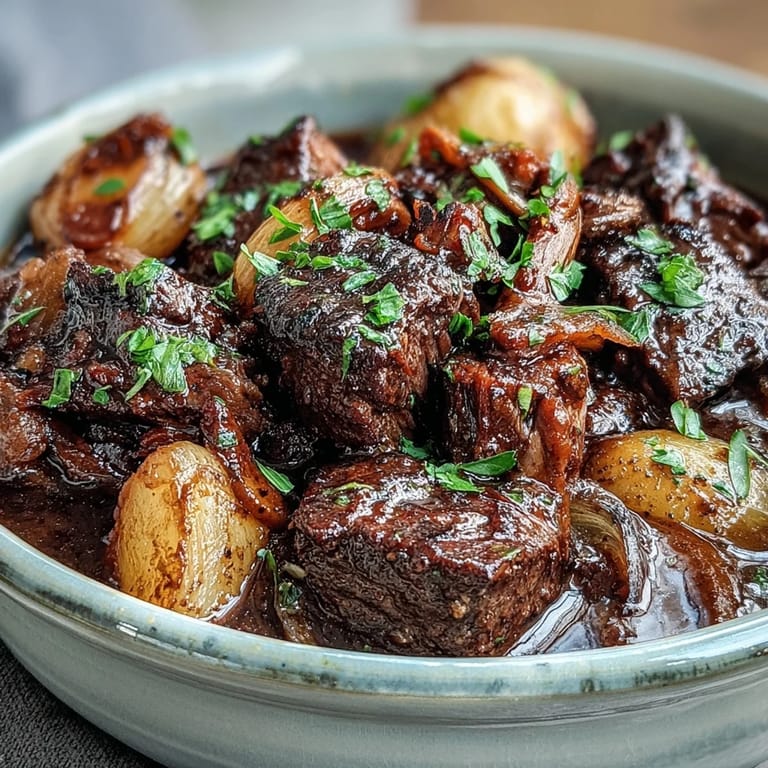 Save to Pinterest
 Years ago, I made this stew for a friend who was going through a rough patch, and she later told me it was the first meal that made her feel like someone was taking care of her. Food has a way of saying things we're too awkward to speak aloud, and this stew says it better than most.
The Science of Slow Cooking
What happens in your slow cooker over eight hours is actually a gentle chemical transformation. The low, steady heat breaks down the collagen in that tough chuck roast into gelatin, which is why the meat becomes silky instead of tough. The vegetables slowly soften and release their sugars into the broth, sweetening and deepening its character. This is why you can't rush it—high heat for two hours will give you hot, unpleasant beef and crunchy vegetables, but low heat for eight hours gives you magic.
Storage and Make-Ahead Magic
This stew actually improves after a day or two in the refrigerator, which makes it perfect for meal planning or unexpected guests. The flavors meld and mature like old friends, and reheating it gently on the stovetop brings everything back to life. You can also freeze it for up to three months—just thaw it overnight in the refrigerator and warm it slowly so the vegetables don't turn mushy.
Easy Variations to Keep It Fresh
Once you've mastered the basic version, you can play around without losing what makes it special. Try adding a cup of sliced mushrooms or a handful of frozen peas in the last hour of cooking for textural contrast, or swap the Yukon Golds for sweet potatoes to add a subtle sweetness. Some versions add a tablespoon of red wine vinegar at the very end to brighten everything up, and others throw in a splash of balsamic vinegar for earthiness.
- Mushrooms add umami depth and a meaty texture that stretches your beef further.
- Peas pop in at the end and stay bright, giving you flashes of sweetness in every bite.
- A squeeze of fresh lemon juice at the end cuts through the richness without making anything taste acidic.
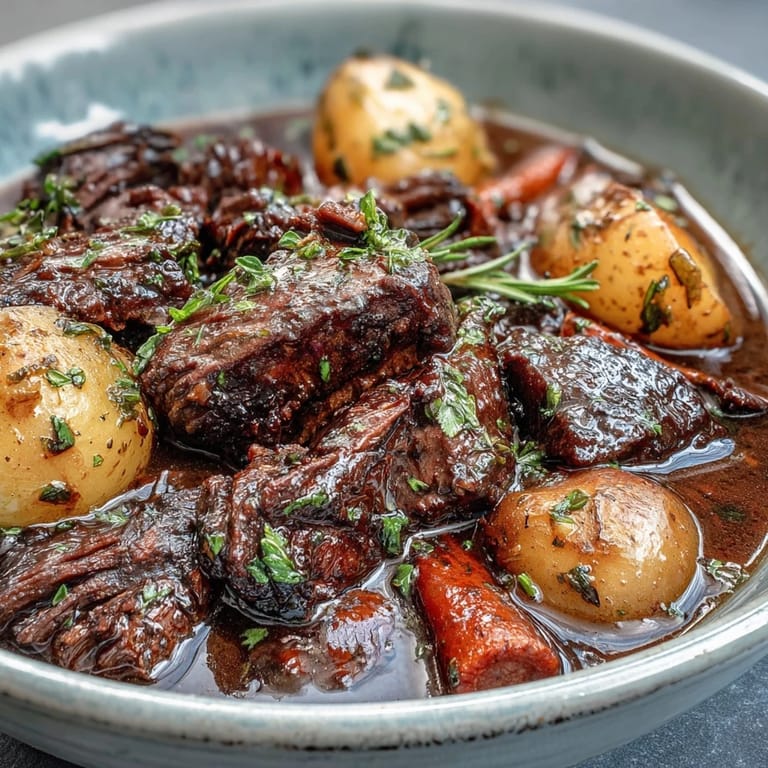 Save to Pinterest
 This stew has become my go-to proof that simple, honest cooking done with patience and care is worth so much more than anything complicated. Make it once and you'll find yourself making it again, each time finding new reasons to love it.
Recipe FAQs
- → What cut of beef works best?
Beef chuck cut into cubes is ideal as it becomes very tender after slow cooking and imparts rich flavor.
- → Can I substitute vegetables?
Yes, sweet potatoes can replace Yukon Gold potatoes for a sweeter taste, and mushrooms or peas add extra depth if added near the end.
- → How do I thicken the stew?
Mix cornstarch with cold water to create a slurry, then stir into the hot stew and cook uncovered until thickened.
- → Is slow cooking necessary?
Slow cooking is preferred to tenderize beef gently and develop deep flavors, but stovetop simmering for several hours can be an alternative.
- → Can I omit the wine?
Yes, replace the wine with additional beef broth for an alcohol-free version without compromising flavor.
- → How to adjust seasoning?
After cooking, taste and add salt or pepper as needed to enhance the flavors according to preference.