 Save to Pinterest
 My neighbor stopped by on a gray November afternoon with leftover ham from her dinner party, and instead of letting it languish in her fridge, she asked if I wanted to turn it into something special. That's when this slow cooker soup became my go-to—a dish that transforms simple ingredients into something warm enough to chase away any chill. What I love most is how it practically cooks itself while you're doing other things, filling your kitchen with this savory, comforting aroma that makes everyone ask what's for dinner.
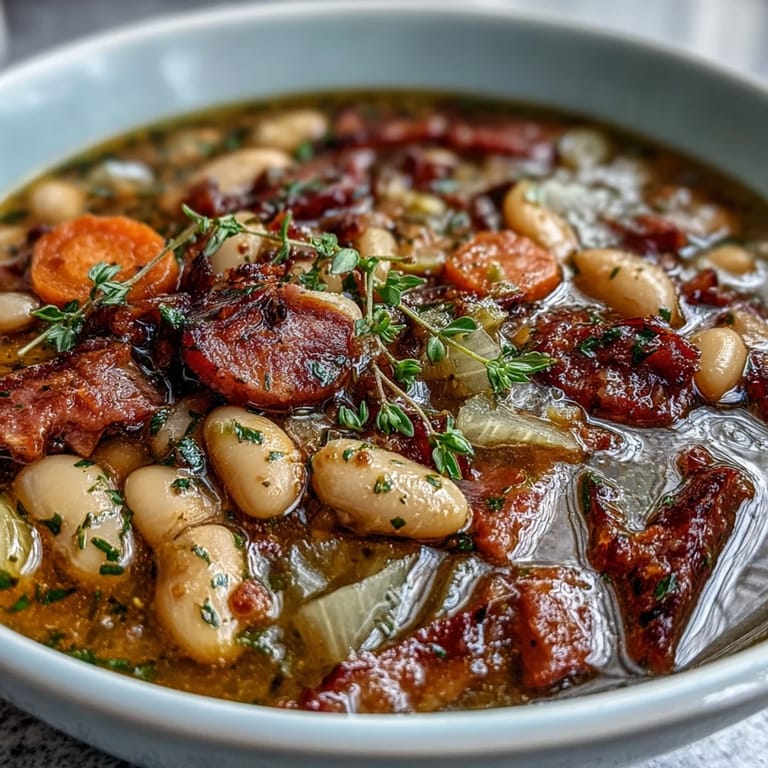
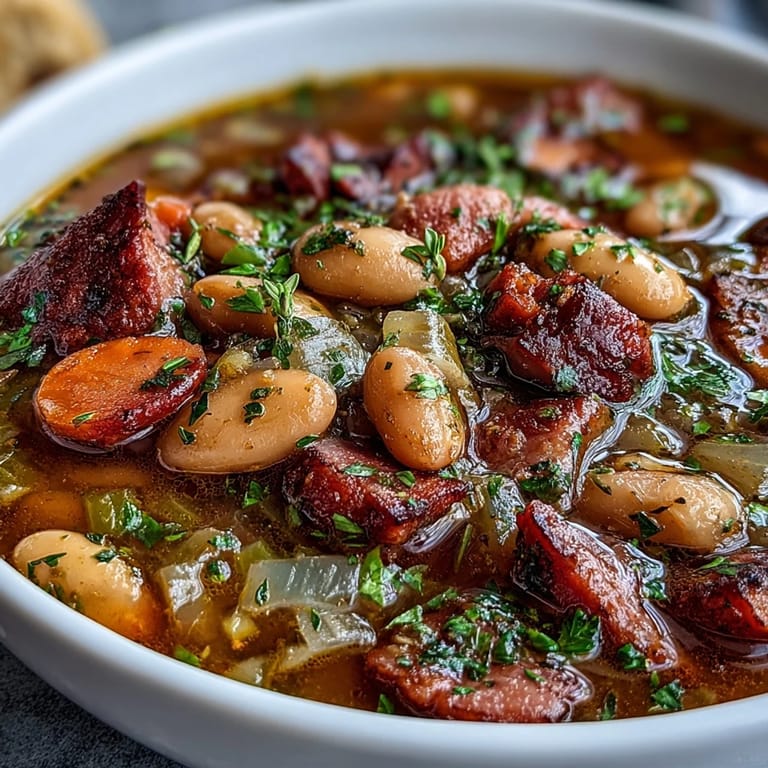
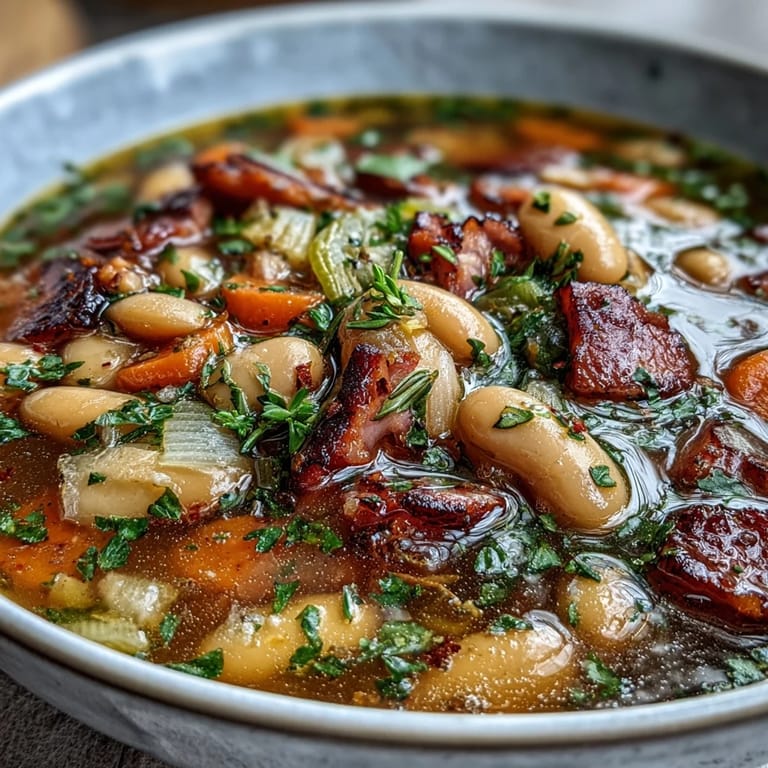
I made this for my book club on a night when I was running late, and everyone was so surprised by how restaurant-quality it tasted—silky beans, tender carrots, and that ham flavor woven through every spoonful. One friend asked for the recipe before she'd even finished her bowl, and now it's the soup she makes whenever her family needs comfort on a chilly evening.
Ingredients
- Cooked ham, diced (1 lb): This is your umami foundation—leftover ham from holidays or a fresh ham steak from the butcher both work beautifully, though smoked varieties add extra depth.
- Carrots, peeled and sliced (2 large): They soften into almost-silky ribbons during the long cook and add natural sweetness that balances the salty ham.
- Celery stalks, sliced (2): This is the quiet backbone that nobody mentions but everyone tastes; it creates that classic soup foundation flavor.
- Yellow onion, diced (1 medium): The aromatics matter here—dicing it fine helps it melt into the broth rather than staying as distinct pieces.
- Garlic, minced (3 cloves): Fresh garlic gets surprisingly gentle during seven hours of cooking, becoming almost sweet and pervasive throughout.
- Cannellini or great northern beans, canned (2 cans, 15 oz each): Draining and rinsing them removes excess sodium and prevents the soup from becoming murky or too thick.
- Low-sodium chicken broth (6 cups): This lets you control the saltiness since the ham contributes plenty; use good-quality broth if you can, as it's basically your soup's backbone.
- Bay leaf (1): Leave this whole so you can easily fish it out before serving—it's about flavor, not texture.
- Dried thyme (1 tsp): Dried herbs actually work better in slow cookers than fresh ones because they have time to unfold and distribute evenly.
- Dried parsley (1 tsp): A gentle herb that adds brightness without overpowering the ham and bean flavors.
- Black pepper (½ tsp): Start conservative; you can always adjust at the end after tasting.
- Salt, to taste: Add this at the very end, never at the beginning, because the ham and broth are already contributing salt that intensifies as the soup cooks down.
Tired of Takeout? 🥡
Get 10 meals you can make faster than delivery arrives. Seriously.
One email. No spam. Unsubscribe anytime.
Instructions
- Prep your vegetables with intention:
- Take a few minutes to dice everything into roughly the same size—carrots on the bias, celery into half-moons, onion into small cubes. This isn't about being fancy; it's about even cooking, so nothing gets mushy while other pieces stay crunchy.
- Build your slow cooker foundation:
- Start by layering the ham and vegetables directly into your slow cooker, then add the beans. This order helps the flavors mingle from the bottom up, though honestly, stirring at the end blends everything anyway.
- Pour and season:
- Add the broth, then scatter in the bay leaf, thyme, parsley, and black pepper before giving everything a gentle stir. The motion helps distribute the seasonings so no pocket ends up under- or over-seasoned.
- Let time do the work:
- Cover your slow cooker and set it to low for seven hours—this slower cook keeps the ham tender and lets the beans break down just enough to thicken the broth naturally. Resist the urge to lift the lid constantly; every peek lets heat escape and adds extra time.
- Taste and adjust at the finish line:
- After seven hours, remove that bay leaf with a slotted spoon. Give the soup a taste, and add salt gradually until it sings—you'll be surprised how much you might need, since the long cooking concentrates everything else.
- Serve with warmth:
- Ladle into bowls and serve with crusty bread for dunking, or crackers for crunch, depending on your mood.
 Save to Pinterest
 There's something about serving this soup to people on a day when the weather turns unpredictable—it becomes more than just dinner, it becomes this quiet gesture of care. My sister now requests it every January when she's trying to eat better, and somehow this humble slow cooker creation feels like the easiest promise I can keep.
The Beauty of the Slow Cooker Method
The slow cooker isn't just about convenience, though that's certainly part of the appeal. There's actual chemistry happening inside that pot over those seven hours—the ham releases its salt and smoke into the broth, the vegetables soften and surrender their natural sugars, and the beans gradually break down, which is what makes the soup feel creamy without any cream at all. The low, gentle heat means nothing gets harsh or overcooked; instead, flavors meld into something rounded and complete. I've tried making this on the stovetop at higher heat, and while you can finish it faster, something essential gets lost—the soup tastes hurried instead of thoughtful.
Customizing Based on What You Have
This recipe is forgiving in the best way possible, which is honestly why it became a staple in my kitchen. If you have smoked ham hocks instead of diced ham, they work beautifully—just give yourself time to remove the bones and shred the meat before serving. Swap great northern beans for cannellini if that's what your pantry holds, and they'll perform nearly identically. I've added chopped kale during the last thirty minutes of cooking, and it wilts right into the broth, adding nutrition without changing the soup's essential character. Some people add a splash of cider vinegar at the end for brightness, and I won't argue with that choice.
Storage, Reheating, and Make-Ahead Magic
This soup actually tastes better the next day, after the flavors have had time to settle and deepen. Let it cool completely before transferring to airtight containers, and it'll keep in the refrigerator for up to four days or in the freezer for two months. When you're ready to reheat, thaw it overnight in the fridge if it's frozen, then warm it gently on the stovetop or in a microwave, stirring occasionally so nothing sticks to the bottom. I sometimes make a double batch on a Sunday, knowing that Tuesday evening is already solved.
- Make it ahead: Prep all your vegetables the night before and store them separately, then everything comes together in five minutes on slow cooker morning.
- Freeze in portions: Pour cooled soup into individual containers or ice cube trays for easy weeknight reheating when time is tight.
- Don't skip the taste adjustment: Salt and pepper preferences vary widely, so always taste a spoonful before serving to someone else.
 Save to Pinterest
 This soup has become my answer to almost every question—what to make when you're tired, how to stretch leftover ham, what to bring to someone who needs comfort. It's honest food that doesn't ask for anything fancy, just time and a slow cooker.