 Save to Pinterest
 The first time I made shakshuka, I was standing in a cramped kitchen in Istanbul with my friend Deniz, who kept insisting I was overcomplicating something that should be simple and honest. She was right. What started as me nervously following a scrawled recipe on the back of a napkin turned into one of those magical cooking moments where everything just works—the tomatoes breaking down into silk, the smell of cumin filling the whole apartment, and then those eggs sliding into the sauce like they belonged there all along.
I made this for my neighbor last winter when she was recovering from the flu, and watching her eat it slowly, methodically soaking up the sauce with pita, felt like witnessing actual healing happen. She came back three days later asking for the recipe, which meant everything to me because it wasn't about impressing anyone—it was just real food doing what it does best.
Ingredients
- Onion: Start with one large one chopped fine because it'll cook down to almost nothing but give you the foundation of everything else.
- Red and yellow bell peppers: The two together create this natural sweetness that balances the spice, so don't skip one for convenience.
- Garlic cloves: Three minced ones go in after the peppers soften, which prevents them from burning and turning bitter on you.
- Fresh spinach: Optional but it adds this earthy note and sneaks vegetables past anyone who's skeptical about greens.
- Jalapeño: Leave the seeds in if you're brave, remove them if you want the flavor without the serious heat.
- Olive oil: Two tablespoons is your cooking fat, so use something you'd actually eat by itself.
- Ground cumin: This is what makes it taste like itself, so one full teaspoon matters.
- Paprika: Another teaspoon that brings warmth and a subtle smokiness without overpowering.
- Ground coriander: Half a teaspoon adds complexity that most people can't quite name but definitely notice.
- Cayenne pepper: A quarter teaspoon optional, but this is where you customize the heat level to match your comfort zone.
- Crushed tomatoes: One 28-ounce can is your main event, so get the good stuff if your budget allows it.
- Sugar: One teaspoon cuts the acidity of the tomatoes just enough to let the other flavors breathe.
- Salt and black pepper: Taste as you go because these two are your insurance policy against a bland sauce.
- Eggs: Four to six large ones depending on how many people you're feeding and how egg-forward you want this to feel.
- Fresh cilantro or parsley: A quarter cup chopped just before serving keeps it bright and stops the dish from feeling heavy.
- Feta cheese: Half a cup crumbled is optional but adds this salty, tangy contrast that makes you want another bite.
- Pita bread: Four warmed ones for serving, which are honestly essential for the experience of eating this.
Tired of Takeout? 🥡
Get 10 meals you can make faster than delivery arrives. Seriously.
One email. No spam. Unsubscribe anytime.
Instructions
- Build Your Base:
- Heat two tablespoons of olive oil in a large skillet over medium heat and add your finely chopped onion. Let it cook for three minutes, stirring occasionally, until it turns translucent and starts to soften—you'll notice the kitchen suddenly smells like possibility.
- Introduce the Peppers:
- Add your diced red and yellow bell peppers along with the jalapeño if you're using it, then cook for five minutes until everything becomes tender and the peppers release their sweetness into the oil. The skillet will smell incredible at this point, and that's your sign you're doing it right.
- Wake Everything Up:
- Stir in your minced garlic, ground cumin, paprika, ground coriander, and cayenne pepper if you want the heat. Cook for exactly one minute—long enough to release all those warm spice aromas but not so long that the garlic burns and becomes bitter.
- Build the Sauce:
- Pour in your crushed tomatoes and add one teaspoon of sugar, salt, and black pepper to taste. Let this simmer uncovered for ten to twelve minutes, stirring occasionally as it thickens—the sauce should reduce slightly and concentrate all those flavors into something deeper.
- Add the Greens:
- If you're using spinach, add your two cups now and cook for about two minutes until it wilts completely and becomes part of the sauce rather than floating on top.
- Create the Egg Wells:
- Use the back of a spoon to make small wells in the sauce, spacing them so each egg has its own little nest and won't run into its neighbors as they cook.
- Cradle the Eggs:
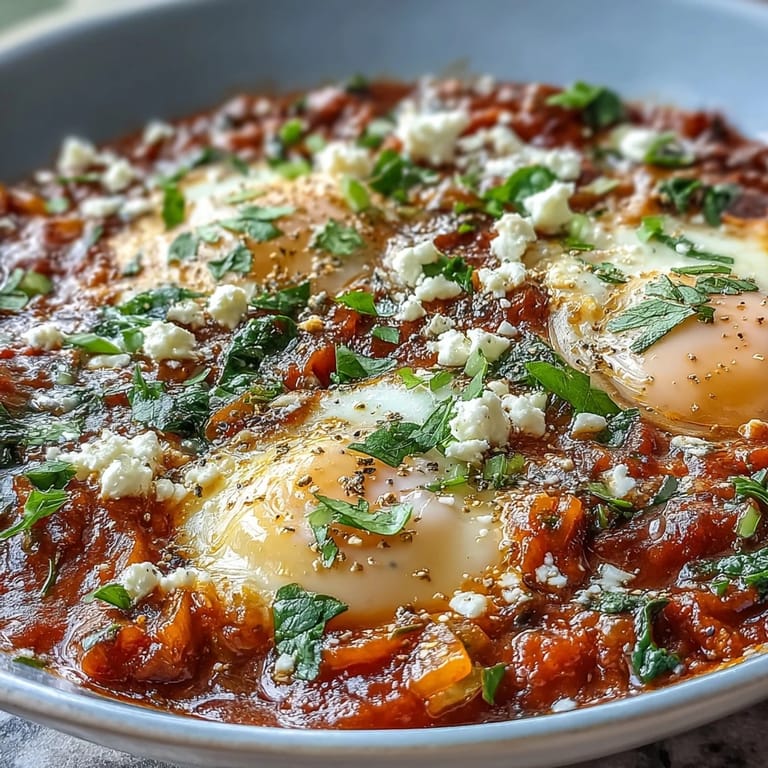
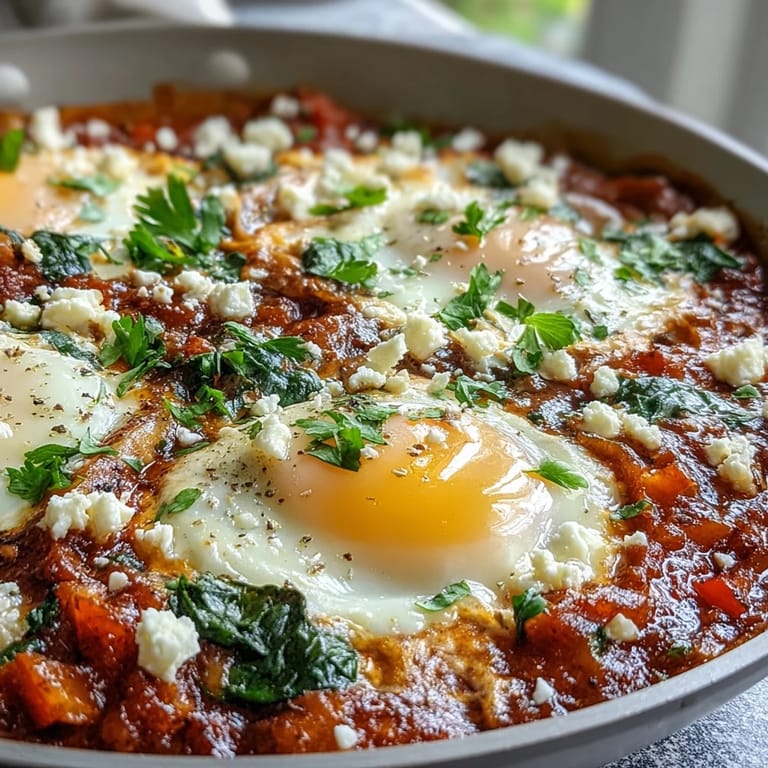
- Crack your eggs into each well carefully, cover the skillet with a lid, and let them cook for six to eight minutes until the whites set but the yolks stay runny and glossy in the center. You'll know it's done when the whites turn opaque but still jiggle slightly when you gently shake the pan.
- Finish and Serve:
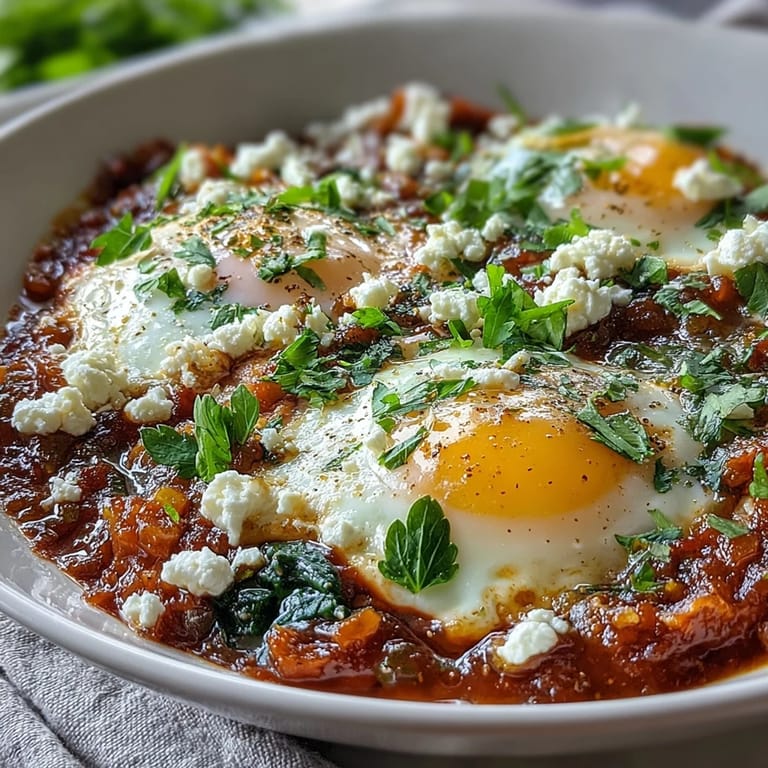
- Remove from heat and scatter your fresh cilantro or parsley over the top along with crumbled feta cheese if you're using it. Serve immediately with warm pita bread for dipping and breaking into the yolks.
 Save to Pinterest
 My partner and I have this unspoken rule now where shakshuka means Sunday morning, no phones at the table, and whatever was stressing us during the week gets left in another room. That's when I realized this isn't really a recipe—it's become our ritual.
The Spice Spectrum
When I first made this, I used both the jalapeño and full cayenne thinking I was being adventurous, and I basically cleared my sinuses for three hours. Now I understand that this dish has room for everyone at the table. Some people want it gentle and sweet-forward, others want their mouth to wake up completely, and everyone's right. The beauty is that you can dial the heat up or down based on what you're feeling that day, so taste as you build and don't feel locked into the original proportions.
Timing and Temperature Matter
Medium heat is your friend here because anything hotter will burn your tomato sauce before it has time to develop depth and complexity. I learned this by rushing and cranking the flame up, then ending up with something that tasted acrid and one-dimensional. Patience during the sauce phase—that ten to twelve minute simmer—is what separates a good shakshuka from one that tastes like you just dumped a can of tomatoes into a skillet. The slower thickening means the flavors meld instead of staying separate and fighting with each other.
Variations and Flexibility
This dish is genuinely forgiving if you work with what you have. Some nights I add chickpeas for extra protein, other times I've swapped the spinach for kale or even added roasted cauliflower pieces. The core—the spiced tomato sauce with eggs nestled in—stays constant, but everything else can shift based on your mood, the season, or what's already in your refrigerator. I once made it with soft tofu crumbled in instead of eggs because I was cooking for a vegan friend, and it turned out beautifully different but still unmistakably itself.
- Try stirring in some harissa paste if you want an extra layer of smoky, spicy depth.
- Labneh or thick Greek yogurt on the side is not optional once you've tried it—the cool tanginess against the warm eggs is magic.
- Leftover sauce keeps for days and reheats gently, which means you can make extra without guilt.
 Save to Pinterest
 Shakshuka has this quiet way of making you feel like you've traveled somewhere just by cooking dinner in your own kitchen. Every time I make it, it tastes like home and somewhere else at the same time.
Recipe FAQs
- → What is shakshuka?
Shakshuka is a Middle Eastern and North African dish of eggs poached in a sauce of tomatoes, olive oil, peppers, onion, and garlic. Common spices include cumin, paprika, and cayenne. It's typically served with bread for dipping.
- → How do I know when the eggs are done?
Cook covered for 6–8 minutes. The whites should be completely set and opaque, while the yolks remain slightly runny. You can gently shake the pan to check—the whites shouldn't jiggle but yolks should still move slightly.
- → Can I make shakshuka ahead of time?
The sauce base reheats beautifully and can be made up to 2 days ahead. However, eggs are best cooked fresh just before serving. If reheating the sauce, bring to a simmer then add eggs and finish cooking.
- → What can I serve with shakshuka?
Warm pita bread is traditional for scooping up the sauce and eggs. You can also serve with crusty bread, naan, or flatbread. A side of labneh, Greek yogurt, or fresh salad complements the rich flavors nicely.
- → How can I adjust the spice level?
Control heat by adjusting the jalapeño and cayenne. Omit both for a mild version, or increase cayenne to ½ teaspoon for more kick. Harissa paste makes an excellent spicy addition if you want extra depth and heat.
- → Is shakshuka suitable for meal prep?
The sauce component meal preps excellently. Store the cooked sauce in an airtight container for up to 4 days. When ready to eat, reheat the sauce until bubbling, create wells, and crack in fresh eggs to finish.