 Save to Pinterest
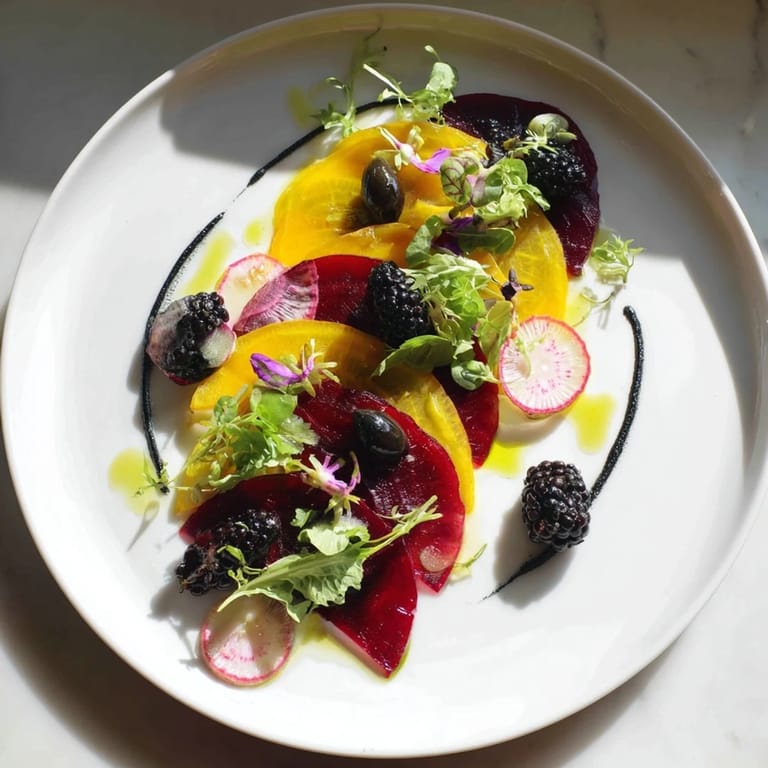
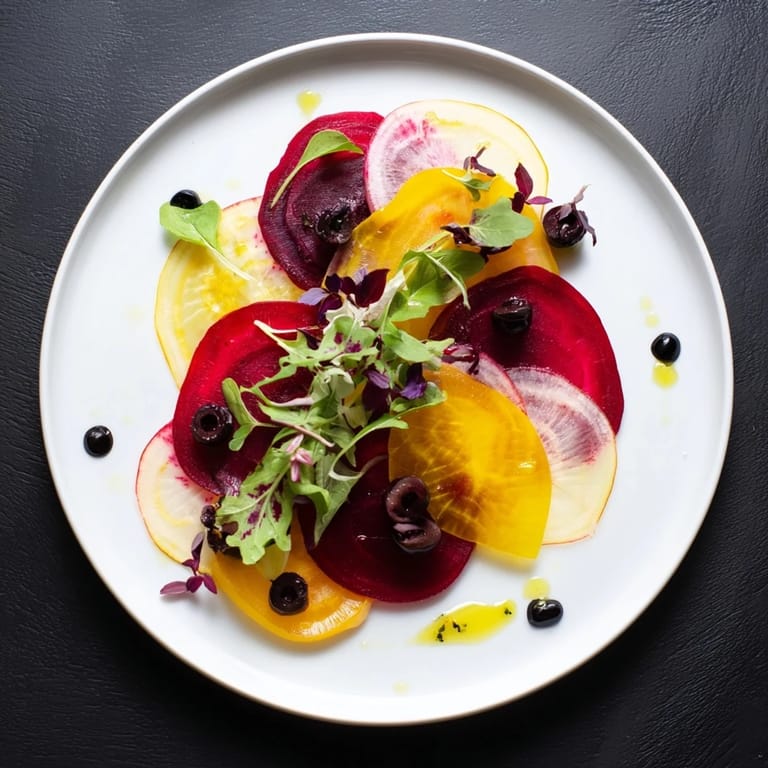
 I stumbled onto this dish while attempting to impress someone with my plating skills at a dinner party, armed mostly with confidence and a mandoline I'd just bought. Halfway through slicing beets, I realized the golden ones and red ones created this natural visual tension on the plate, and suddenly I wasn't just making a salad anymore—I was composing something. The blackberries caught the light differently than the olives, the arugula softened the edges, and the whole thing started to feel less like food and more like a conversation between colors.
My friend Marco took one look at this and asked if I'd become a food artist overnight, then he tasted it and stopped talking for a moment. That pause told me something had worked—the visual drama had set an expectation that the flavors actually delivered on, with the sweet earthiness of the beets playing against the sharpness of the arugula and the subtle nuttiness creeping in from the tahini.
Ingredients
- Golden beet: Its subtle sweetness becomes almost buttery when thin-sliced, creating brightness without sharpness that white plates could never achieve on their own.
- Red beet: The deeper color creates natural contrast, and when they're sliced paper-thin, they become almost translucent at the edges, which is where the magic happens visually.
- Baby arugula: Use it as a texture bridge between the cooked and raw elements, and don't dress it separately or it'll wilt before you plate.
- Watermelon radish: If you can find it, the pale exterior and shocking pink interior create the surprise factor that makes people lean in closer to look.
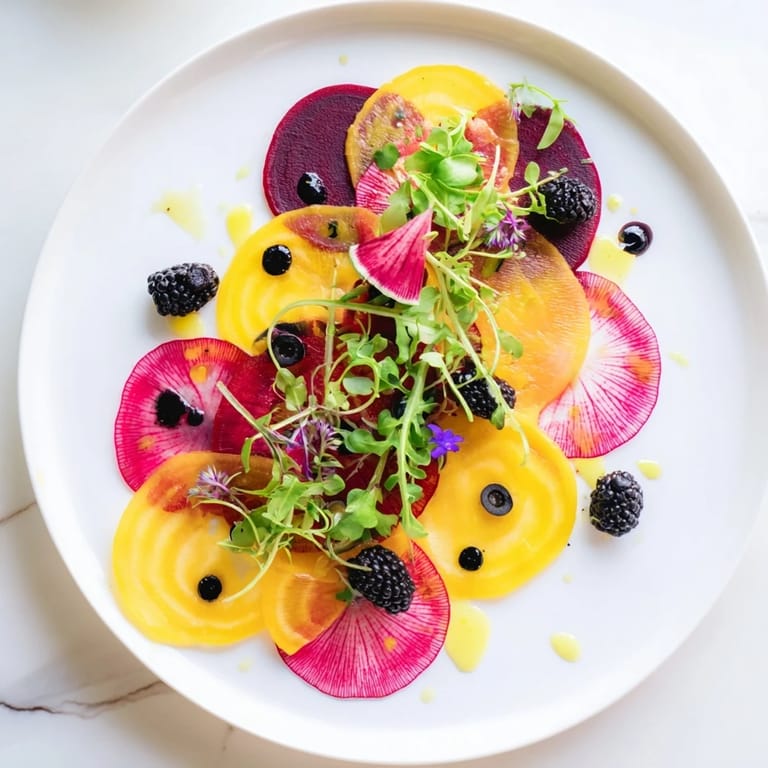
- Blackberries: They're not just garnish here—their dark color creates the shadow, but they also add tartness that cuts through the earthiness beautifully.
- Black olives: Pit them yourself if possible; the flavor is rounder and less briny than pre-pitted versions that sit in brine.
- Black tahini: If you can't find it, regular tahini mixed with a tiny bit of squid ink works, though the flavor stays pure tahini—earthy and grounding.
- Extra virgin olive oil: Don't cheap out here; the better the oil, the more it carries the dressing and becomes part of the story.
- Lemon juice: Fresh lemon only; bottled tastes tinny and will flatten everything you've built.
- Honey: It rounds out the acid and adds a whisper of sweetness that nobody can quite identify, which is exactly the point.
Tired of Takeout? 🥡
Get 10 meals you can make faster than delivery arrives. Seriously.
One email. No spam. Unsubscribe anytime.
Instructions
- Slice your beets paper-thin:
- Use a mandoline if you have one, holding your fingers high and letting the blade do the work. If you're using a knife, your slices don't need to be perfect, just thin enough that light passes through slightly at the edges.
- Build your base with intention:
- Overlap the golden and red beet slices in a semi-circle or scattered pattern, leaving some plate showing through—negative space is part of the composition.
- Layer with watermelon radish:
- Fan these slices over the beets like they're catching light; the pale rings and pink centers become part of the visual rhythm.
- Scatter the arugula casually:
- This is where you stop being precious; let the greens fall where they want to, just don't pile them in one spot.
- Place blackberries and olives as shadows:
- Think of them as creating depth rather than random garnish; put them where they make the brighter elements pop by contrast.
- Whisk your dressing:
- Combine oil, lemon, honey, salt, and pepper in a small bowl, tasting as you go because this thin layer of flavor carries everything.
- Drizzle thoughtfully:
- A light hand here; the vegetables should shine, not swim in dressing.
- Add tahini as shadow:
- Use the back of a spoon to smear small amounts around the plate like you're painting with it, which you kind of are.
- Finish with microgreens and flowers:
- If using edible flowers, pick ones that photograph well and taste like something—violas and nasturtiums both work.
 Save to Pinterest
 I served this to a group of people who didn't know each other, and watching them reach for their forks almost in unison, pausing just slightly to admire it first, reminded me that food isn't just about taste. The visual story you tell on the plate changes how people experience what they're eating, making even simple vegetables feel like an event.
The Art of Contrast
This dish works because it embraces the idea that opposites actually do belong together. The earthiness of the beets finds its counterpoint in the peppery arugula, and the sweet honey in the dressing gives just enough brightness to make you want another bite. When you're composing a plate like this, you're not just mixing ingredients; you're creating conversation between flavors, and the visual arrangement sets the tone for that dialogue before anyone even takes a bite.
Timing and Preparation
The beauty of this dish is that most of the work happens in your mind before you even touch a knife. If you plan your plating composition beforehand, slice your vegetables, make your dressing, and gather your garnishes, the actual assembly takes maybe three minutes. I like to prep everything while my guests settle in, then plate individually so each one gets the full experience of watching food become art right in front of them.
Variations and Pairings
The shadow play concept is flexible enough to adapt to whatever's in your garden or at the market. I've made winter versions with roasted purple carrots and pomegranate seeds, and spring versions with compressed beets and fresh peas. The core idea stays the same: use dark elements to make the bright ones brighter, and let the plate guide the palate as much as the flavors do.
- Try black garlic instead of tahini for a deeper, sweeter shadow that doesn't need to be drizzled.
- Substitute the watermelon radish with thinly shaved beets of a third variety if you can find them, keeping the color progression unexpected.
- If honey doesn't align with your diet, agave or maple syrup work just as well without changing the dressing's character.
 Save to Pinterest
 This recipe taught me that sometimes the simplest dishes require the most intention, and that slowing down to notice the difference between gold and red, between shadow and light, makes you a better cook. It's become my go-to when I want to say something without saying a word.
Recipe FAQs
- → What is the best way to slice the beets thinly?
Using a mandoline slicer ensures even, paper-thin slices that layer beautifully for contrast and texture.
- → Can the honey be substituted for a vegan option?
Yes, agave syrup works well as a vegan-friendly sweetener without altering the flavor profile much.
- → How do the dark ingredients enhance the dish?
Blackberries and olives provide rich color and bold flavor, creating striking silhouettes against the bright vegetables.
- → What's a good wine pairing for this dish?
A crisp Sauvignon Blanc or an earthy Pinot Noir complements the freshness and layered flavors nicely.
- → Are there any common allergens in this dish?
It contains sesame from the tahini and may have olive pits; always check packaged ingredients for gluten traces.