 Save to Pinterest
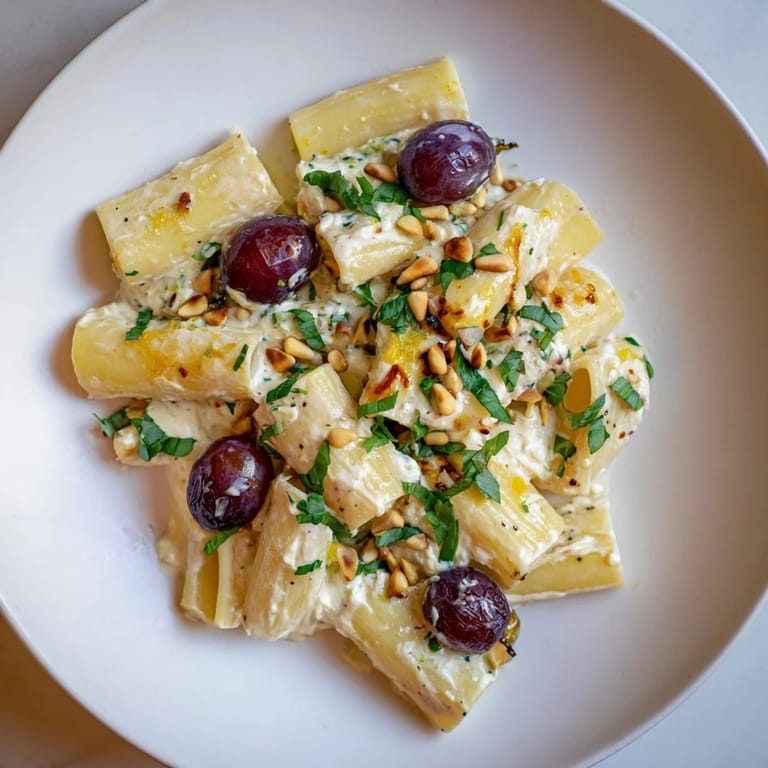
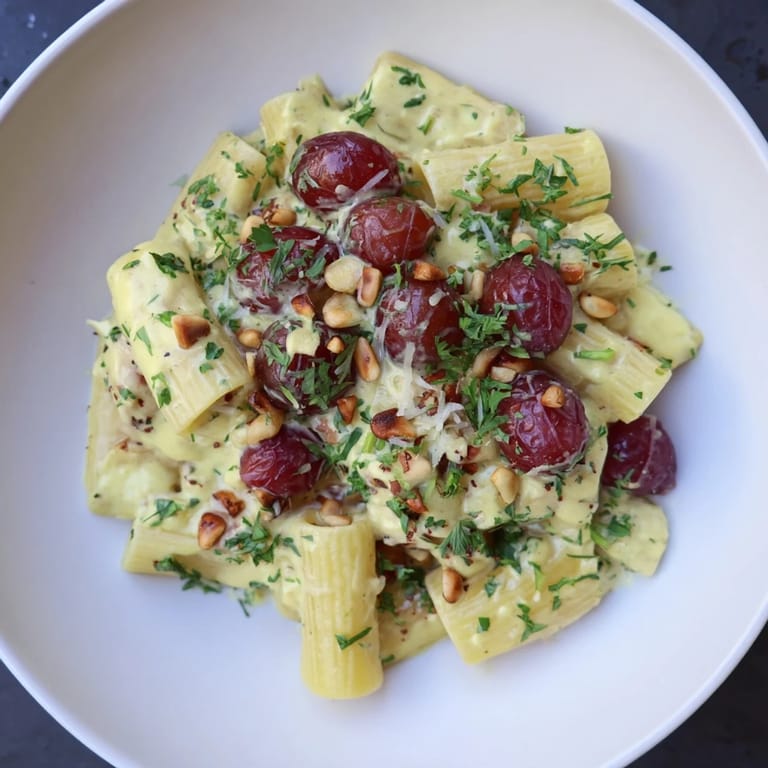
 I stumbled upon this dish by accident on a quiet Wednesday evening, staring at a bunch of grapes that had been languishing in my fruit bowl and a container of ricotta left over from Sunday's breakfast. The idea of roasting grapes felt almost too strange at first—wouldn't they just shrivel into raisins?—but something about their jammy sweetness against the cool creaminess of ricotta kept whispering in my ear. One lazy roast later, and those blistered, caramelized orbs had transformed into something almost decadent, like a secret that shouldn't work but absolutely does.
I made this for two friends who were skeptical about my "grape pasta" experiment until they took their first bites and went completely quiet—the kind of quiet where you know something just clicked. One of them actually set her fork down and asked if I'd somehow made roasted grapes taste like candy, and I realized right then that this wasn't just a way to use up leftover ingredients; it was something people would actually crave.
Ingredients
- Dried short pasta (penne, rigatoni, or fusilli): 350 g (12 oz) gives you enough structure to catch the ricotta and grapes without disappearing into them.
- Seedless red or black grapes: 300 g (2 cups) become the star here—their natural sugars concentrate when roasted, so pick grapes that taste sweet before they even hit the oven.
- Olive oil for roasting: 1 tbsp may seem minimal, but it's just enough to help the grapes blister without turning them into oil-logged pebbles.
- Fresh ricotta cheese: 250 g (1 cup) acts as your creamy anchor; make sure it's actually fresh and not the dense kind meant for baking.
- Lemon zest: 1/2 tsp cuts through the richness and keeps the dish from feeling too sweet or heavy.
- Lemon juice: 1 tbsp brightens everything, balancing the grapes' natural sugar with just enough acidity.
- Fresh basil and parsley: 2 tbsp basil and 1 tbsp parsley aren't just garnish here—they're woven into the ricotta mixture, adding freshness that makes you taste each herb.
- Extra-virgin olive oil: 2 tbsp for assembly is where you use something truly good, the kind that tastes like green and sun.
- Toasted pine nuts: 40 g (1/4 cup) optional but worth the small effort—they add a gentle crunch that makes people wonder what you did differently.
Tired of Takeout? 🥡
Get 10 meals you can make faster than delivery arrives. Seriously.
One email. No spam. Unsubscribe anytime.
Instructions
- Heat your oven and prep the grapes:
- Preheat to 220°C (425°F) and line a baking tray with parchment paper. This high heat is your secret weapon—it concentrates the grapes' natural sugars fast, turning them into little jewels instead of just dried-out balls. Spread your grapes out, drizzle with 1 tbsp olive oil, sprinkle with salt and pepper, and give everything a gentle toss.
- Roast until blistered:
- Roast for 20–25 minutes, shaking the tray about halfway through so they caramelize evenly. You'll know they're ready when their skins have split and darkened in places, and they smell like concentrated grape candy. Set them aside and let them cool slightly—they'll continue to soften.
- Cook the pasta:
- While the grapes work their magic, bring a large pot of salted water to a boil and cook your pasta until it's just barely al dente. Here's the crucial bit: reserve 120 ml (1/2 cup) of that starchy pasta water before draining—it's what transforms ricotta into a silky sauce.
- Build the ricotta base:
- In a bowl, combine ricotta, lemon zest, lemon juice, basil, parsley, and salt, stirring until smooth and completely incorporated. Taste it—it should taste bright and fresh enough to make you smile, not just creamy.
- Bring pasta and ricotta together:
- Return the drained pasta to the warm pot and add the ricotta mixture, tossing gently and slowly adding reserved pasta water until everything comes together into a creamy, glossy sauce. The warmth of the pasta will help the ricotta relax without breaking apart.
- Fold in the roasted grapes:
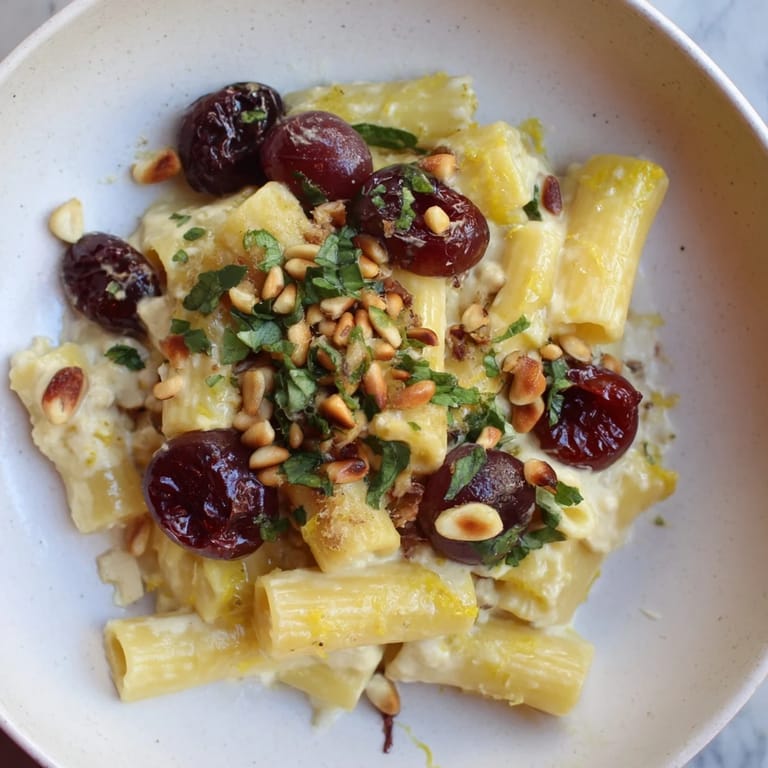
- Gently fold in the roasted grapes and all their juices—this is when the magic happens, when sweet and creamy and bright all collide on the spoon. Drizzle with extra-virgin olive oil and give everything one last gentle toss.
- Plate and finish:
- Divide among plates while everything's still warm, topping each portion with toasted pine nuts, fresh basil, a crack of black pepper, and Parmesan if you like. Serve immediately while the ricotta still feels luxurious and the grapes still taste slightly warm.
 Save to Pinterest
 There was this moment when everyone had finished eating and someone asked if the grapes were actually supposed to be in a pasta dish, and I realized that sometimes the best food happens when you stop second-guessing yourself and just trust that strange combinations can work. It felt like I'd cracked a code that evening.
The Sweet and Savory Balance
When roasted grapes first entered my kitchen, I kept waiting for them to taste weird or overly sweet, but they don't—instead, they taste like themselves, just amplified. The heat brings out their natural sugars while their skins split and char slightly, creating this complex sweetness that's almost savory in how it deepens. Paired with ricotta's mild creaminess and the sharp bright notes of lemon and herbs, they stop being a fruit and start being a building block for something completely unexpected. The key is not fighting their sweetness but embracing it as its own ingredient, the same way you would a caramelized onion or roasted carrot.
Why Fresh Herbs Make All the Difference
I learned this the hard way when I first made this dish in winter and grabbed the dried basil from my cabinet—it tasted like I was eating something pharmaceutical and dusty. Fresh herbs aren't just nicer; they're completely different plants in flavor, almost alive in a way that dried herbs can never quite capture. In this pasta, basil and parsley aren't background notes—they're woven directly into the ricotta, so their flavor is in every bite, cutting through the richness and keeping things feeling green and vibrant. If you can't find good fresh basil in winter, this is honestly a dish better saved for warmer months when your local market has the real thing.
Swaps and Substitutions That Actually Work
This dish is more forgiving than it might seem at first glance, which is probably why it came together by accident in the first place. You can absolutely swap out the pine nuts for toasted walnuts or almonds, or skip them entirely if you're cooking for someone with allergies—the texture isn't essential, though the nutty flavor adds a layer that makes people feel like you're showing off a little. Goat cheese will give you something tangier than ricotta if that's what your fridge holds, and it's genuinely delicious, just different. Whole-wheat or gluten-free pasta works just fine; the only thing that really matters is cooking it until it's properly al dente and remembering to save that pasta water.
- Swap ricotta for goat cheese if you want something with more tang and personality.
- Pine nuts can be replaced with walnuts, almonds, or omitted entirely depending on what you have or what allergies matter in your kitchen.
- This dish tastes best when you use whatever quality pasta and fresh herbs are actually available to you right now.
 Save to Pinterest
 This pasta reminds me that sometimes the best cooking happens when you stop following rules and just ask yourself what sounds good when you open the refrigerator. Everything else is just technique.