 Save to Pinterest
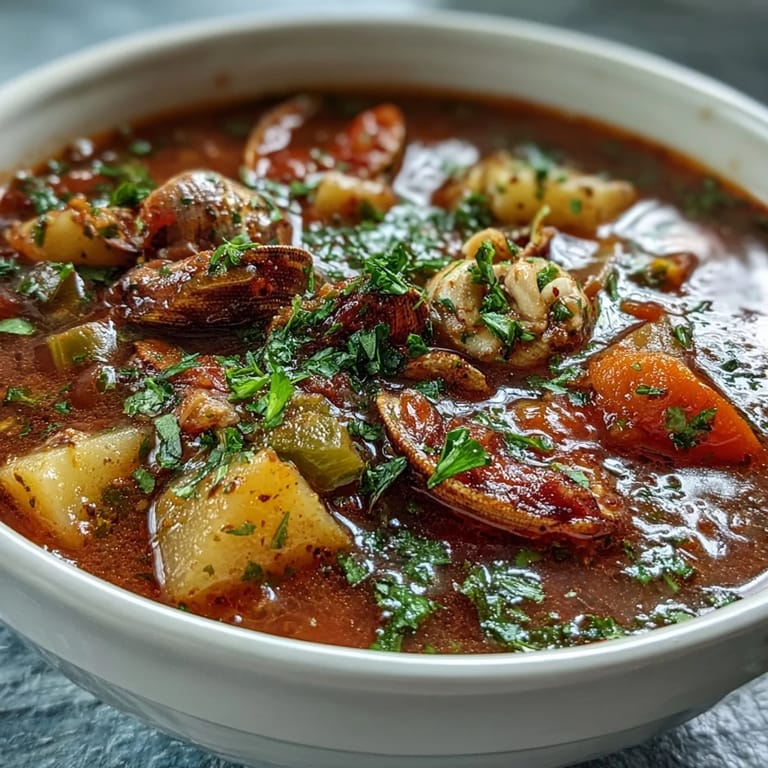
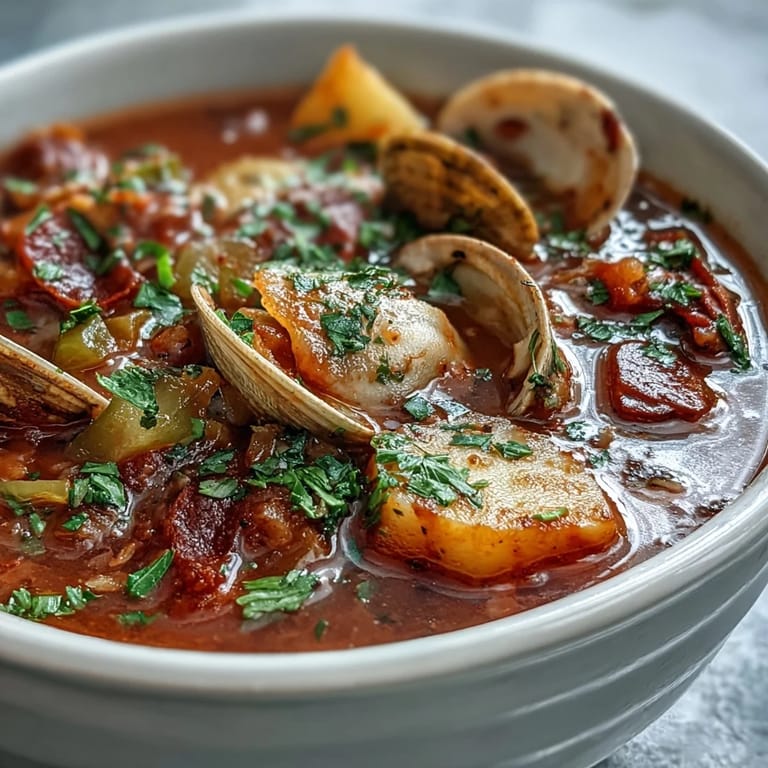
 My neighbor Mike showed up one October morning with a cooler full of littleneck clams he'd dug up himself, insisting I needed to make Manhattan clam chowder instead of the creamy New England version I'd always relied on. I was skeptical at first—tomato-based felt too bright, too acidic for clams—but that first spoonful changed everything. The briny sweetness of the clams cut through the acidity perfectly, and suddenly I understood why this vibrant red soup had its own devoted following all these years.
I made this for my book club on a rainy Tuesday, and three people asked for the recipe before they'd even finished their bowls. One of them mentioned she'd grown up eating Manhattan clam chowder at her grandmother's table in Rhode Island, and watching her eyes light up when she recognized the flavors felt like I'd unlocked something personal for her. That's when I realized this soup isn't just about technique—it's about connection to place and memory.
Ingredients
- Fresh clams (littlenecks or canned): Fresh clams give you that briny liquid gold—reserve every drop because it's the soul of this chowder, though canned clams work perfectly when fresh aren't available.
- Clam juice: The bottled stuff is your backup plan, but combining reserved clam liquid with bottled creates a more authentic, layered flavor than either alone.
- Diced tomatoes with juice: Don't drain them—that juice is crucial for building the broth, and canned tomatoes are actually more reliable than fresh for consistent results.
- Potatoes (Yukon gold): These waxy potatoes hold their shape instead of turning to mush, which keeps your chowder textured and elegant rather than mushy.
- Onion, celery, carrots, bell pepper: This aromatic base is where flavor starts, and dicing them consistently helps them cook at the same rate.
- Garlic: Three cloves minced fine, added after the softer vegetables so it doesn't burn and turn bitter on you.
- Thyme and oregano (dried): These herbs have an earthy quality that complements clams without overpowering them, and dried versions are more stable in long-cooking broths.
- Bay leaves: Two whole leaves add subtle depth, but remember to fish them out before serving—nothing ruins a spoonful like a surprise bay leaf.
- Red pepper flakes: Optional, but a light dusting gives a whisper of heat that brightens the whole pot without making it spicy.
- Olive oil: Your cooking fat for sautéing the vegetables and building that initial flavor foundation.
- Fresh parsley (for garnish): A sprinkle at the end adds color and a fresh herbal note that cuts through the richness.
Tired of Takeout? 🥡
Get 10 meals you can make faster than delivery arrives. Seriously.
One email. No spam. Unsubscribe anytime.
Instructions
- Steam your fresh clams (if using):
- Scrub them under cold running water, then place them in a pot with one cup of water and cover. Steam over medium-high heat for about five to seven minutes—you'll hear them click open, which is your signal they're ready. Remove the clams, let them cool enough to handle, pull them from their shells, chop them coarsely, and strain that cooking liquid through a fine sieve to catch any sand.
- Build your flavor base:
- Heat two tablespoons of olive oil in a large heavy-bottomed pot over medium heat, then add your chopped onion, celery, carrots, and bell pepper. Let them soften for six to eight minutes, stirring occasionally—you want them tender but not browned. The kitchen will smell incredible at this point, like the beginning of something good.
- Wake up the garlic:
- Stir in three minced cloves of garlic and cook for just one minute until fragrant. Don't skip this step or rush it—one minute is perfect, any longer and the garlic can turn harsh and bitter.
- Combine everything into the pot:
- Add your diced potatoes, the entire can of diced tomatoes with its juice, your clam juice, reserved clam liquid, and all your seasonings (thyme, oregano, bay leaves, red pepper flakes if using, salt, and black pepper). Stir everything together so nothing sticks to the bottom.
- Bring to a simmer and cook the potatoes:
- Raise the heat to bring the liquid to a boil, then immediately reduce it to a gentle simmer. Cook uncovered for twenty to twenty-five minutes until the potatoes are completely tender when pierced with a fork. This is the point where you can taste and adjust salt if needed—always better to undersalt now and adjust later.
- Add the clams and finish:
- Gently stir in your chopped clams and simmer for three to five minutes just to heat them through. Overcooking clams makes them tough and rubbery, so this final step is quick and gentle.
- Final check and serve:
- Remove and discard the bay leaves, taste one more time and adjust seasonings if needed, then ladle into bowls. Garnish each with a small handful of fresh chopped parsley and serve hot, ideally with crusty bread or oyster crackers on the side.
 Save to Pinterest
 Years later, I brought this chowder to a potluck where someone mentioned they'd lost their restaurant job during the pandemic, and watching them eat a quiet bowl with closed eyes reminded me why home cooking matters. A good soup does more than nourish—it holds space for people.
The Fresh Versus Canned Question
I spent months being a purist about fresh clams before realizing that good canned clams are honestly more convenient and produce consistent results. Fresh clams are lovely when you find them at a fishmonger or farmers market, but canned chopped clams work beautifully in chowder and save you the steaming step. The real secret is using both the clam juice and the reserved liquid together—that combination of briny depths is what makes your chowder taste like the actual ocean, not just like tomato soup with clams thrown in.
Potato Timing and Texture
Yukon gold potatoes are my pick for this soup because their buttery texture and natural sweetness complement clams in a way waxy or starchy potatoes can't quite match. The dice size matters too—if you cut them too small they dissolve into the broth, too large and they take forever to cook and throw off your timing. I aim for roughly half-inch cubes, which gives you that satisfying bite in each spoonful while still allowing them to absorb the tomato-clam flavors.
Customizing Without Losing the Soul
One night I added diced bacon to this chowder on a whim, and it transformed the whole character into something smokier and richer—which taught me that Manhattan clam chowder is flexible enough to adapt to your mood without losing its identity. You can add corn kernels for sweetness, increase the potato ratio for heartiness, or swap red bell pepper for green if you want extra sweetness. The foundation is strong enough that these additions enhance rather than overshadow the clam flavor.
- If you're adding bacon, cook it separately and stir it in at the end so it stays crispy instead of dissolving into mush.
- Red pepper flakes should be added sparingly unless you love heat—a half teaspoon is enough to add complexity without making it spicy.
- Fresh herbs like basil or cilantro can replace some of the parsley garnish if you want to experiment with flavor direction.
 Save to Pinterest
 This soup has become my default when I want to cook something that feels both special and honest. There's something about a good clam chowder that makes people gather a little closer around the table.
Recipe FAQs
- → What makes Manhattan clam chowder different from New England style?
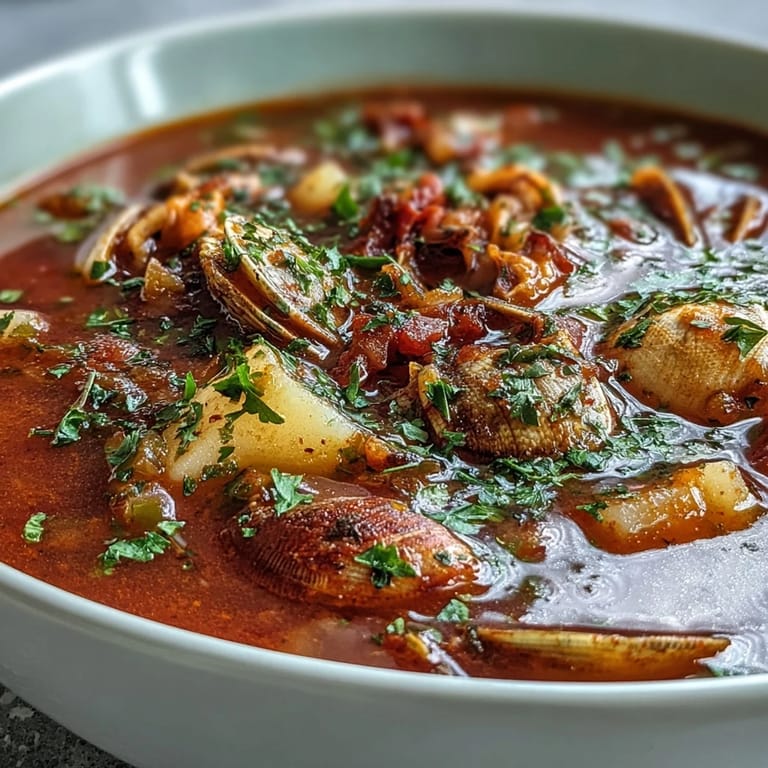
Manhattan clam chowder features a clear, tomato-based broth instead of the creamy milk or cream base found in New England versions. This gives it a lighter, more vibrant appearance and a slightly acidic brightness that balances the briny clams. The red broth comes from diced tomatoes with their juices, creating a zesty alternative to the rich, white chowder most people know.
- → Can I use canned clams instead of fresh?
Absolutely. Canned chopped clams work beautifully in this chowder and actually save significant prep time. Use about 3 cups of canned clams, drained, and reserve the liquid to supplement the clam juice. If using fresh clams, you'll need to steam them first, remove them from shells, and strain the cooking liquid to remove any grit or sand.
- → How do I store and reheat leftover chowder?
Store cooled chowder in an airtight container in the refrigerator for up to 3 days. The flavors often develop and improve overnight. Reheat gently over medium-low heat, stirring occasionally to prevent sticking. Avoid boiling, as this can make the clams tough. If the chowder seems too thick after refrigeration, add a splash of water or additional clam juice when reheating.
- → What vegetables can I add or substitute?
The classic vegetable trio includes onions, celery, and carrots for aromatic depth, plus green bell pepper and potatoes. You can substitute red bell pepper for green to add sweetness, or add corn kernels for extra texture and heartiness. Some cooks add a bit of diced fennel for an anise-like flavor that complements the seafood beautifully.
- → Can I make this chowder ahead of time?
Yes, this chowder actually benefits from being made a day ahead. The flavors meld and develop during refrigeration, resulting in a more cohesive and deeply flavorful dish. Prepare the chowder completely, cool it quickly, and refrigerate. When ready to serve, reheat gently and taste again before adding final seasoning. You may need to adjust the salt since flavors concentrate overnight.
- → What should I serve with Manhattan clam chowder?
Oyster crackers or crusty sourdough bread are classic accompaniments for soaking up the flavorful tomato broth. A simple green salad with vinaigrette provides a fresh contrast to the hearty chowder. For a complete meal, consider serving with a light white wine like Sauvignon Blanc or Pinot Grigio, which complements the briny clams and bright tomato base.