 Save to Pinterest
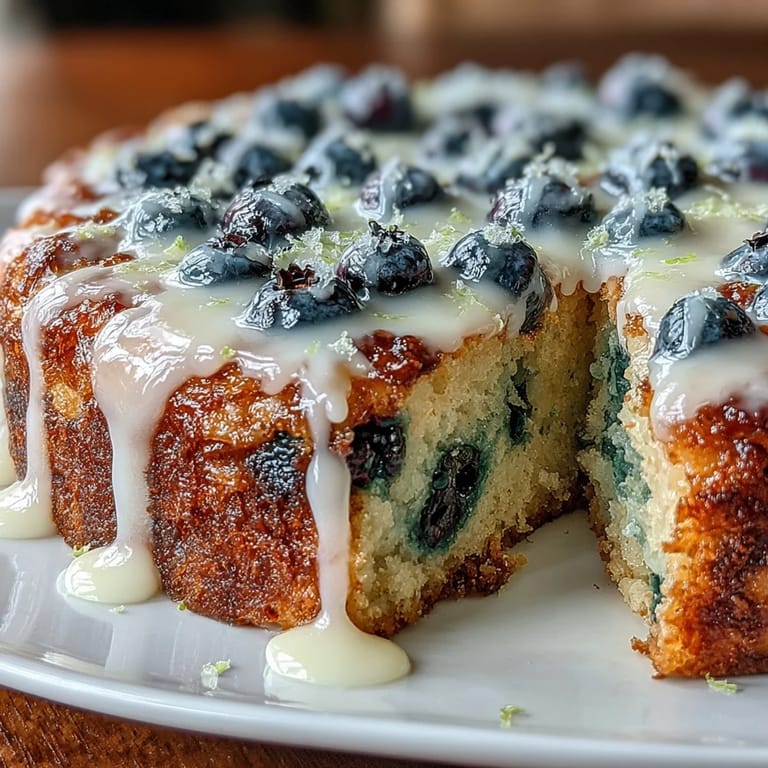
 There's something magical about pulling a skillet cake from the oven when the kitchen smells like burnt sugar and bright lemon—it happened by accident one Sunday morning when I had leftover sourdough starter staring at me from the fridge. That tangy starter seemed like it belonged in something sweet, so I started folding blueberries into a basic cake batter and letting the oven do its thing. The result was so unexpectedly good that I've been making it ever since, each time discovering something new about how the sourdough deepens the flavor in a way that plain cakes never could.
I'll never forget bringing this to a neighbor's impromptu afternoon gathering last summer, still warm from the oven and drizzled with icing that had barely set. She took one bite and closed her eyes like she was solving a puzzle, then asked if I'd used buttermilk—the sourdough had done exactly what I'd hoped, creating this almost-there tang that felt familiar but couldn't quite be named. That cake disappeared in twenty minutes, and I've made it at least once a month since then.
Ingredients
- All-purpose flour (1 cup): Keep it measured by weight if you can; scooping straight from the bag tends to pack it down and throw off your ratios.
- Unsalted butter (1/2 cup), softened: Leave it on the counter for about an hour before you start—cold butter won't cream properly and you'll end up with dense spots in the cake.
- Granulated sugar (3/4 cup): This is your structure and moisture; don't skip it or reduce it trying to be healthy.
- Large eggs (2): Room temperature eggs incorporate more smoothly into the butter mixture, which traps air and keeps the cake tender.
- Active sourdough starter (1/2 cup): Use the discard from your feedings—there's no point wasting good starter, and the discard works beautifully here.
- Whole milk (1/4 cup): This balances the acidity from the sourdough and keeps the crumb moist without making it gummy.
- Vanilla extract (1 tsp): Real vanilla matters here because the sourdough's complexity deserves it.
- Lemon zest (from 1 lemon): Zest before you juice; use a microplane and go just to the yellow, not into the bitter white pith.
- Fresh lemon juice (2 tbsp): Bottle juice is fine, but fresh tastes brighter and less metallic.
- Baking powder (1 tsp) and baking soda (1/4 tsp): Together they lift the cake; the baking soda also neutralizes some of the sourdough's acidity.
- Salt (1/4 tsp): This tiny amount amplifies everything else and prevents the cake from tasting flat.
- Fresh blueberries (1 1/4 cups): Toss them in a spoonful of flour before folding them in so they don't sink to the bottom as the batter rises.
Tired of Takeout? 🥡
Get 10 meals you can make faster than delivery arrives. Seriously.
One email. No spam. Unsubscribe anytime.
Instructions
- Heat your oven and prepare your skillet:
- Preheat to 350°F and grease a 10-inch oven-safe skillet—cast iron is ideal because it distributes heat evenly and creates a beautiful golden edge. If you don't have cast iron, any oven-safe skillet works fine, though the results might look slightly different.
- Mix your dry ingredients:
- Whisk together flour, baking powder, baking soda, and salt in a medium bowl and set it aside. This prevents lumps from forming and ensures the leavening agents are evenly distributed throughout the cake.
- Cream butter and sugar:
- In a large bowl, beat softened butter and sugar together for about 2 minutes until it's pale and fluffy—this is where you're incorporating air that will make the cake tender. You should be able to drag your finger through it and see the trail hold its shape.
- Add eggs one at a time:
- Drop each egg in and mix well before adding the next; rushing this step means you'll have streaks of unincorporated egg white in your batter. This matters more than you'd think because it affects how evenly the cake rises.
- Add vanilla, lemon zest, and lemon juice:
- Mix these in until they're evenly distributed, and take a moment to smell what you've created—it's bright and a little bit sour in the best way. The zest and juice are doing different jobs: the zest adds flavor oils, while the juice adds moisture and tang.
- Stir in the sourdough starter:
- Fold it in gently so you don't deflate the butter mixture; it'll look a bit streaky at first, but that's okay. This is where the magic ingredient enters, bringing its funky depth.
- Alternate adding flour and milk:
- Add half the flour mixture and stir just until you don't see dry flour anymore, then pour in the milk, then add the remaining flour and mix gently until everything is combined. Overmixing develops gluten and makes the cake tough, so stop as soon as everything looks incorporated.
- Fold in the blueberries:
- Use a spatula and a gentle hand; crush them and they'll bleed color through the batter. If you're worried about them sinking, toss them in a little bit of flour first.
- Transfer to the skillet:
- Pour the batter in and smooth the top with a spatula, then sprinkle extra blueberries across the surface if you want them to be visible. They'll sink a bit as the cake rises, which is fine and actually looks nice.
- Bake until golden:
- Set a timer for 30 minutes and then check—you're looking for a golden top and a toothpick that comes out clean or with just a crumb or two clinging to it. If the top is browning too fast, tent it loosely with foil.
- Cool in the skillet:
- Let it rest for at least 15 minutes before you touch it; this lets the crumb set so it doesn't fall apart when you slice it. The skillet will still be warm, which is perfect for the next step.
- Make the icing drizzle:
- Whisk powdered sugar with lemon juice until you have something slightly thicker than heavy cream—it should drizzle but not run off immediately. Taste it and adjust the lemon juice if it needs more brightness.
- Drizzle and serve:
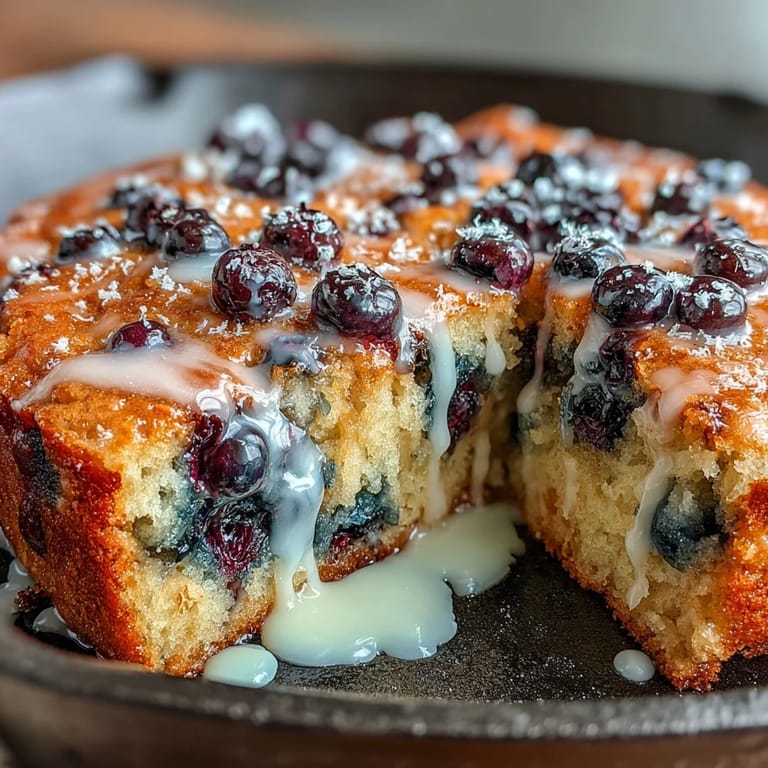
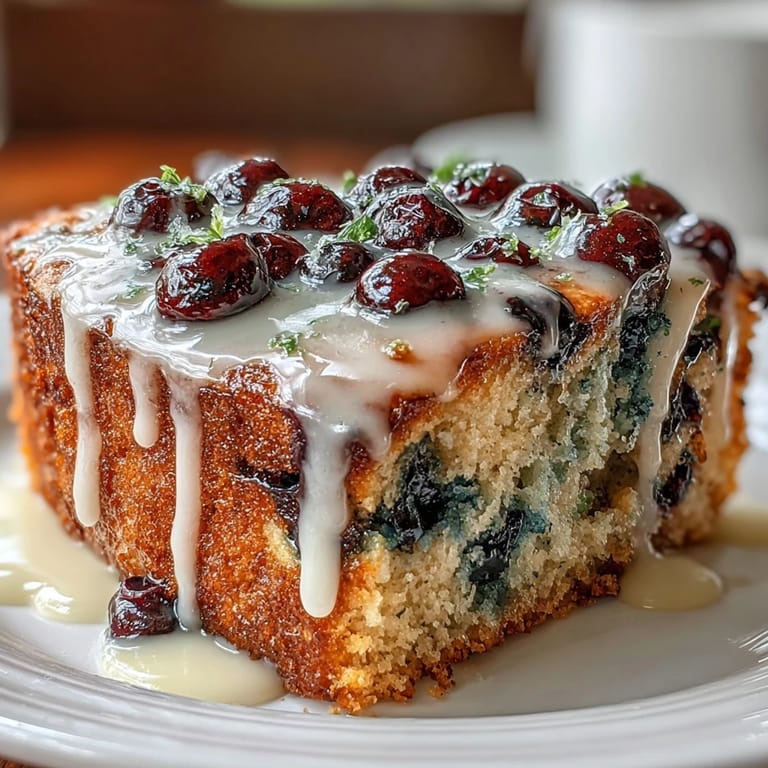
- Pour the icing over the cooled cake in a loose, artistic pattern, or be neat about it if that's more your style. Slice while it's still slightly warm and serve with whipped cream if you're feeling indulgent.
 Save to Pinterest
 There was a moment during a rainy afternoon when my partner walked into the kitchen, saw this cake cooling on the counter, and without saying anything, just started setting out plates and making coffee. That's when I knew it had become something more than a recipe—it was the kind of cake that makes people want to sit down and stay awhile.
Why Sourdough Starter Belongs in Cake
Most people think of sourdough starter as a bread thing, but its tangy complexity actually transforms cakes into something more interesting and less one-dimensional than recipes using buttermilk or yogurt. The fermented flavor adds depth that lingers on your palate, and because the starter contains some acid, it reacts with the baking soda to create a lighter, more delicate crumb. I've started adding it to all kinds of baked goods now—cookies, muffins, even brownies—because once you taste what it does, plain recipes feel a little bit flat.
The Cast Iron Advantage
Using a cast iron skillet isn't just for show, though it does look beautiful on the table. The iron conducts heat more evenly than regular baking pans, which means the edges don't overbake while the center is still soft, and you get this gorgeous caramelized bottom edge that regular pans can't quite achieve. If you don't have cast iron, a 9 or 10-inch round cake pan works fine, but you'll need to add a few minutes to the baking time because the sides won't brown as aggressively.
Variations Worth Trying
The first time I made this, I used what I had in the fruit bowl, and lately I've been experimenting with swapping out the citrus to see what other flavors play well with sourdough. Blackberries are darker and more subtle, while fresh raspberries add a delicate floral note that's completely different. I tried orange zest once and the cake had this warm, almost candied flavor that reminded me of marmalade, and it was so good I've done it twice since.
- Substitute fresh raspberries or blackberries for a different berry flavor and slightly less sweetness.
- Swap lemon for orange zest and juice for a warm, citrus-forward variation that feels almost dessert-wine adjacent.
- Add a handful of sliced almonds or coarse sugar on top before baking for texture contrast.
 Save to Pinterest
 This cake has become my answer to every casual gathering, unexpected visitor, and afternoon when I need to remember why I love baking. It's the kind of recipe that feels fancy enough to impress people but simple enough that you're never stressed about making it.
Recipe FAQs
- → What is the role of sourdough starter in this cake?
The sourdough starter adds a subtle tang and depth of flavor while improving moisture and texture.
- → Can I use frozen blueberries instead of fresh?
Yes, frozen blueberries can be used directly without thawing, which helps prevent excess moisture.
- → Why bake this cake in a skillet?
Baking in a skillet helps achieve even heat distribution and creates a golden crust with a tender crumb inside.
- → How is the lemon icing made?
The icing is a simple drizzle made by whisking powdered sugar with fresh lemon juice until smooth and pourable.
- → Can I swap lemon for other citrus flavors?
Yes, orange zest and juice can replace lemon for a sweeter, citrusy variation.