 Save to Pinterest
 There's something about candy-making that turns a quiet afternoon into pure theater—the way sugar transforms from granules into liquid amber, how steam rises off the pan like tiny applause. My first batch of black currant and licorice candy happened almost by accident, born from a tin of licorice root I'd bought years ago and forgotten in the back of a drawer. When I finally cracked it open, the smell was so intensely aromatic, so gloriously strange, that I knew it had to become something. The tart brightness of black currants felt like the natural counterpoint, and here we are.
I made a batch to bring to my neighbor one October evening when her grandchildren were visiting. Watching those kids' faces when they bit into something that tasted nothing like the candy they knew—that mix of confusion, then genuine delight—made the whole process feel worth it. One of them asked if they were "grown-up candy," and honestly, that's the perfect description.
Ingredients
- Black currant purée (1 cup): This is the soul of the candy—use fresh berries if you can find them, but frozen work beautifully and honestly taste brighter because they're picked ripe. The tartness cuts through the sweetness in a way that makes each piece feel complex and intentional.
- Lemon juice (1 tablespoon): A small amount that lifts the currant flavor without making the candy sour, keeping everything in balance.
- Granulated sugar (1 1/2 cups): The structural backbone, but combined with corn syrup it creates a texture that's chewy rather than hard or crumbly.
- Light corn syrup (1/2 cup): This prevents crystallization and gives the candy its signature tender chew that keeps your teeth happy.
- Water (1/3 cup): Just enough to help the sugar dissolve evenly and conduct heat properly—too much and you'll never reach the right temperature.
- Powdered gelatin (3 tablespoons): The secret ingredient that creates that satisfying give-way texture, transforming a syrup into something you can actually hold in your hand.
- Cold water for blooming (1/3 cup): Gelatin needs this quiet moment to hydrate before it does its magic, and cold water is essential—warm water would activate it prematurely.
- Licorice extract (1 1/2 teaspoons): The aromatic signature of the whole candy, but measure carefully because it's potent. If you can't find licorice extract, anise extract works but tastes slightly different.
- Salt (1/4 teaspoon): The quiet hero that makes every other flavor taste like itself, heightening both the currant tartness and the licorice depth.
- Confectioners sugar and cornstarch (for coating): These prevent the finished candies from sticking to each other and to your fingers, and they add a subtle sweetness and texture contrast.
Tired of Takeout? 🥡
Get 10 meals you can make faster than delivery arrives. Seriously.
One email. No spam. Unsubscribe anytime.
Instructions
- Set the stage:
- Line your 8x8-inch pan with parchment paper, letting it overhang slightly so you can lift the finished slab out cleanly. A light grease under the parchment keeps everything from adhering where it shouldn't.
- Wake up the gelatin:
- Sprinkle the powdered gelatin over cold water and let it sit undisturbed for 10 minutes—this is called blooming, and it lets the gelatin absorb water before you ask it to set your candy. You'll see it become opaque and spongy, which means it's ready to work.
- Warm the fruit:
- Heat the black currant purée with lemon juice over gentle heat—you're not cooking it, just bringing it to a warm state so it'll mix smoothly with the hot sugar syrup later. The smell will fill your kitchen with something between jam and pure summer.
- Build the syrup:
- Combine sugar, corn syrup, and water in a separate saucepan and let the heat work its magic without your stirring. Once the sugar dissolves, clip on your candy thermometer and let it bubble quietly until it reaches 250°F—this is the hard-ball stage where the finished candy will have a chewy texture rather than anything brittle. Watch it closely in the final minutes because temperature can jump fast.
- Marry the mixture:
- Remove the syrup from heat and stir in your bloomed gelatin until it's completely dissolved—the residual heat does this job perfectly. Pour this hot mixture into your warm currant purée and whisk until smooth and glossy.
- Add the soul:
- Stir in the licorice extract and salt, then taste a tiny drop on your fingertip once it's cool enough. This is your moment to decide if you want more licorice intensity—you can always add a touch more extract, but you can't take it out.
- Set and settle:
- Pour everything into your prepared pan and spread it as evenly as you can—it doesn't need to be perfect because you're cutting it anyway. Let it cool at room temperature for 1 to 2 hours until it's completely set and firm to the touch.
- Cut and coat:
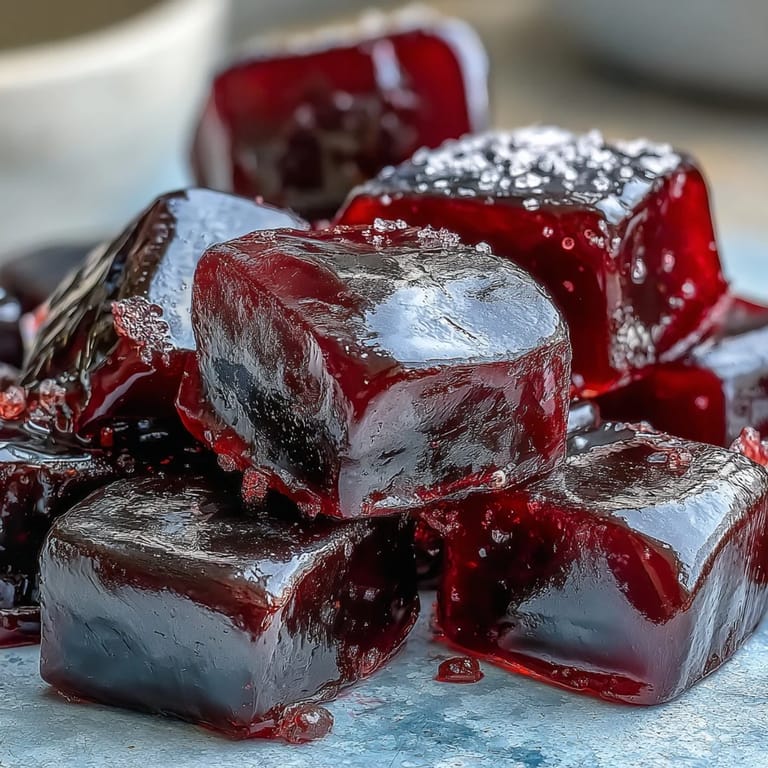
- Mix your confectioners sugar and cornstarch together, dust a cutting board generously, then turn out your candy slab onto it. Use a sharp knife dipped in hot water and wiped clean between cuts to slice into 1-inch squares, then toss each piece in the coating so they don't stick together during storage.
 Save to Pinterest
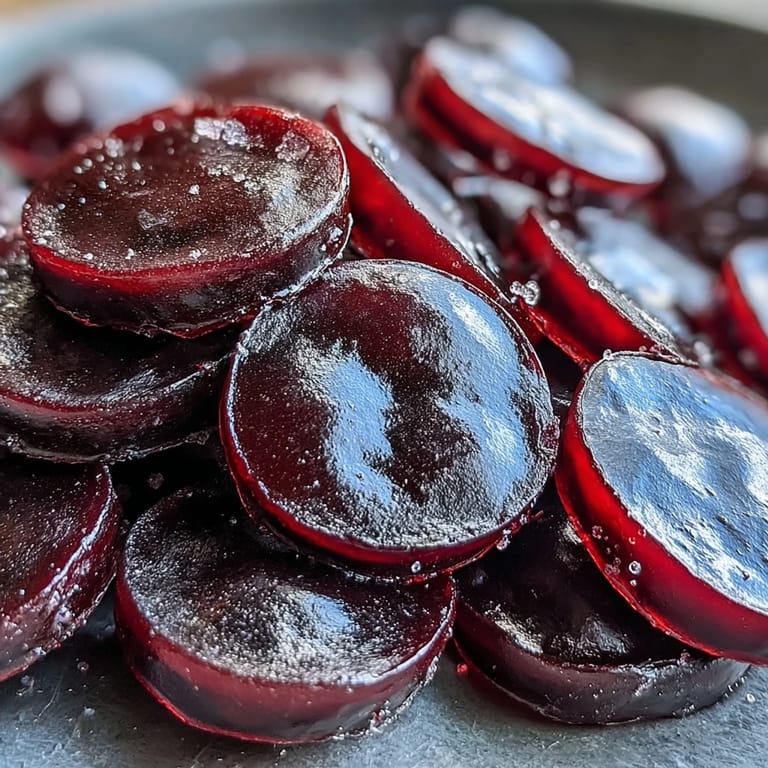
 What struck me most about making this candy wasn't the final taste, though that's wonderful, but the moment when I first poured the hot syrup into the currant purée and whisked them together. The color bloomed into something between ruby and deep burgundy, and the smell—tart fruit meeting that distinctive licorice warmth—created something that felt like a small act of alchemy in my own kitchen. I kept lifting the whisk just to watch how the mixture coated it, already knowing I'd made something good.
Choosing Your Licorice
Licorice extract and anise extract are cousins but not twins—licorice has a deeper, more complex flavor while anise is brighter and slightly more medicinal. If you're hesitant about either one, start with 1 teaspoon and taste as you go. Some people love the boldness of pure licorice extract, while others prefer the gentler anise route, and there's no wrong answer. This recipe is forgiving enough to let you find your own balance.
The Fruit Variation Dance
Black currants are specific in flavor—tart, slightly earthy, with a kind of sophisticated depth that pairs beautifully with licorice. But I've experimented with black raspberries and blackberries, and both work wonderfully if that's what you have access to. Blackberries create a slightly sweeter candy while black raspberries give you something more delicate and floral. The licorice stays the anchor no matter which berry you choose, so feel confident swapping based on what's available or what calls to you.
Storage and Keeping
These candies stay fresh and chewy for about a week in an airtight container at room temperature—any longer and they start to crystallize slightly around the edges. Keep them away from humidity because they'll stick together if exposed to moisture. I've found that wax paper between layers helps prevent them from bonding, and a silica gel packet tucked into the container keeps everything dry and ready to eat.
- Store in an airtight container or glass jar away from direct sunlight for up to 7 days.
- Freeze them for longer storage and thaw gently before eating so they maintain their chewy texture.
- Individually wrapped pieces in cellophane make beautiful gifts that stay fresh even longer.
 Save to Pinterest
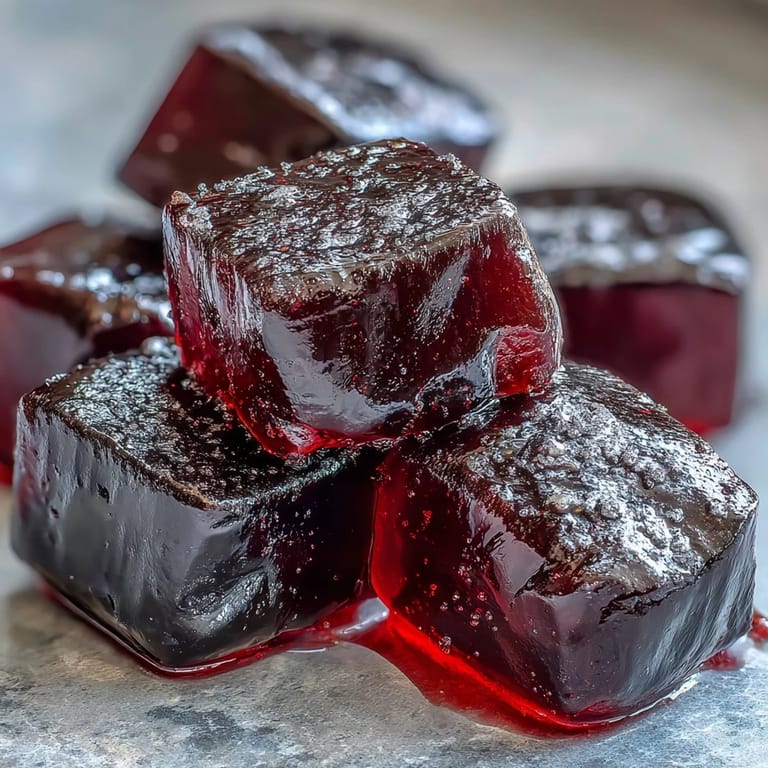
 Making candy at home feels like a small act of rebellion against mass production, a way of saying you have time for something simple and handmade. Every batch you make teaches you something new about heat and timing and flavor, and eventually you'll have a recipe that tastes distinctly like you.
Recipe FAQs
- → What gives this candy its chewy texture?
The chewy texture comes from the gelatin mixture combined with the sugar syrup cooked to the soft-ball stage, resulting in a firm yet pliable confection.
- → How can I intensify the licorice flavor?
Adding 1/2 teaspoon of finely ground licorice root powder enhances the aromatic depth and intensity of the licorice notes.
- → Can I substitute black currant with other fruits?
Yes, black raspberry or blackberry purée can be used as alternatives to black currant for different berry undertones.
- → How do I prevent candy pieces from sticking together?
Coating the cut candy squares with a mixture of confectioners sugar and cornstarch creates a barrier that prevents sticking.
- → What tools are essential for cooking this candy?
A candy thermometer is vital for reaching the correct syrup temperature, along with an 8x8-inch baking pan, saucepan, whisk, and sharp knife for preparation and cutting.
- → How long does the candy need to set before cutting?
Let the candy set at room temperature for 1 to 2 hours until fully firm before cutting into squares.