 Save to Pinterest
 I was standing in my kitchen on a Tuesday afternoon, staring at a half-empty fridge and wondering what to do with a lonely container of quinoa I'd bought weeks earlier. My friend had just texted about needing lunch ideas that wouldn't leave her sluggish by 3 PM, and somehow that question sparked something. Within an hour, I'd roasted every colorful vegetable I could find, tossed them with fluffy grains, and drizzled everything with a punchy lemon dressing that made my taste buds wake up. That bowl became a regular rotation, then a go-to when I needed to feel grounded and energized.
I made this for my book club last spring, and someone asked for the recipe before dessert even arrived. That's when I realized it wasn't just about the ingredients—it was the way the bowl felt substantial enough for dinner but light enough that nobody needed a nap afterward. Now whenever I'm hosting or bringing food somewhere, this is my secret weapon.
Ingredients
- Quinoa: This nutty grain cooks up fluffy and stays tender, plus it's packed with all nine essential amino acids, which means it actually fills you up properly.
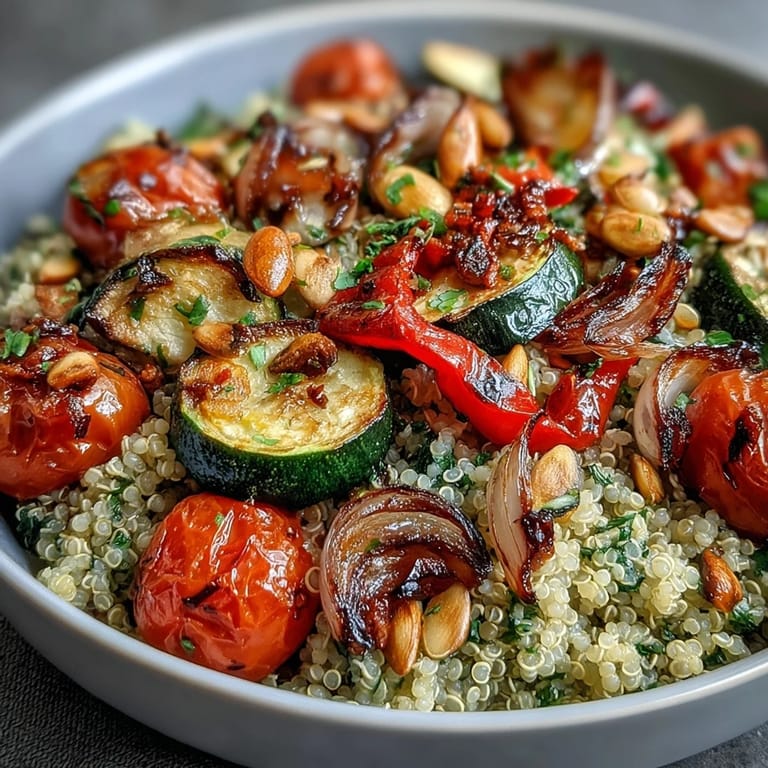
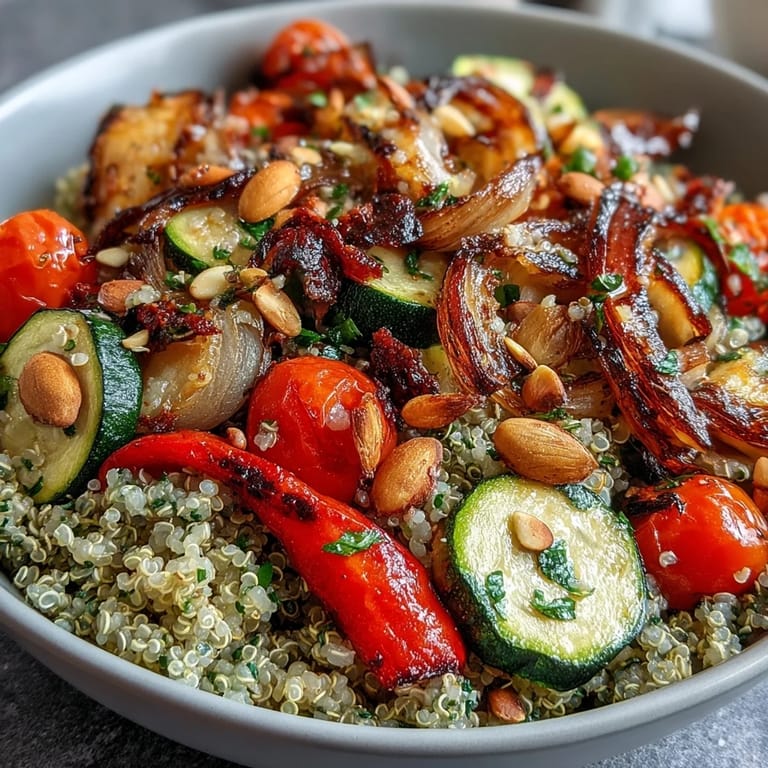
- Red bell pepper: When roasted, it becomes almost sweet and silky, adding brightness without any sharpness.
- Zucchini: Slicing it thin means it roasts quickly and gets slightly crispy at the edges, which I genuinely look forward to.
- Carrot: Thinly sliced carrots caramelize beautifully, turning into little pockets of natural sweetness throughout the bowl.
- Red onion: The wedges soften and develop a mellow flavor when roasted, losing their raw bite entirely.
- Cherry tomatoes: Halved and roasted, they burst and concentrate into tiny flavor bombs that brighten everything around them.
- Olive oil: Use good quality here—you taste it twice, in the roasting and in the dressing.
- Dried oregano: A teaspoon is enough to remind your nose you're eating something Mediterranean without overwhelming the delicate vegetables.
- Black beans or chickpeas: Either one works, but I've learned to rinse canned beans thoroughly because that helps them taste fresher and prevents a metallic aftertaste.
- Roasted almonds or walnuts: The crunch is essential, and roasting them yourself first makes them taste exponentially better than raw ones.
- Pumpkin seeds: These add a subtle earthiness and toasty flavor that most people can't quite identify but immediately love.
- Extra virgin olive oil: Reserve this for the dressing where you'll actually taste its delicate flavor and fruity notes.
- Fresh lemon juice: Freshly squeezed matters here—bottled juice lacks the brightness that makes this dressing sing.
- Dijon mustard: A teaspoon emulsifies the vinaigrette and adds a gentle tang that balances the sweetness of roasted vegetables.
- Maple syrup or honey: Just enough to round out the dressing and let the other flavors shine without making it sweet.
- Garlic: One small clove, minced fine, perfumes the entire dressing without ever becoming harsh or overpowering.
Tired of Takeout? 🥡
Get 10 meals you can make faster than delivery arrives. Seriously.
One email. No spam. Unsubscribe anytime.
Instructions
- Heat your oven and prep the vegetables:
- Set your oven to 425°F and while it warms up, dice and slice all your vegetables into similarly-sized pieces so they roast evenly. I've learned this matters more than people think—a thick carrot slice next to a thin zucchini slice means one gets mushy while the other stays raw.
- Coat and roast:
- Toss everything on a baking sheet with olive oil, oregano, salt, and pepper, spreading them in a single layer where they can actually touch the hot pan. Stir halfway through those 20-25 minutes so the vegetables caramelize on multiple sides and you get those deep golden edges.
- Cook the quinoa:
- While the vegetables roast, rinse your quinoa under cold water to remove any bitter coating, then combine it with water or broth in a saucepan. Bring it to a boil, cover, reduce the heat to low, and let it simmer quietly for 15 minutes without peeking—the steam does the work.
- Let quinoa rest:
- This step sounds small but it's crucial: remove the pan from heat and let it sit covered for 5 minutes so any remaining moisture gets absorbed and the grains separate instead of clumping together. Fluff it gently with a fork and taste a grain to make sure it's tender all the way through.
- Make the vinaigrette:
- In a small bowl, whisk together the olive oil, lemon juice, mustard, maple syrup, and minced garlic until it emulsifies into something creamy and cohesive. Taste it and adjust the salt and pepper, remembering that it should taste bright and slightly punchy because it's about to coat mild quinoa and vegetables.
- Build your bowls:
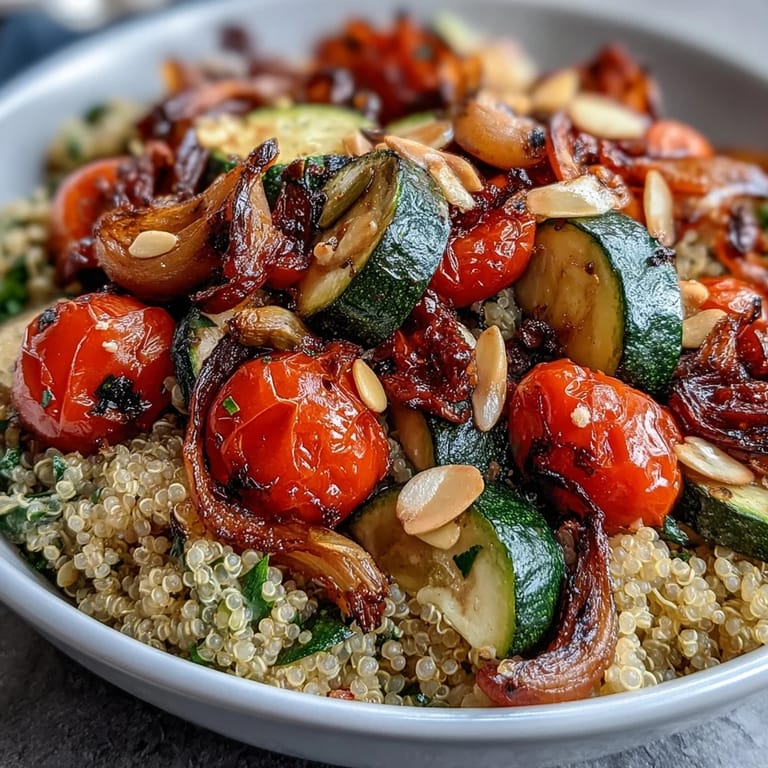
- Divide the fluffy quinoa among four bowls, then arrange the warm roasted vegetables on top in sections if you're feeling artistic, or just pile them together if you're hungry. Add the beans, scatter the nuts and seeds, and drizzle generously with dressing so every spoonful tastes complete.
- Serve or chill:
- Eat it warm right away while the vegetables are still steaming slightly, or let it cool and refrigerate for a refreshing cold lunch that tastes even better the next day when all the flavors have mingled.
 Save to Pinterest
 My mom made this for herself one week when she was trying to feel better, and she said it was the first meal that actually made her body feel grateful instead of just fed. That's when I understood this bowl was more than efficient—it was generous to yourself in a way that simple food often is.
Why Roasted Vegetables Matter
Raw vegetables would be crunchy and technically nutritious, but roasted ones taste intentional. When the heat caramelizes their natural sugars and brings out their inherent sweetness, everything transforms from healthy obligation into something you actually crave. The slightly crispy edges and tender centers create a texture contrast that makes your mouth interested in every bite.
Building Flavor Layers
This bowl works because it respects the fact that we eat with our whole senses. The warm roasted vegetables provide earthiness and comfort, the cold fresh dressing brings brightness and acidity, the beans add protein and substance, and the nuts and seeds contribute crunch and nuttiness. When you eat it, you're not just getting fuel—you're experiencing different textures and temperatures and flavor notes that make you pay attention to the actual act of eating.
Making It Your Own
The beauty of this bowl is that it's genuinely flexible, which is how it became my go-to rescue meal. In summer I'll add fresh corn and cherry tomatoes, in fall I swap in roasted sweet potato and Brussels sprouts, and in winter I'll roast whatever's in my vegetable drawer. The formula stays the same, but the bowl tastes like the season you're in, which somehow makes it feel even more nourishing.
- Swap the quinoa for brown rice, farro, or even roasted chickpeas if you want something heartier or have a grain you prefer.
- Top with a poached egg, grilled tofu, or crumbled feta if you want more protein or richness without changing the core recipe.
- Make the dressing in double or triple batches and keep it in the fridge for other salads and grain bowls throughout the week.
 Save to Pinterest
 This bowl has become one of those recipes I make automatically when I need to feed myself well or show up for someone else with something genuinely nourishing. It's proof that wholesome food doesn't need to be complicated or time-consuming.
Recipe FAQs
- → Can I make this bowl ahead of time?
Absolutely. This bowl meal preps beautifully. Cook the quinoa and roast vegetables in advance, then store them separately in airtight containers in the refrigerator for up to 4 days. Add the nuts and seeds just before serving to maintain crunch, and dress individual portions when ready to eat.
- → What vegetables work best for roasting?
While the recipe calls for bell pepper, zucchini, carrot, red onion, and cherry tomatoes, you can substitute any seasonal vegetables that roast well. Sweet potato, broccoli, cauliflower, butternut squash, and eggplant all make excellent additions. Cut vegetables into similar-sized pieces for even cooking.
- → How can I add more protein to this bowl?
The bowl already provides 13g of protein from quinoa and beans, but you can boost it further. Grilled tofu, tempeh, or a poached egg work wonderfully. For non-vegetarian options, grilled chicken or shrimp pair perfectly with the lemon vinaigrette. Feta cheese also adds 4g of protein per ounce.
- → What's the best way to cook quinoa perfectly?
Rinse quinoa thoroughly before cooking to remove bitter compounds. Use a 1:2 ratio of quinoa to liquid, bring to a boil, then reduce heat to low, cover, and simmer for 15 minutes. Remove from heat and let it steam covered for 5 minutes—this crucial step ensures fluffy, separate grains. Fluff with a fork before serving.
- → Can I make this vegan?
Yes, simply substitute maple syrup for the honey in the vinaigrette. The rest of the ingredients are naturally plant-based. For extra richness, you can add avocado slices or a dollop of tahini drizzled over the top instead of cheese.
- → What if I don't have a whisk for the dressing?
No problem. Place all vinaigrette ingredients in a small jar with a tight-fitting lid and shake vigorously until emulsified. Alternatively, use a fork to whisk the ingredients in a bowl—just keep whisking until the oil and liquid fully combine into a smooth dressing.