 Save to Pinterest
 There's something about a Mediterranean platter that stops conversations mid-sentence. I discovered this one golden afternoon when a friend brought a wooden board to my place, and instead of the usual appetizers, she'd arranged this sun-bright collection of cheeses, vegetables, and dips with such care that we ended up just admiring it before diving in. What struck me most wasn't the individual flavors, but how they lived together on that board—each element distinct, yet somehow part of the same story. Now, whenever I want to feel like I'm hosting somewhere breezy and unhurried, I build one of these.
My sister once told me that the best way to bring people together isn't through a complicated meal—it's through abundance that feels effortless. We made this platter for a small gathering on her back patio, and I watched as people grazed and lingered for hours, the board becoming this living thing that shrunk and shifted as hands reached in. The conversation flowed easier than it ever does at a formal dinner table.
Ingredients
- Feta cheese, cubed: Choose a creamy, good-quality feta that crumbles slightly; it's the backbone of this platter and deserves real attention.
- Fresh mozzarella balls: Look for bocconcini packed in whey or water, drained just before serving so they stay tender and mild.
- Cucumber, sliced: Cut thick enough to hold their shape but thin enough to feel delicate; they're your refreshing pause between richer bites.
- Cherry tomatoes, halved: Use the ripest, sweetest ones you can find—they should burst slightly when you bite them.
- Bell pepper, sliced: Yellow peppers are sweeter and more visual than green, offering both crunch and a subtle floral note.
- Red onion, thinly sliced: The bite of raw onion cuts through the richness of the cheeses and makes every other flavor sing.
- Radishes, sliced: They add peppery snap and beautiful pale-pink circles that catch the light on the board.
- Kalamata olives, pitted: Deep and briny, they're the umami anchor that ties everything together.
- Hummus and tzatziki: One is earthy and grounding; the other is cooling and herbaceous—together they're your flavor bridges.
- Extra virgin olive oil: This is not the time for the ordinary bottle; use something that tastes like it came from sun-warmed groves.
- Fresh mint and dill: These sprigs aren't just decoration—they're the final flourish that whispers Mediterranean into every bite.
- Sea salt and cracked black pepper: Finish with restraint; a light hand here lets each ingredient taste like itself.
Tired of Takeout? 🥡
Get 10 meals you can make faster than delivery arrives. Seriously.
One email. No spam. Unsubscribe anytime.
Instructions
- Start with the cheeses:
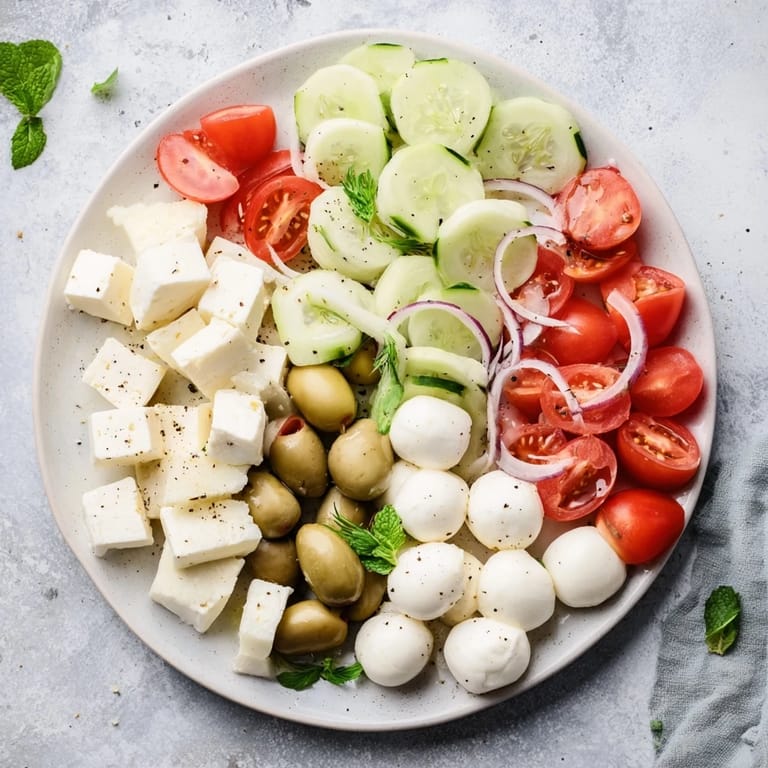
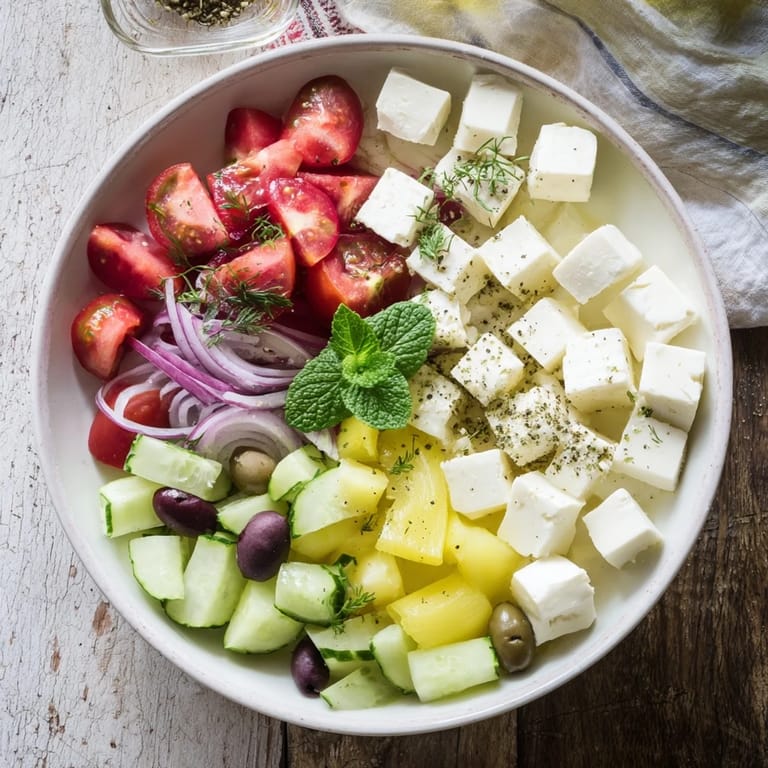
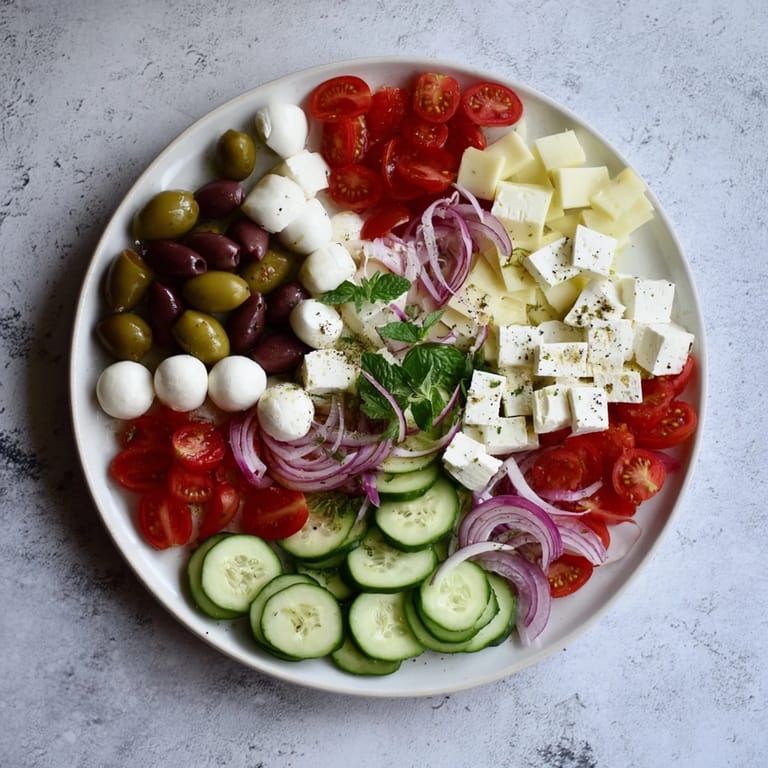
- Place your feta cubes and mozzarella balls in separate spots on a large board or platter, leaving white space around them like islands on water. This breathing room is what makes it feel inviting, not cramped.
- Arrange the vegetables in gentle clusters:
- Fan your cucumber slices in a soft arc, then create small groupings of tomatoes, peppers, onion, and radishes, leaving gaps between each cluster. Think of it like you're planting a garden, not filling every inch.
- Add the olives:
- Pile them into a small bowl right on the board or mound them in their own corner, so guests can easily grab a handful without disturbing the vegetables.
- Settle the dips:
- Spoon hummus and tzatziki into small, shallow bowls and nestle them among the other elements. Make sure they're positioned where someone standing around the board can reach them easily.
- Dress lightly with oil and seasoning:
- Drizzle the feta and vegetables with a fine thread of olive oil, then finish with a scatter of sea salt and a grind of black pepper. Taste nothing yet—this is the stage-setting moment.
- Crown it with herbs:
- Tuck sprigs of fresh mint and dill between elements and across the top, letting them spill out naturally as if they've just wandered there. These final green touches are what transform it from food into an experience.
- Serve right away:
- Place the crispbreads or pita wedges on the side and set your board out into the world. The best moment to eat is the moment you've finished arranging it.
 Save to Pinterest
 I learned, over time, that the real magic of a mezze platter isn't in the ingredients themselves—it's in what happens around it. I've watched friendships deepen over one of these boards, seen cousins laugh harder than they have in years, and witnessed quiet moments where a person picks an olive and just sits with their thoughts. Food becomes memory when it's presented with intention.
The Art of Spacing
The difference between a mezze platter that feels generous and one that feels chaotic is restraint. When I first started making these, I crammed everything together, thinking more was better. Then someone pointed out that my eye needed places to rest, that the emptiness was part of the design. Now I think of the board like a painting—the vegetables and cheeses are the subjects, but the empty space is what lets them breathe and shine.
Timing and Temperature
There's a narrow window where everything is perfect—the mozzarella still creamy, the cucumber cool and crisp, the feta at that ideal firmness. Assemble this just before serving, and if you're outdoors on a warm day, keep the board in the shade until the last possible moment. I once made one in the morning and left it out, and by noon, the mozzarella had wept and everything felt slightly wilted. Now I treat the final assembly like a stage curtain—don't raise it until you're ready for the show.
Personal Touches and Variations
The beauty of this platter is that it invites your fingerprints all over it. Some days I add a small bowl of pomegranate seeds for a jewel-like sweetness, other times I scatter some crispy chickpeas for texture and earthiness. A pinch of sumac over the feta gives it a subtle tartness, or a light sprinkle of dried oregano whispers of sun-baked hillsides. The foundation stays the same, but what you add makes it yours.
- If you love heat, add a small bowl of red pepper paste or harissa alongside the hummus.
- For added richness, include a small wedge of halloumi or a handful of grilled halloumi cubes.
- Don't sleep on fresh herbs beyond mint and dill—cilantro, parsley, or basil all find their place here.
 Save to Pinterest
 A mezze platter is less a recipe and more an invitation—to slow down, to eat standing up with people you care about, to let the meal be the backdrop rather than the main event. Make this when you want to feel like you're in a village somewhere, where food and time move a little slower.
Recipe FAQs
- → What cheeses are featured in this mezze platter?
The platter includes cubes of feta cheese and fresh mozzarella balls (bocconcini) for a creamy texture.
- → Which vegetables complement the mezze’s flavors?
Cucumber, cherry tomatoes, yellow bell pepper strips, red onion slices, radishes, and Kalamata olives add color and freshness.
- → How is the mezze platter presented?
Ingredients are arranged with ample space on a large platter or board, creating an airy and inviting sunlit appearance.
- → What dips accompany the mezze elements?
Small bowls of hummus and tzatziki provide creamy and savory contrast alongside the vegetables and cheeses.
- → Are there suggestions for garnishing the platter?
The mezze is garnished with fresh mint and dill sprigs, plus a drizzle of extra virgin olive oil and seasoning with sea salt and cracked pepper.
- → Can this platter be adapted for dietary preferences?
Yes, goat cheese or plant-based feta can substitute feta; vegan mozzarella alternatives can be used to omit dairy.