 Save to Pinterest
 I discovered this dish on a rainy afternoon when a Spanish friend stopped by unexpectedly with a package of chorizo from her favorite market. We had almost nothing in the pantry except pasta and tomatoes, but she insisted we could make something incredible. Twenty minutes later, the kitchen was filled with this intoxicating smoky aroma, and I realized how a few quality ingredients and a bit of confidence could transform something so simple into something unforgettable.
The first time I made this for a dinner party, I was nervous about whether it would feel special enough for guests. But watching people close their eyes after that first bite, tasting the sweet peppers against the spicy paprika and chorizo oil coating every strand of pasta—that's when I knew this wasn't just a recipe, it was a conversation starter. Now it's the one everyone asks me to make.
Ingredients
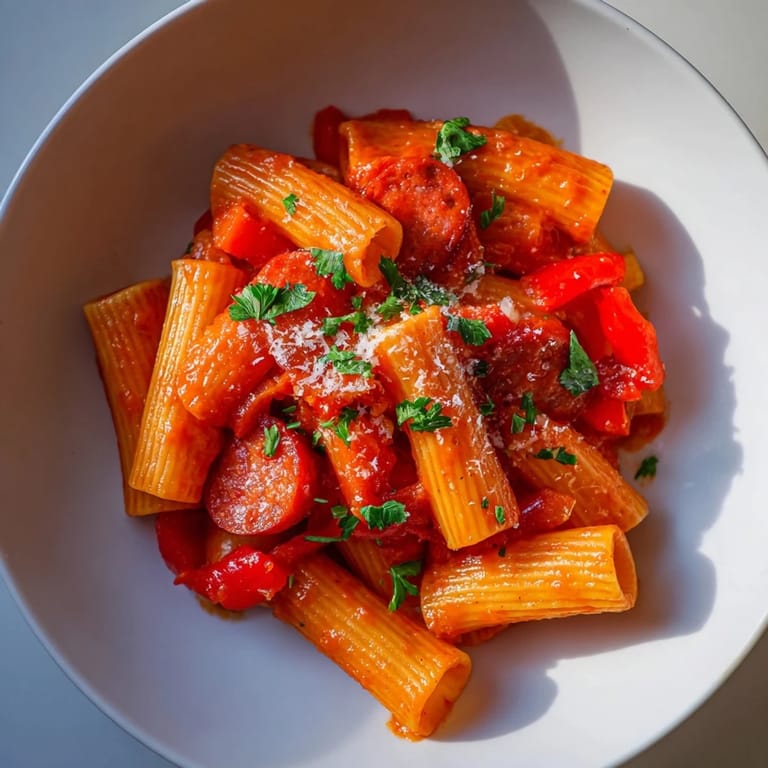
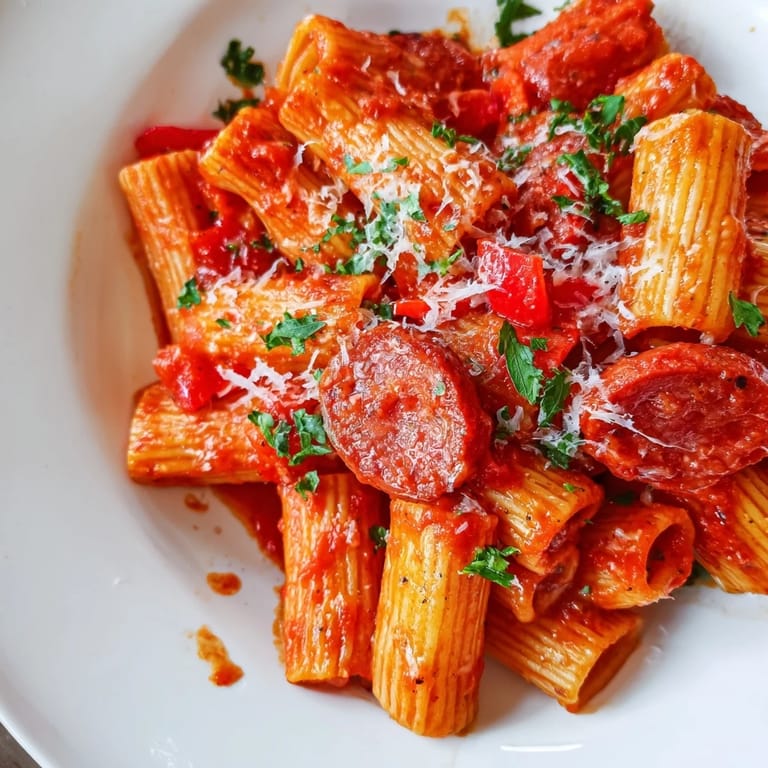
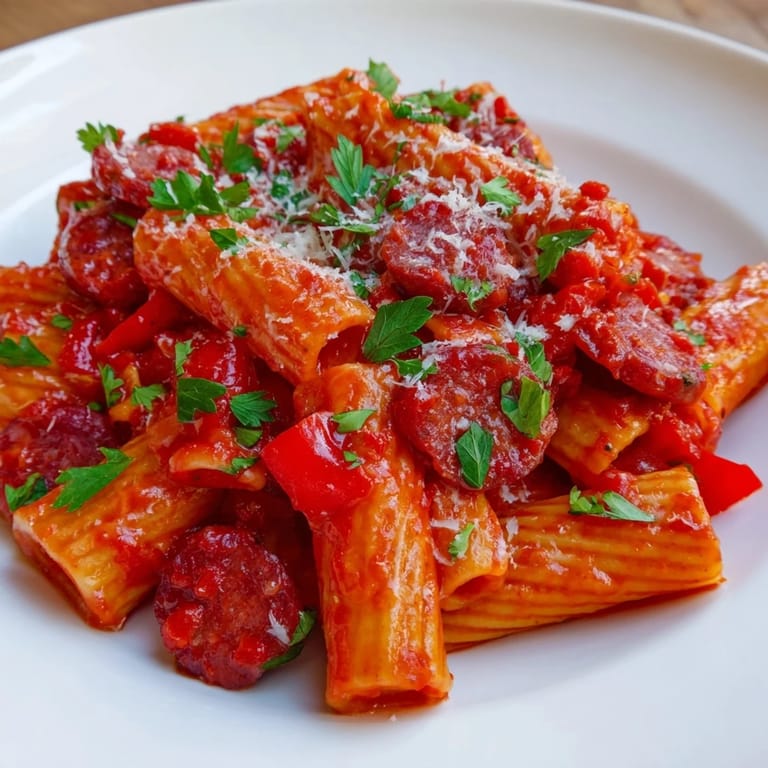
- Penne or rigatoni: The ridged shapes trap that gorgeous chorizo-infused sauce better than smooth pasta, and 350 grams feeds four people generously.
- Spanish chorizo: This is where the magic lives—the curing and paprika create that distinctive smokiness that no substitute quite captures, though good Spanish sausage comes close.
- Onion: One medium onion chopped fine dissolves into the sauce and adds sweetness that balances the spice.
- Garlic: Two cloves minced releases its perfume right into the hot oil, but don't skip the brief cooking step or it turns bitter.
- Red bell pepper: The natural sweetness becomes almost jammy after a few minutes in the pan, mellowing the heat perfectly.
- Canned chopped tomatoes: Quality matters here—use the best can you can find, as this is your sauce foundation and there's nowhere to hide.
- Smoked paprika: One teaspoon is the backbone, delivering that authentic Spanish warmth without overshadowing the other flavors.
- Chili flakes: Half a teaspoon adds optional heat for those who want their pasta to stand up and announce itself.
- Extra virgin olive oil: Two tablespoons is enough to cook everything and create the emulsion that coats each piece of pasta.
- Fresh parsley: A handful chopped at the last moment brightens everything and reminds you that good food appeals to all your senses.
- Manchego or Parmesan: Optional but recommended—the sharpness cuts through the richness beautifully, though leaving it off keeps things lighter.
Tired of Takeout? 🥡
Get 10 meals you can make faster than delivery arrives. Seriously.
One email. No spam. Unsubscribe anytime.
Instructions
- Get the pasta started:
- Fill a large pot with water, salt it generously (it should taste like the sea), and bring it to a rolling boil. This is happening while you prep everything else, so time it right and you'll have pasta ready when your sauce is.
- Wake up the chorizo:
- Slice your chorizo into thin rounds and drop them into a large skillet with olive oil over medium heat. Listen for that gentle sizzle—after 2-3 minutes, you'll see the oil turning red and the edges getting crispy. That's when you know the magic is starting.
- Build your flavor base:
- Add your chopped onion and diced red pepper to the same pan. Stir occasionally and let them soften for 4-5 minutes—don't rush this, as the slower cooking brings out their natural sweetness.
- Add the aromatics:
- Stir in your minced garlic, smoked paprika, and chili flakes if using. Cook for just 1 minute until the spices become fragrant—you'll smell the transformation happening, and that's your signal not to let it sit longer or the paprika can scorch.
- Simmer the sauce:
- Pour in your canned tomatoes and let everything bubble gently for 8-10 minutes, stirring occasionally. The sauce will thicken and deepen in color, and all those individual flavors will start speaking to each other.
- Bring it all together:
- Drain your pasta (saving that pasta water—it's liquid gold) and add it directly to the skillet. Toss everything until every piece of pasta is coated. If it looks too thick, splash in some of that starchy pasta water a little at a time until you have a silky sauce that moves.
- Final season and serve:
- Taste and adjust the black pepper, then remove from heat. Sprinkle with fresh parsley and cheese if you like, and serve hot in warm bowls so the flavors stay vibrant.
 Save to Pinterest
 There's a moment in cooking this dish when the kitchen fills with that deep, warm aroma of smoked paprika meeting tomato, and somehow it transports you somewhere. My grandmother used to say that smell is the truest memory, and this dish proved her right—it became less about following steps and more about recreating that feeling of warmth and welcome.
The Spanish Pantry Secret
I learned something important the day a Spanish cook friend watched me make this: the best Spanish food doesn't rely on complicated techniques, it relies on respecting quality ingredients and letting them shine. Chorizo, paprika, tomatoes, and time—that's not laziness, that's restraint. When you taste a really good Spanish dish, what you're experiencing is the confidence to know when not to complicate things.
Variations That Work
Once you understand the skeleton of this dish, it welcomes small changes gracefully. I've added a splash of dry white wine after the vegetables soften, creating a more complex sauce, and I've stirred in baby spinach right at the end for brightness. Some nights I use spicy Italian sausage instead when I can't find chorizo, and it's a different song but still recognizable.
Serving and Pairing
This pasta wants simple accompaniments that don't fight for attention. A crisp white wine or even a light red plays beautifully against the smokiness, and a simple green salad with vinaigrette provides relief between bites. I've learned that serving it in warm bowls makes a real difference—cold bowls steal the heat and somehow make the flavors feel less generous.
- Pair with a Spanish Albariño or a lighter Rioja if you want to stay true to tradition.
- A simple arugula salad with lemon dressing cuts through the richness perfectly.
- Warm your serving bowls in a low oven for five minutes before serving to keep the pasta at its best.
 Save to Pinterest
 This dish has become my answer to the question of what makes a meal feel special—not complexity, but intention. Every time I make it, I'm reminded that good cooking is really just about paying attention and trusting the ingredients you've chosen.
Recipe FAQs
- → What type of pasta works best?
Penne or rigatoni are ideal as their ridged surfaces hold the sauce well.
- → Can I adjust the spice level?
Yes, omit or reduce chili flakes for milder heat or add extra for more kick.
- → Is there a substitute for Spanish chorizo?
Spicy Italian sausage can be used as an alternative if Spanish chorizo isn't available.
- → How to enhance the sauce depth?
Adding a splash of dry white wine after sautéing vegetables enriches the flavor.
- → What garnishes complement this dish?
Fresh parsley adds brightness and grated Manchego or Parmesan provides a creamy finish.