 Save to Pinterest
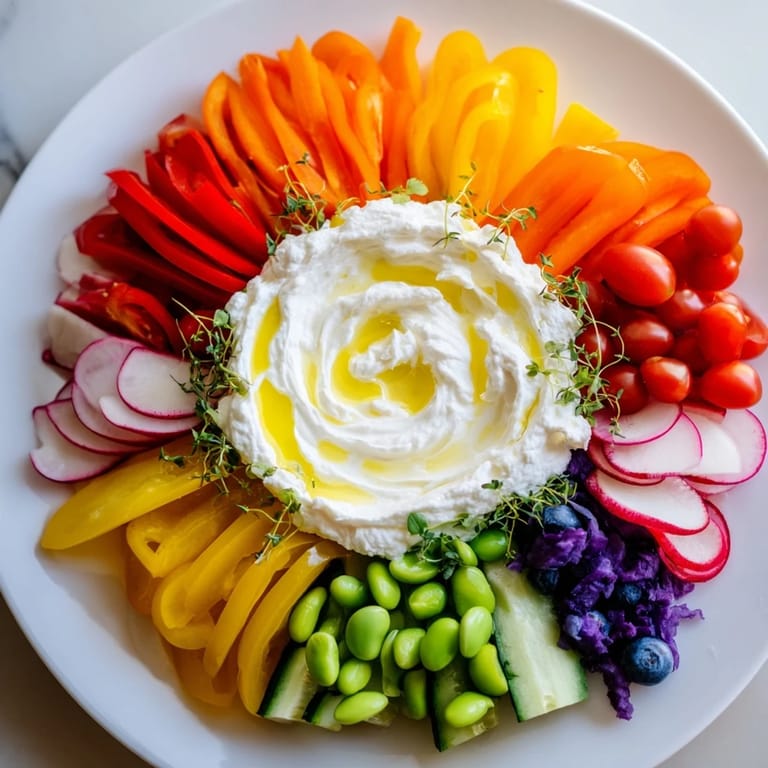
 I discovered this salad almost by accident on a gray afternoon when I was staring into my vegetable drawer, overwhelmed by the colors staring back at me. Instead of tossing everything into a bowl like usual, I thought: what if I actually arranged them? The moment I placed that creamy white ricotta circle in the center and started fanning out the reds and oranges and yellows around it, something shifted. It felt less like cooking and more like painting. My kitchen suddenly felt intentional, joyful even.
The first time I made this for my sister's dinner party, I spent way too long fussing with the arrangement, convinced that one radish slice out of place would ruin everything. She walked in, took one look, and said, "You're overthinking this. It's supposed to look alive, not perfect." She was right. That's when I realized the beauty of this salad isn't in flawless execution—it's in the courage to actually try something that looks a little wild.
Ingredients
- Ricotta cheese (or Greek yogurt): The creamy anchor that everything radiates from; use full-fat ricotta if you want it richer, or yogurt if you prefer something lighter and slightly tangy.
- Extra-virgin olive oil: Don't skip the good stuff here—it's only a small amount, so invest in one you actually enjoy tasting.
- Lemon zest and juice: This brightens everything and prevents the whole thing from feeling heavy; zest the lemon before you juice it.
- Cherry tomatoes: Halve them just before assembly so they don't weep juice all over the other colors.
- Bell peppers (red, orange, yellow): Slice them thin so they fan out gracefully; a sharp knife makes this feel effortless instead of tedious.
- Cucumber and radishes: The crisp, cool elements that keep each bite fresh; slice the radishes paper-thin if you have a mandoline, or just do your best with a knife.
- Blueberries and grapes: These add sweetness and visual drama; halve the grapes so they feel intentional in the arrangement.
- Fresh herbs (parsley, basil, or mint): Choose whichever one you have or love most—there's no wrong answer.
Tired of Takeout? 🥡
Get 10 meals you can make faster than delivery arrives. Seriously.
One email. No spam. Unsubscribe anytime.
Instructions
- Build your white base:
- Mix the ricotta with olive oil, lemon zest, salt, and pepper in a small bowl until it's smooth and spreadable. Spoon it onto the center of a large platter and gently spread it into a small circle—this is your canvas. The white base is what everything else will radiate from, so take a breath and don't worry if it's not perfectly circular.
- Prep your colors in separate bowls:
- Put each color group into its own small bowl so you're not scrambling when you're arranging. This isn't just practical; it also lets you see how vibrant each color actually is before you start.
- Fan out the prism:
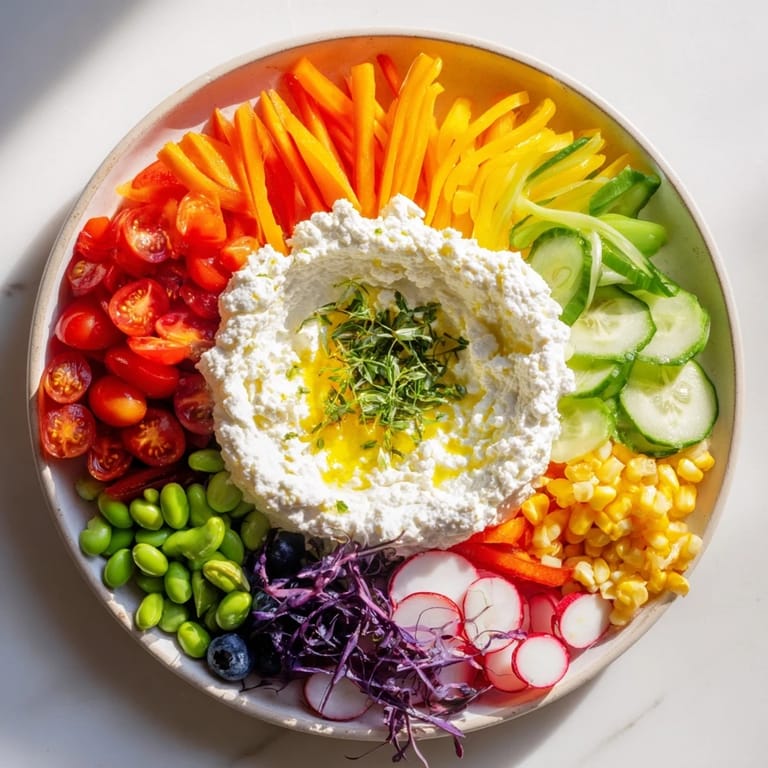
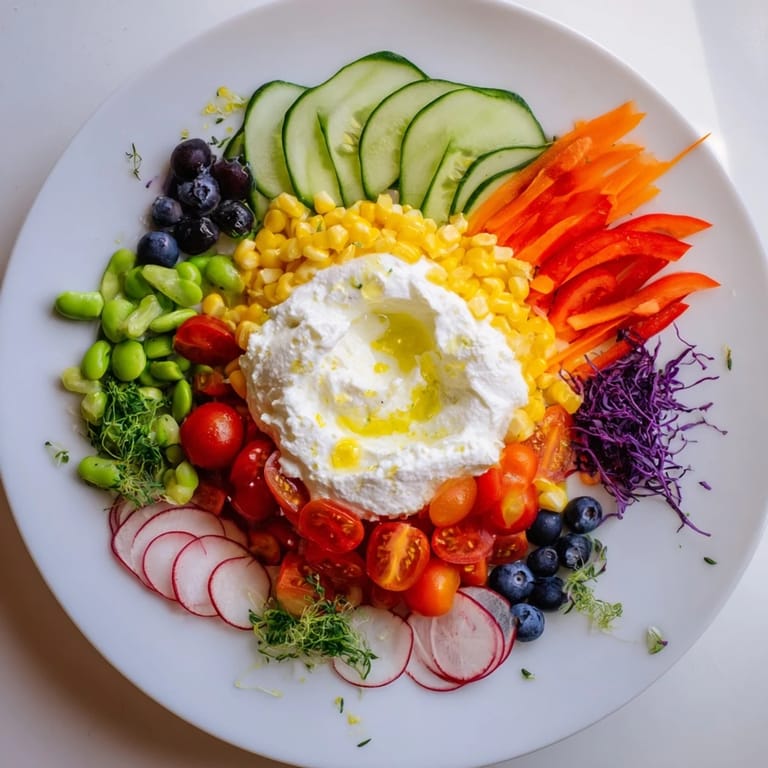
- Starting right at the edge of the white base, lay down the red layer first—tomatoes and red peppers fanning outward. Then move to orange, then yellow, then green, then blue, then violet, each one creating a visible stripe as it radiates out. Use your hands or a small spoon to keep the colors from bleeding into each other. This is the moment where it starts looking like something special.
- Make the dressing:
- Whisk together olive oil, lemon juice, honey, salt, and pepper in a small bowl. Taste it and adjust—it should be bright and balanced, not aggressively sour.
- Dress and serve:
- Drizzle the dressing lightly over the whole salad just before serving, or offer it on the side so people can control how much they want. Finish with a scatter of fresh herbs and a final grind of black pepper.
 Save to Pinterest
 My mom called it "too pretty to eat" when she first saw it, and then she ate half of it standing at my counter. That's when I understood—this salad exists at the intersection of art and appetite, and somehow it satisfies both.
Playing With Color
The magic of this salad is that it forces you to really look at your vegetables. You'll notice how different red peppers are from red tomatoes, how purple cabbage isn't quite blue but closer than you'd think. If you're missing one of the colors, don't panic. Swap in what you have—snap peas for green, strawberries for red, whatever makes sense. The prism is flexible; it's the principle that matters.
Texture That Keeps You Coming Back
A neutral, creamy base like ricotta is what makes every single bite feel cohesive. The vegetables stay crisp and bright, but when they hit that soft center, everything becomes balanced. If you want to add another layer of texture, toast some seeds or nuts and scatter them across the top—pumpkin seeds add a subtle sweetness, sunflower seeds bring a gentle crunch, and pine nuts feel almost fancy without requiring any extra work.
Making It Your Own
This is genuinely a canvas for whatever you love eating. Some additions will change the vibe slightly but in ways that feel right. Others will transform it completely, and that's okay—the recipe is a starting point, not a rulebook.
- For a vegan version, swap ricotta for a creamy plant-based alternative and you lose nothing in flavor or texture.
- Microgreens or edible flowers will make it feel restaurant-quality without any real effort.
- If you're serving this alongside something rich, a crisp white wine like Sauvignon Blanc feels like the obvious pairing.
 Save to Pinterest
 This salad reminds me that sometimes the simplest dishes—the ones with no cooking, no complicated technique—are the most memorable. It's proof that eating well can be joyful without being stressful.
Recipe FAQs
- → What can I use instead of ricotta for the white base?
You can substitute ricotta with Greek yogurt for a lighter option or vegan cream cheese for a dairy-free alternative.
- → How do I keep the colorful layers separated when arranging?
Use your hands or a spoon to carefully fan out each layer from the center, maintaining neat stripes without mixing the colors.
- → Can this dish be prepared in advance?
For best freshness and visual appeal, assemble just before serving. Prepare ingredients ahead but arrange close to serving time.
- → What herbs complement the salad best?
Fresh parsley, basil, or mint chopped and sprinkled over the green layer or as garnish add refreshing herbal notes.
- → Are there suggestions for extra texture or garnish?
Toasted nuts or seeds like pumpkin, sunflower, or pine nuts add crunch. Microgreens or edible flowers enhance color and presentation.
- → What dressing pairs well with this salad?
A simple lemon juice and olive oil dressing with a touch of honey or agave syrup balances the fresh flavors without overpowering them.