 Save to Pinterest
 The idea hit me during a chaotic Sunday meal prep session when I stared at four empty mason jars and thought, what if lunch could pack itself into these glass containers? I'd been making minestrone for years, standing over bubbling pots while winter rain drummed against the kitchen window, but something about this grab-and-go approach felt like discovering a secret shortcut. My roommate walked in, eyed the colorful layers, and immediately claimed one for Monday's work lunch. Now these jars live in my fridge constantly, like edible insurance against busy days.
I first packed these for a hiking trip last fall, tucked into a cooler with ice packs. At the summit, boiling water from a camp stove transformed those neat layers into something that tasted like hours of labor. Everyone asked how I managed to transport such a complex soup, and I just tapped the glass jar and grinned. There's something deeply satisfying about carrying dinner in your backpack that looks this beautiful.
Ingredients
- Small pasta: Choose ditalini, elbows, or mini shells that cook quickly in hot water and fit perfectly through jar openings
- Dried red lentils: These tiny legumes soften faster than beans and add protein without pre-soaking
- Cannellini beans: Creamy and mild, they hold their shape beautifully through the rehydration process
- Fresh vegetables: Diced zucchini, carrots, and celery provide texture and color while being small enough to hydrate evenly
- Frozen green peas: They need no prep and add pops of sweetness throughout every spoonful
- Baby spinach: Chop it slightly so it wilts nicely when hot water hits the jar
- Sun-dried tomatoes: Oil-packed versions bring concentrated umami that makes broth taste simmered for hours
- Tomato paste: Just a tablespoon creates a rich, red base that feels indulgent
- Dried Italian herbs: Oregano, basil, and thyme blend brings classic minestrone flavor
- Garlic powder: Distributes evenly through the jar better than fresh garlic cloves
- Chili flakes: Optional heat that warms you from the inside out
- Salt and black pepper: Essential seasoning that wakes up all the other ingredients
- Vegetable bouillon cube: Crumbled on top, it creates instant depth when water pours over
- Boiling water: Two cups per jar transforms everything into soup
- Grated Parmesan cheese: Optional finish that adds salty richness
Tired of Takeout? 🥡
Get 10 meals you can make faster than delivery arrives. Seriously.
One email. No spam. Unsubscribe anytime.
Instructions
- Layer your foundation:
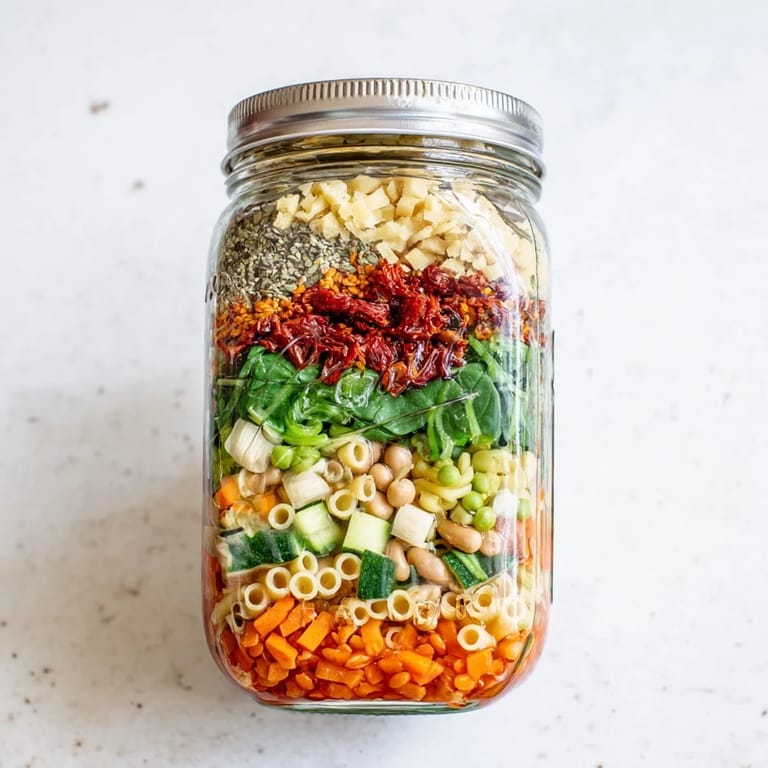
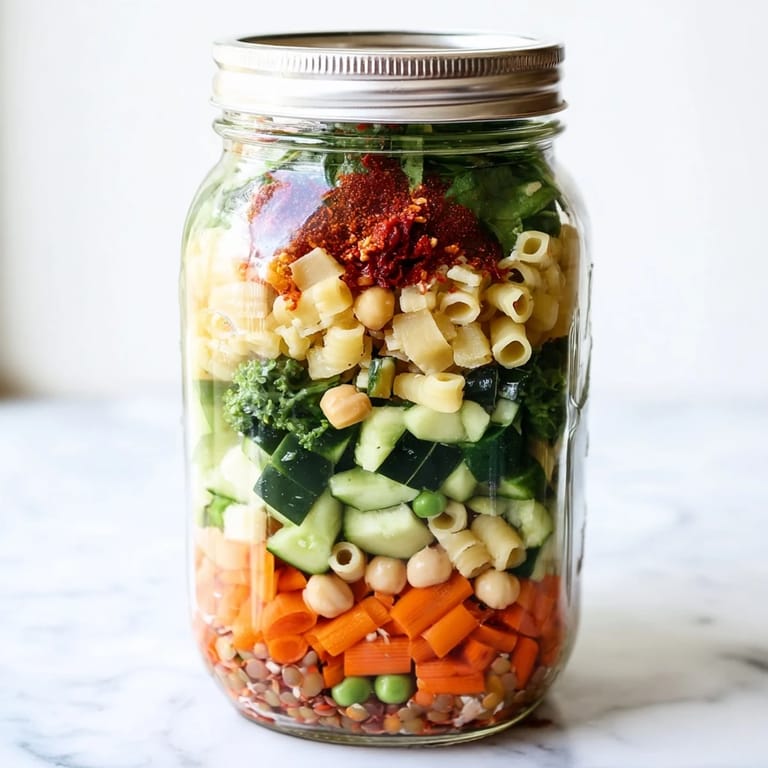
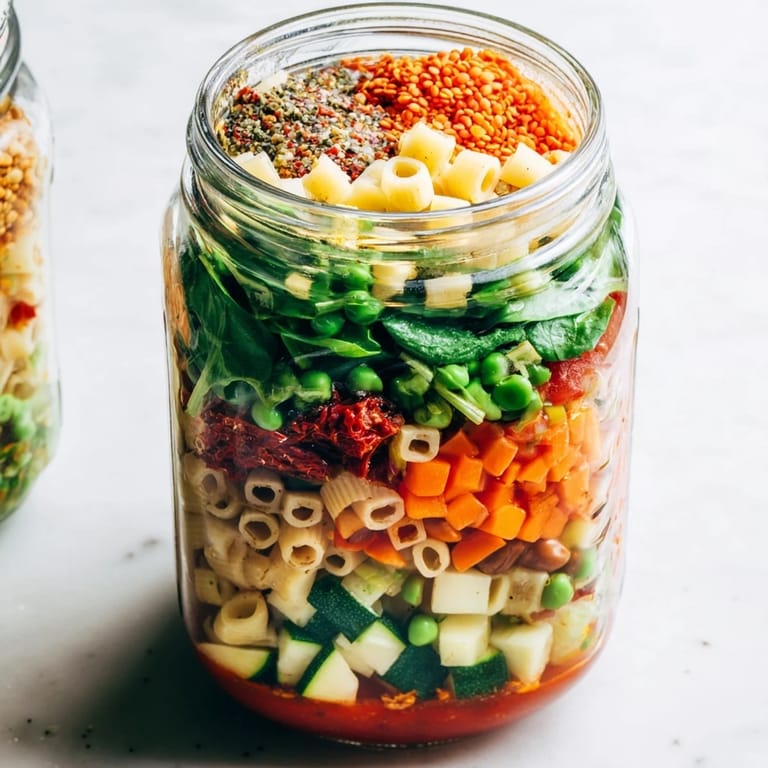
- Start with pasta at the bottom of each clean quart jar, then add lentils and beans, pressing gently to create stable layers that wont shift during storage
- Build the rainbow:
- Add carrots, celery, zucchini, peas, and spinach in separate layers so each vegetable maintains its distinct color and texture
- Infuse with flavor:
- Sprinkle sun-dried tomatoes and dollop tomato paste before adding seasonings and crumbling the bouillon cube on the very top
- Seal and store:
- Tighten lids completely and refrigerate for up to four days, letting ingredients settle while staying fresh and ready
- Transform into soup:
- Pour two cups boiling water into each jar, stir thoroughly or shake gently with the lid secured, then let sit until pasta is tender
 Save to Pinterest
 My sister now keeps a stack of these in her office fridge, and her coworkers have started requesting jar-lunch Fridays. There's something about unscrewing that lid and revealing perfectly portioned homemade soup that makes even the most chaotic workday feel a little more civilized. It became a small ritual she refuses to give up.
Making It Your Own
After making dozens of batches, I've learned that the layering order matters less than using ingredients that rehydrate at similar rates. Sometimes I swap butternut squash for zucchini in autumn, or add tiny chopped kale instead of spinach when that's what's languishing in my crisper drawer. The beauty is in the customizing.
Storage Wisdom
These jars keep beautifully in the refrigerator, but I've also frozen the dry ingredient layers for up to three months without issues. Just thaw completely before adding water. The vegetables retain their texture surprisingly well, though the pasta becomes slightly more tender after freezing.
Serving Suggestions
A slice of crusty bread turned this from lunch into something that felt like dinner at an Italian trattoria. I've also added a drizzle of really good olive oil right before eating, which somehow makes everything taste richer and more satisfying.
- Keep grated Parmesan in a separate small container if taking this to work
- Always use wide-mouth jars for easier stirring and eating
- The soup continues thickening as it cools, so eat it while steaming hot
 Save to Pinterest
 Sometimes the simplest solutions end up being the ones we reach for again and again. These jars started as an experiment and became a permanent fixture in my weekly routine.
Recipe FAQs
- → Can I use different types of pasta?
Yes, any small pasta shape works well, such as ditalini, elbow macaroni, mini shells, or orzo. For a gluten-free version, substitute with gluten-free pasta.
- → How long can I store the jars in the refrigerator?
The layered jars can be stored in the refrigerator for up to 4 days. Make sure the jars are sealed tightly to keep ingredients fresh.
- → Can I heat this in the microwave?
Yes, remove the metal lid and microwave the open jar for 3-4 minutes, stirring halfway through. Ensure your jar is microwave-safe before heating.
- → What vegetables can I substitute?
Feel free to swap in bell peppers, green beans, kale, or any other favorite vegetables. Just keep the total volume similar and adjust seasonings as needed.
- → How do I make this vegan?
Simply omit the Parmesan cheese topping. Check that your vegetable bouillon cube is vegan-friendly, as some contain animal products.
- → Do I need to cook the vegetables before layering?
No, all vegetables can be added raw. The boiling water and resting time will cook them perfectly, creating a tender, flavorful soup.