 Save to Pinterest
 My neighbor stopped by on a sweltering afternoon with a container of homemade hummus and asked if I had anything fresh to eat. I raided my fridge—cucumber, tomatoes, a can of chickpeas I'd been meaning to use—and threw together this salad on the spot. She took one bite and her eyes lit up, and suddenly what was supposed to be a quick lunch became the dish I'd make again and again through every Mediterranean-craving summer that followed.
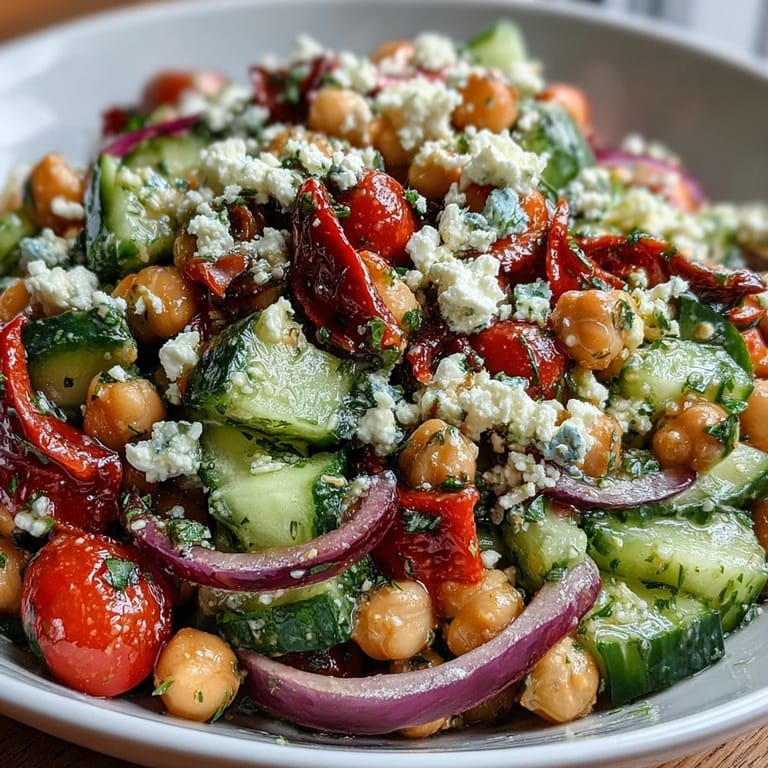
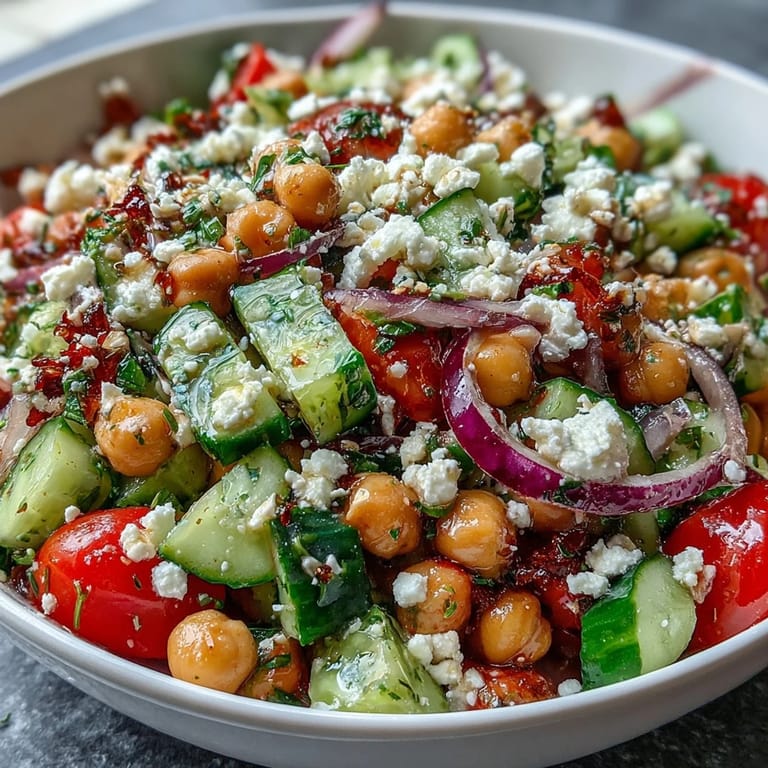
I made this for a potluck once and watched it disappear faster than the lasagna someone spent three hours on. There's something about the bright yellow-green of the dressing catching the light, the way the feta crumbles catch your eye—people trust what looks this fresh and alive on a table.
Ingredients
- Cucumber (1 large, diced): The watery crispness is everything here; dice it just before serving or it'll weep into the salad and turn everything soggy.
- Cherry tomatoes (1 cup, halved): Halving them instead of chopping keeps them from falling apart and releasing too much juice—a small move that matters.
- Red onion (1/2, thinly sliced): The sharp bite mellows once it sits in the dressing, so don't be shy with how thin you slice it.
- Red bell pepper (1, diced): The sweetness balances the acidic dressing and adds a pop of color that makes the whole bowl feel celebratory.
- Fresh parsley (1/4 cup, chopped): Use it the day you buy it if possible; older parsley tastes like regret instead of garden-fresh brightness.
- Chickpeas (1 can, 15 oz, drained and rinsed): Rinsing them isn't just about reducing sodium—it removes the starchy coating that can make the salad cloudy and heavy.
- Feta cheese (3.5 oz, crumbled): Buy it in blocks if you can and crumble it yourself; pre-crumbled feta dries out and tastes like chalk by comparison.
- Extra-virgin olive oil (3 tbsp): This is where quality shows; a good olive oil makes the whole dressing sing instead of just hanging around.
- Lemon juice (2 tbsp, freshly squeezed): Bottled juice will work in a pinch, but fresh lemon brings an electric brightness that changes everything.
- Dried oregano (1 tsp): Mediterranean salads live and die on oregano; it's the flavor that says you know what you're doing.
- Garlic (1 clove, minced): Mince it fine and let it sit in the dressing for a few minutes before tossing to wake up the whole bowl.
- Sea salt (1/2 tsp): Taste as you go; the feta already brings salt, so it's easy to overshoot and regret it.
- Black pepper (1/4 tsp, freshly ground): Fresh ground makes a real difference; pre-ground pepper tastes dusty and tired.
Tired of Takeout? 🥡
Get 10 meals you can make faster than delivery arrives. Seriously.
One email. No spam. Unsubscribe anytime.
Instructions
- Gather and Chop Your Vegetables:
- Lay out all your ingredients like you're about to paint—this is the moment where everything still feels fresh and full of possibility. Work quickly so nothing wilts, dicing the cucumber last since it releases water the fastest.
- Build the Salad Base:
- Toss the cucumber, tomatoes, onion, bell pepper, parsley, and rinsed chickpeas together in your largest bowl. The chickpeas should be scattered throughout, not clumped in one spot where someone will get a forkful of just legumes.
- Make the Dressing:
- Whisk the olive oil, lemon juice, oregano, minced garlic, salt, and pepper in a small bowl until the texture looks emulsified and creamy. Taste it on its own—it should make your mouth water, bright and bold enough to carry the whole salad.
- Bring It Together:
- Pour the dressing over the vegetables and chickpeas, tossing gently so nothing bruises or falls apart. The goal is every piece coated, not drenched.
- Add the Feta:
- Toss the crumbled feta through if you want it distributed throughout, or sprinkle it on top just before serving for a more stunning presentation. Either way, the cool creaminess of the cheese against the acidic vegetables is where the magic happens.
- Chill or Serve:
- You can eat it immediately and enjoy the contrast of cool vegetables against room-temperature dressing, or refrigerate for 20 to 30 minutes if you want the flavors to get to know each other better. Both ways are right.
 Save to Pinterest
 My daughter brought this to a school lunch swap and came home saying someone's parent asked for the recipe, then asked again the next week because their family had made it twice. There's something about watching a dish you assembled in your own kitchen become important to someone else's table that makes you feel like you've done something small but real.
The Magic of Simple Ingredients
This salad proved to me that you don't need a long ingredient list or complicated technique to make something memorable. The whole dish relies on the quality of what you buy and the care you take not to overthink it. When you're working with this few components, each one has to pull its weight—there's nowhere to hide a mediocre tomato or stale oregano. It's honest cooking, the kind where your hands do the work and your instincts tell you when something is right.
Make It Your Own
The architecture of this salad is strong enough to hold whatever else you want to add. I've made it with kalamata olives when I was feeling rich, with fresh mint when someone brought a bunch from their garden, with crumbled goat cheese instead of feta on nights when I wanted something slightly tangier. A handful of sliced red onion can become half a red onion if you love the sharp bite. The chickpeas are your protein anchor, the vegetables your framework, but what you do inside those bounds is entirely up to you.
Serving and Storage
This salad is best the day you make it, when everything is still crisp and the flavors haven't blurred together. If you do have leftovers, keep the dressing separate and toss them together just before eating—this trick extends the life of the salad by at least a day and keeps everything from turning into sad, soggy disappointment. It travels well in a container, packs beautifully for lunch, and doesn't require any special equipment or last-minute assembly.
- Pair it with warm pita bread, grilled chicken, or a piece of baked salmon if you want to turn it from a side into something more substantial.
- Make a double batch of the dressing and keep it in a jar in the fridge for up to a week—it works on leafy greens, roasted vegetables, or even just drizzled over a piece of bread.
- If you're feeding a crowd, assemble everything ahead of time but wait to dress it until the last possible moment, then serve immediately while everything is still at its best.
 Save to Pinterest
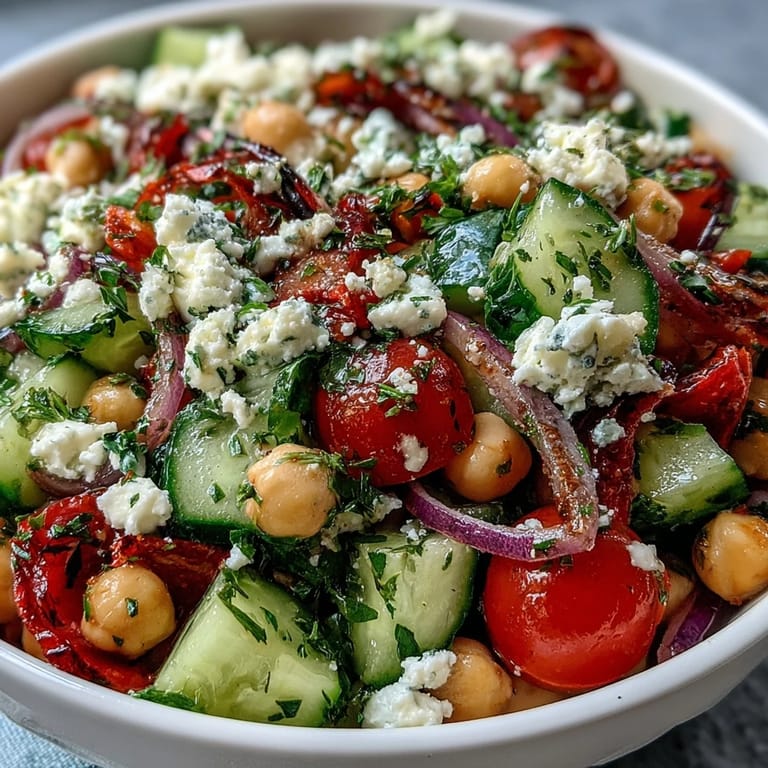
 Every time I make this, it reminds me that sometimes the best meals are the ones that let the ingredients speak for themselves. There's a real comfort in that simplicity.
Recipe FAQs
- → Can I make this chickpea salad ahead of time?
Yes, this salad actually tastes better after chilling for 20-30 minutes. You can prepare it up to a day in advance, though add the feta just before serving to prevent it from becoming too soft.
- → What can I use instead of feta cheese?
Vegan feta makes an excellent dairy-free alternative. You could also use cubed avocado for creaminess, or sprinkle with shaved Parmesan for a different salty kick.
- → How long does this salad keep in the refrigerator?
Stored in an airtight container, this salad stays fresh for 3-4 days. The vegetables may release some moisture, so give it a quick toss before serving leftovers.
- → Can I add other vegetables to this Mediterranean salad?
Absolutely! Kalamata olives, artichoke hearts, roasted red peppers, or fresh mint all work beautifully. You could also add arugula or spinach for more greens.
- → Is this chickpea salad protein-rich enough for a main course?
With 9g of protein per serving, it's satisfying as a light meal. For more protein, serve with grilled chicken, shrimp, or add quinoa to the salad itself.