 Save to Pinterest
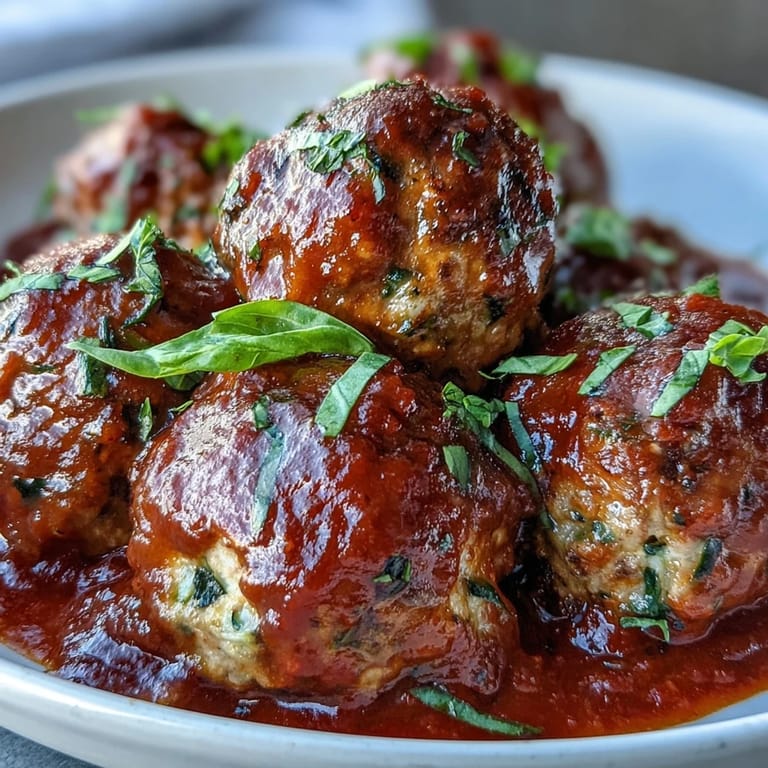
 There's something about standing in your kitchen on a Tuesday evening, wanting dinner to feel nourishing but not complicated, when these turkey meatballs suddenly make sense. I'd been wrestling with finding meals that actually satisfied my family without the heaviness of traditional beef, and one afternoon while chopping zucchini, it hit me—what if I tucked all these vegetables right into the meat itself? The result was lighter, juicier, and somehow more flavorful than I expected.
I made these for a potluck last spring where someone's kid actually asked for seconds, which never happens with the picky eaters. What got me wasn't just that they cleaned their plates, but how the parents crowded around asking what was in them, surprised that something tasting this good could be gluten-free and dairy-free. That's when I realized these weren't just clean eating—they were real food that happens to be good for you.
Ingredients
- Lean ground turkey (1 lb): Use freshly ground if your market has it, as it stays moister during baking than the pre-packaged stuff that sits too long.
- Zucchini (1 cup, grated): Squeeze it hard with your hands after grating—this step matters more than you'd think because excess moisture makes mushy meatballs.
- Carrot and onion (1/2 cup each): Finely grating or chopping these makes them nearly invisible in the texture while adding natural sweetness and moisture.
- Fresh garlic and parsley (2 cloves and 1/4 cup): Don't skip the fresh herbs; they brighten everything and keep these from tasting processed.
- Gluten-free rolled oats or almond flour (1/3 cup): Oats add binding power and a subtle texture—if you go with almond flour, the meatballs become slightly denser and grain-free.
- Large egg (1): This is your binder; it's what holds everything together so they don't fall apart during baking.
- Dried oregano and sea salt (1/2 tsp and 1/2 tsp): Season as you taste; everyone's preferences vary and it's easier to add than remove.
- Extra-virgin olive oil (1 tbsp): Use good quality here since the marinara is so simple—the oil flavor actually shines through.
- Crushed tomatoes (28 oz can): San Marzano varieties tend to be sweeter and less acidic, which makes a difference in how little honey you'll need.
- Fresh basil (for garnish): Tear it by hand right before serving so it stays vibrant and aromatic rather than bruised.
Tired of Takeout? 🥡
Get 10 meals you can make faster than delivery arrives. Seriously.
One email. No spam. Unsubscribe anytime.
Instructions
- Set your stage:
- Heat your oven to 400°F and line a baking sheet with parchment paper so cleanup later feels like a gift to your future self.
- Build the mixture gently:
- In a large bowl, combine the turkey with all the vegetables, oats, egg, and seasonings, mixing with your hands just until everything disappears into the meat. Overmixing makes dense, tough meatballs; you want them tender and almost fluffy.
- Form with intention:
- Use a tablespoon or small scoop to make 18–20 evenly sized meatballs—they should all cook at the same speed, and uniform size is your secret to none being over or underdone.
- Bake until golden:
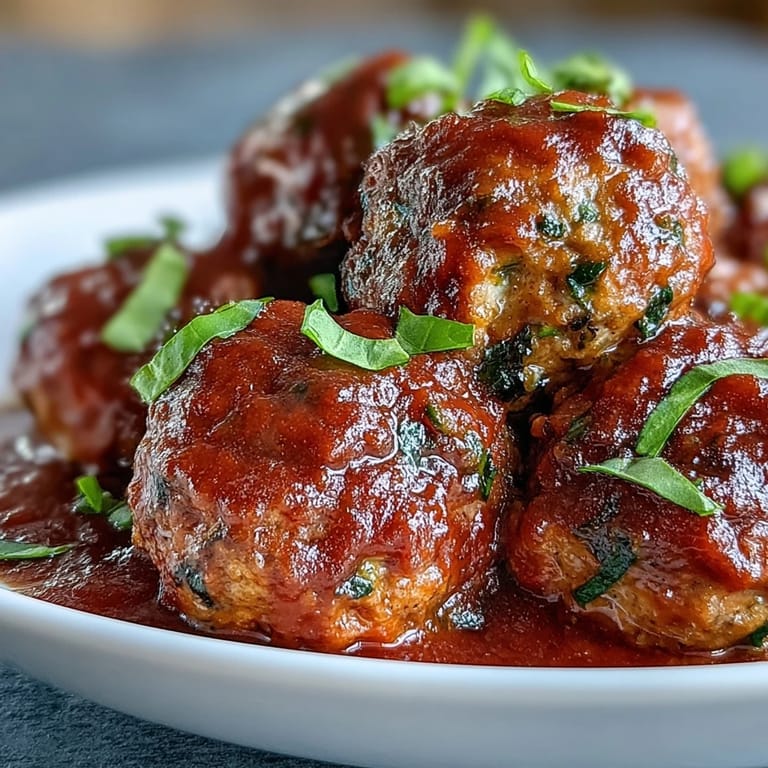
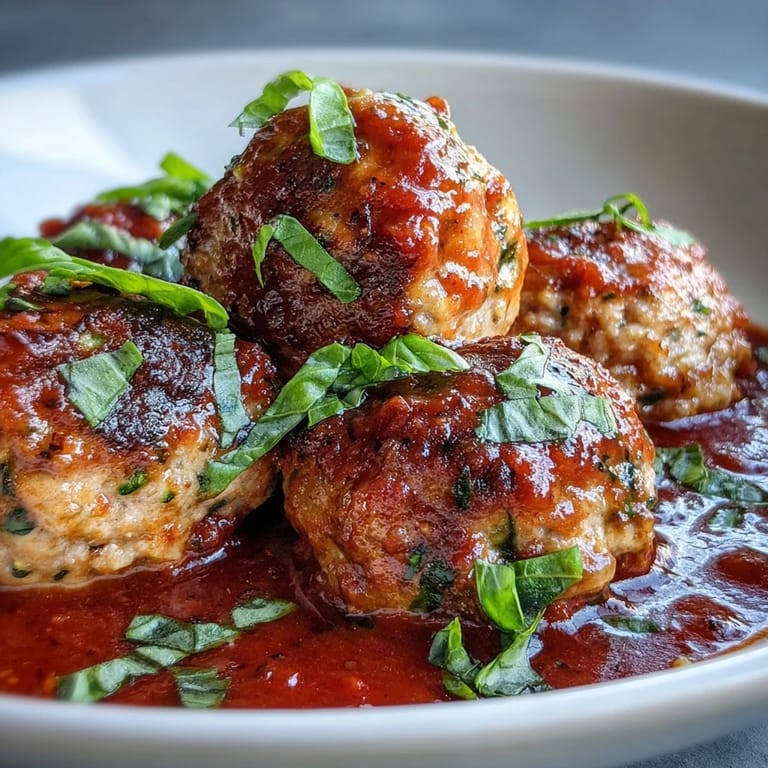
- Slide them into the oven for 18–20 minutes; they'll puff slightly and the tops will turn a light golden brown while the inside stays juicy. You'll know they're done when a quick internal check shows no pink.
- Start the sauce in parallel:
- While the meatballs bake, warm olive oil in a large skillet over medium heat, add minced garlic for just 30 seconds until it smells incredible, then pour in the crushed tomatoes along with basil, oregano, salt, and pepper. Let it bubble gently for 15–20 minutes, stirring now and then so nothing sticks to the bottom.
- Bring it all together:
- Transfer the baked meatballs into the simmering sauce and let everything cook together for 5 more minutes so the flavors actually meet and mingle.
- Finish with grace:
- Scatter fresh basil over the top right before serving, and let everyone choose their own base—zucchini noodles, spaghetti squash, brown rice, or even just a bowl with crusty bread for dipping.
 Save to Pinterest
 There was a Saturday morning when my neighbor smelled these cooking through an open window and actually knocked on the door asking what that aroma was. We ended up sharing lunch, and she couldn't believe how substantial and satisfying they felt despite being turkey and vegetables—something about homemade always wins against shortcuts.
Why This Works for Real Life
These meatballs occupy a sweet spot between weeknight dinner and something special enough for guests, which is where most of us actually live. They're forgiving if your oven runs hot or cold, flexible with vegetables you have on hand, and honestly better the next day when you're reheating from the fridge and everything becomes even more cohesive. The cleanup is minimal compared to stovetop versions since baking keeps the splatter off your walls.
Variations That Keep Things Fresh
Once you nail the basic formula, you can swap the vegetables freely—grated apple works beautifully instead of carrot if you want subtle sweetness, and spinach or mushrooms disappear into the mixture while adding moisture and umami. I've also stirred roasted red peppers into the sauce itself and added a pinch of red pepper flakes for heat when my mood called for it, or a splash of balsamic vinegar for deeper richness.
Serving and Storing Wisdom
These keep beautifully in the refrigerator for three days in a covered container, and they freeze wonderfully for up to two months if you want to build a small stash for future busy nights. I've found that reheating them gently in a low oven rather than the microwave keeps the texture better, though honestly cold leftovers on a salad the next day are equally good. Pair them with something bright and raw to balance the richness—a simple green salad with lemon vinaigrette makes the whole plate sing.
- Make a double batch when you're in the mood since the freezer payoff is absolutely worth the minimal extra effort.
- If your sauce seems thin after simmering, whisk in a teaspoon of tomato paste to deepen the flavor without waiting longer.
- Taste and adjust the seasoning right before serving because salt distribution can vary depending on your tomato brand and personal preference.
 Save to Pinterest
 This recipe became my go-to when I needed to prove that eating clean doesn't mean sacrificing flavor or the comfort of a dish that feels like home. Make it once and you'll understand why it keeps coming back to my table.
Recipe FAQs
- → Can I make these meatballs ahead of time?
Yes, these meatballs are perfect for meal prep. You can form and refrigerate the raw meatballs for up to 24 hours before baking, or freeze them uncooked for up to 2 months. Thaw completely in the refrigerator before baking as directed.
- → What can I serve with turkey and veggie meatballs?
These versatile meatballs pair beautifully with zucchini noodles, spaghetti squash, brown rice, quinoa, or your favorite whole grain pasta. For a low-carb option, serve over roasted vegetables or with a fresh side salad and crusty gluten-free bread.
- → How do I prevent the meatballs from being dry?
The key to moist meatballs is not overmixing the mixture—combine ingredients just until combined. The grated zucchini and oats also help retain moisture during baking. Be careful not to overbake; remove them from the oven when they're just cooked through and lightly browned.
- → Can I make this dairy-free?
These meatballs are naturally dairy-free as written. When selecting oats, choose certified gluten-free varieties if needed. For the garnish, simply omit any cheese and stick with fresh basil to keep the dish completely dairy-free.
- → How long do leftovers last?
Cooked meatballs stored in an airtight container will keep well in the refrigerator for up to 3 days. For longer storage, freeze them with the sauce for up to 2 months. Reheat gently on the stovetop or in the microwave until warmed through.